



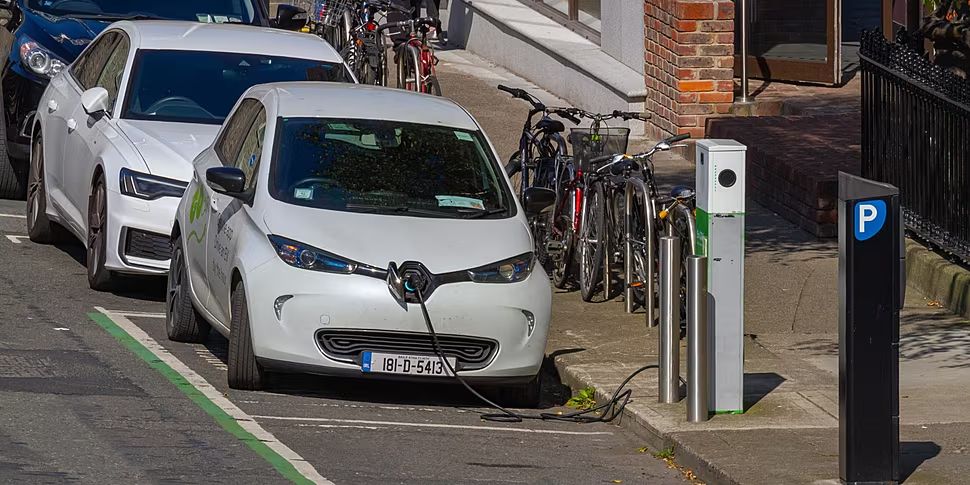
The ESB has increased the costs of its public chargers for EVs by 24% since June.
After the ESB announced another increase in costs for its public electric vehicle (EV) chargers, the question is being asked if it's now more economical to drive a diesel car.
Even with diesel prices being inflated at the moment, Shane O'Donoghue, editor of CompleteCar.ie, told Newstalk Breakfast that the cost increases at the public chargers means it's "more efficient to use a diesel, and even a petrol car".
In fact, Mr O'Donoghue points out that the ESB has increased these public EV charger costs by 24% since June.
He explained: "If you stop at the motorway services, see the ESB branded chargers, you plug in, you're going to find it's going to cost quite a bit more.
"It's gone up at the fastest [level]. So the fastest chargers, they deliver between 50 and 350 kilowatts. That's how it's measured. It's a power rating. And those are the fastest ones.
"They will now cost 85 cent per kilowatt hour that you put into your battery. Now, to try and put that into numbers, say you are adding 50 kilowatt hours, that'll cost you roughly, €42-€50, and that on an average electric car would probably bring you up to 300 kilometres.
"It's worse than diesel prices, actually. Even at our elevated diesel prices right now, we're more than €2 a litre, it's more efficient to use a diesel, and even a petrol car, I believe."
Considering there's been such a push for electric vehicles and building infrastructure for them across the country, it can be argued that these rising costs aren't encouraging more people to invest in them.
Mr O'Donoghue continued: "It comes at a really bad time. You know, as a country, we're trying to achieve our climate goals, we're trying to reduce the carbon footprint of transport, and private transportation is a big part of that.
"Getting people into lower carbon cars, whether that's electric cars or plug-in hybrids or whatever... there's a big push on electric cars, and this is going to make people think twice, for sure, even though it is the public network."
While people might opt to only use their at-home chargers, electricity prices are going up in the home as well, so it could be another factor that is making people hesitant to purchase EVs.
According to data released by the CSO in August, 2026, 26% of cars sold in Ireland in July were EVs, while 24.6% were petrol hybrids, 20.4% were petrol cars, 14.5% were plug-in hybrids and a mere 12.5% were diesels.
Whether this price hike will affect those figures in the remainder of the year remains to be seen.
Main image: Electric car vehicle plugged in at charging point station Pic: Alamy


