



New rules are set to come in for short-term lets, but according to those with properties in that category, it's not clear what they'll be registering for.
Those who own properies for Airbnbs and other short-term lettings are sharing their frustration at new legislation being introduced in Ireland.
While they're not disagreeing with the idea of it and registering their properties, it's not exactly clear what exactly they'll be registering for.
Also, under these regulations, councils may no longer be able to grant planning permission in areas of over 20,000 people.
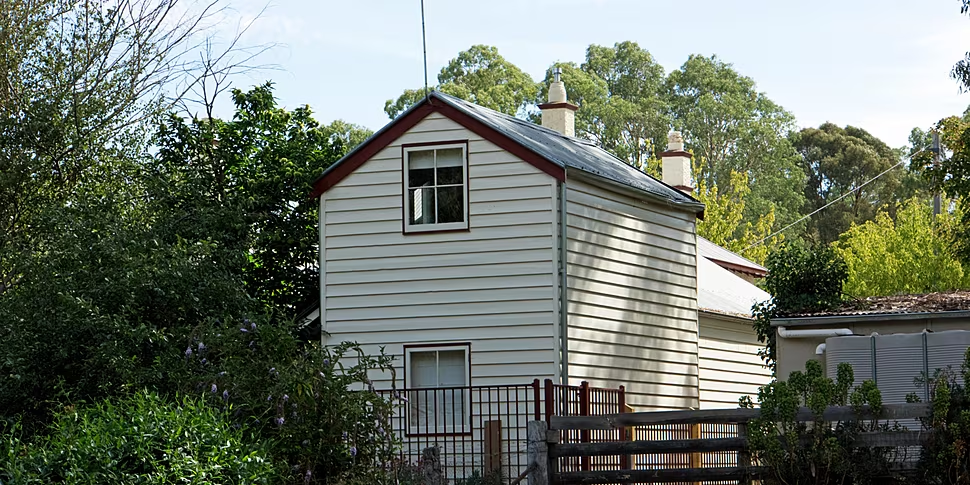
Speaking on Lunchtime Live were some frustrated hosts, including Lorna Cahill who has a "granny flat" in Miltown Malbay in Co Clare.
She explained to Andrea Gilligan that while she doesn't fall into the category for the 20,000 people cutoff, she's still not really sure whether or not the new rules will apply to her.
She explained: "I have a granny flat in my garden. I have absolutely no idea [if they will affect me] because this is all as clear as mud.
"We've been arguing and fighting with the government over the last five years. We've asked for some meaningful discussion because we need clarity.
"And now, all of a sudden, this legislation is being rushed through. There's been no pre-legislation scrutiny committee report that hasn't been issued.
"We cannot get answers to even the most basic questions. For example, how much will registration cost?
"In the past few weeks, we have been sending out emails to TDs right across the country saying that we need a longer registration period to even introduce it on December 1 when, you know, an awful lot of staff are going to be on annual leave and they will close down over Christmas.
"So realistically, we've only got three weeks in which to register. What happens to the hosts on December 1 who have already applied for planning permission, but it hasn't come through, or those that haven't.
"I haven't, because I don't know what it is that I'm applying for, because the National Planning Statement, which runs hand in hand with this SDLT legislation, still hasn't been published. They've published a draft form of it."
When asked if her property would ever be rented for more than 21 nights in a year, Lorna said "never" as people only stay for two or three nights to either visit the Cliffs of Moher or attend a wedding.
Another host who is concerned about the incoming legislation is Derek Keogh who also has short-term lets in Co Meath.
He said how they have three structures in their garden, which is shared with the guests and homeowners, and he's been told that their rentals will now be deemed as "commercial properties" and not part of the family home.
When asked if they were ever long-term rentals, he explained: "Never, and never will be, never can be. One was an onion shed, one was a place where he lived back in the 1930s and the other one was where he used to keep the wood.
"My wife, she got money from her mother when she passed on and we invested our money into this to try and build a secure future for ourselves.
"We're not a faceless business or a wealthy corporation. There are people whose livelihoods and our future are now being put at risk.
"We renovated these cottages with our own parents in mind, so that, as they got older, we might be able to look after them on site.
"It's not just me and my wife's income as anyone that spends money stays with us, three times that money is spent with the local village.
"So it's the local coffee shops, it's the local pubs, and the local activity providers are all benefiting from us because it's economically unviable for our 'hotels' to open up in the areas we're in."
The director of Unique Irish Homes also weighed in on the discussion, echoing Lorna's "clear as mud" comment.
Megan Campbell said that she and the company are none the wiser, with Unique Irish Homes having a collection of 70-80 properties that are privately owned and a lot of them are historical heritage homes.
"These homes are in the same positions as Derek and Lorna," she explained, "and essentially, they're not going to go into long-term residential [rentals].
"So, my collection, let's say, of about 70 to 80 homes, they won't be bothered to go and look for this planning permission because it's putting them in a position of trying to figure that out.
"And, while we support the registry, we need to know the planning rules. We need them published before our owners can confirm if their home complies.
"As Lorna said, it's as clear as mud. We just don't know where any of us stand. It's going to really affect my entire business, not just our wonderful homeowners that we have a great relationship with, but the entire business that I've been working on with my mum and my dad since 2014.
"And we're in a really tricky position and we just need guidelines. We need information at the core of it, really."
The government explained that properties in locations outside the largest towns and cities, "the approach is to be more amenable to consenting short term lets and providers can avail of an extended period to meet planning consenting requirements, while being allowed to register."
Minister Browne, in turn, emphasised: "As Minister for Housing, my priority has to be encouraging more homes back into the rental market for people who want to live long term in a particular local area or in their own community.
"We have far too many full houses being let out on a short term basis in areas when those same areas are experiencing serious housing shortages."
Main image: A granny flat in the garden of a home. Pic: Martin Hurley / Alamy Stock Photo


