



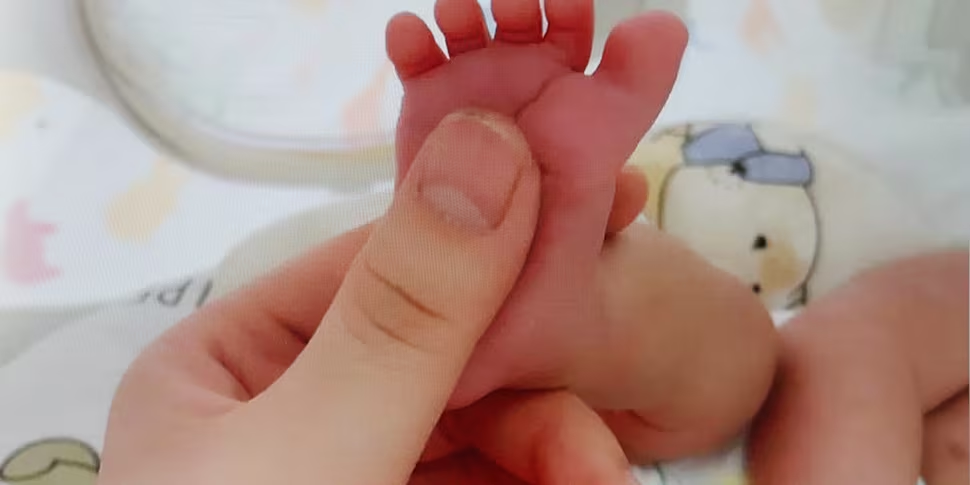
A recent report highlighted serious staffing shortages across the health service, with the INMO calling on the HSE and the Department of Health to fast track recruitment.
Almost 8,000 babies missed their 12-month developmental checks last year, reportedly due to a shortage of public health nurses.
These checks are vital to a baby's development, where checks like the heel prick and hip checks that benefit from early intervention are carried out.
The Irish Nurses and Midwives Organisation (INMO) is calling on the HSE and Department of Health to fast track recruitment following a report highlighting serious staffing shortages across the health service.
Speaking to Anton Savage on Newstalk Breakfast was Tony Fitzpatrick, Director of Professional Services and Industrial Relations at INMO, who explained the vital role public health nurses play in the community.
He shared: "The public health nurse is like a specialist working in the community and they play a vital role in that regard.
"The postnatal home visit when the mother and child come home from the hospital or if they've had a home birth, they're seen within 72 hours by the public health nursing service.
"You then have the maternity health checks, so the newborn examination or the heel prick, but they also give important advice to mothers around sleeping and breastfeeding and all of those other components that are really important as well.
"And then another key piece is the child development and growth milestones. So these are the key stages at three months, at nine to 11 months, 18 to 24 months and three to three and a half years where the public health nurses come back and check those key milestones.
"It's really, really important. It's universally available. But unfortunately, it's been impacted by the lack of resources."
When asked if it was a case of lack of interest in the roles or lack of roles available, Mr Fitzpatrick revealed that of the positions available last year, many weren't filled due to other measures in place.
He explained: "The worrying thing here is that the HSE is funded by the Department of Health for about 165 public health nursing training places every year.
"Last year, they didn't fill 45 of those places because of employment control measures and financial controls within the HSE, even though they were oversubscribed with regards to applications.
"And this year, they only filled 145 of the 165 places. So 20 places went to waste. And this is at a time when these public health nurses are really badly needed, particularly in the Dublin region.
"There are more than 300 public health nursing and community registered nurse vacancies across the country, but I think it's important to look at the figures.
"There's actually only been an increase in seven public health nurses across the whole country in the last 20 years.
"And indeed, since 2019, there's been a decline in the number of whole time equivalents. So in 2019, there was about 1537 whole time equivalents.
"As of September this year, there were 1510, so that's a decrease over the last seven years with regards to the number of public health nurses."
HSE has identified that they need to increase the number of public health nursing places for training.
Main image: Nurse holding baby's foot Pic: Chen feibo - Imaginechina/Sipa USA


