



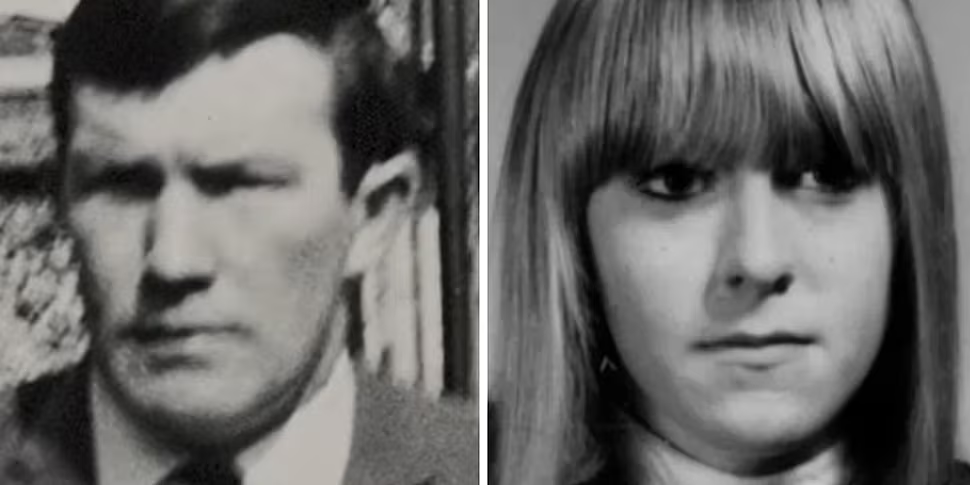
The identification of an Irishman as the killer of a Canadian teenager means other cold cases could also be solved through genealogy, a forensic expert has said.
Police in London, Ontario have named Michael Joseph Moore as the man who strangled Jacqueline 'Jackie' Dunleavy to death in 1968. She was only 16-years-old at the time.
While details remain scarce, police said modern forensic DNA technology and genetic genealogy were used to trace Michael Joseph Moore to the crime.
The Irishman had emigrated to Canada the year before the murder and was only 25-years-old at the time he became a killer. He stayed on in the Canadian town, serving in the local fire brigade and retiring with the rank of captain.
As he died in 2018, no charges can be brought against him.
On The Claire Byrne Show, consultant forensic expert Ray Kane said law enforcement agencies have begun using DNA submitted to companies that help people trace their family tree.
“Forensic technique of genetic genealogy combines modern DNA analysis with traditional genealogical research,” he explained.
“To be able to find more distant relatives, DNA profiles need to be large panels, and usually to be able to hit off a fourth or fifth degree relative, you need to examine thousands of DNA markers.
“Once the DNA profile is created from the evidence, it's used to search generally public databases.
“These are the commercial databases that people send off to find their ancestry and to find potential relatives that might help find the assailant.
“The hope is that the crime stain, the sample that's been tested will not find the assailant, although it's not impossible, but it will hopefully find somebody related to the assailant and give an idea of the type of relationship there is between the two.
“That's actually what's happened in this case.”
While Moore’s DNA was not on the database, a relative’s was and investigators used their sample to track him down.
“Once a potential relative is identified, a genealogist, which is an expert in generating family trees from birth, death records, doing all that research, they create the family tree, looking at the generations of relatives that are relevant to the time of the crime,” Mr Kane said.
“Once that family tree is handed to police to formally investigate the persons and then the old fashioned police detective work kicks in there.”
The successful identification of Moore as Ms Dunleavy’s killer means that other cases could soon be solved using the same forensic techniques.
“If samples are stored from historic cases and they're stored in the right circumstances, yes, absolutely, we could see more cases - that would be the hope, obviously,” Mr Kane said.
“We've got the serious crime review team who are reviewing historic cases on an ongoing basis and trying to match or starting trying to prioritise ones that they believe have the best opportunity for resolution.”
Main image: A split of Michael Joseph Moore and Jacqueline 'Jackie' Dunleavy. Pictures by London Police Service.


