




Rents must increase if the Government is to increase the number of houses being built, an organisation representing international property investors has argued.
Earlier this week, President Catherine Connolly signed into law the Residential Tenancies (Miscellaneous Provisions) Bill 2026 and its provisions are due to come into effect on 1st March.
The legislation will prevent landlords from increasing their tenants rent by more than the rate of inflation or 2% - whichever is lower.
However, a landlord will be able to reset the rent to market levels after six years or when a tenant leaves voluntarily.
New-build apartments are also exempt from the 2% cap, which the Government believes will "incentivise" building.
At Leaders’ Questions on Wednesday, Sinn Féin President Mary Lou McDonald predicted that “property funds are set for a bonanza” and said I-RES REIT - Ireland’s largest corporate landlord - had told investors it would “be able to increase new rents by a staggering 25%”.
Caught out again! 25% hike in new rents! Thats what the biggest landlord in the country has told to its investors. Micheál Martin left scrambling when I confronted him with an the disastrous consequences of Fianna Fáil-Fine Gael's Rent Hike Bill. This is the biggest rip-off of… pic.twitter.com/AreeITsUjc
— Mary Lou McDonald (@MaryLouMcDonald) February 25, 2026
On The Claire Byrne Show, Irish Institutional Property CEO Pat Farrell said the Sinn Féin leader’s characterisation of the reform was “not correct”.
“I think it would be important to put this in context at the very start of the discussion, that that's a projected figure and it's over a period of 10 years,” he said.
“So, that is absolutely a complete mischaracterisation of the issue.”
Mr Farrell continued it was “absolutely highly unlikely” that anyone would find their rent reset at a rate 25% higher than it was before.
“It depends on what the current market rent is in that particular area,” he said.
“The turnover I understand generally is of the order of around 10% - so, in 10% of cases where you have vacation voluntarily by the tenant, then the rent would increase the market rate, whatever that market rate might be.
“But let's not forget one thing here - and this is a really important point - the absolute answer to the current costs of rents is to actually bring more supply into the market.”
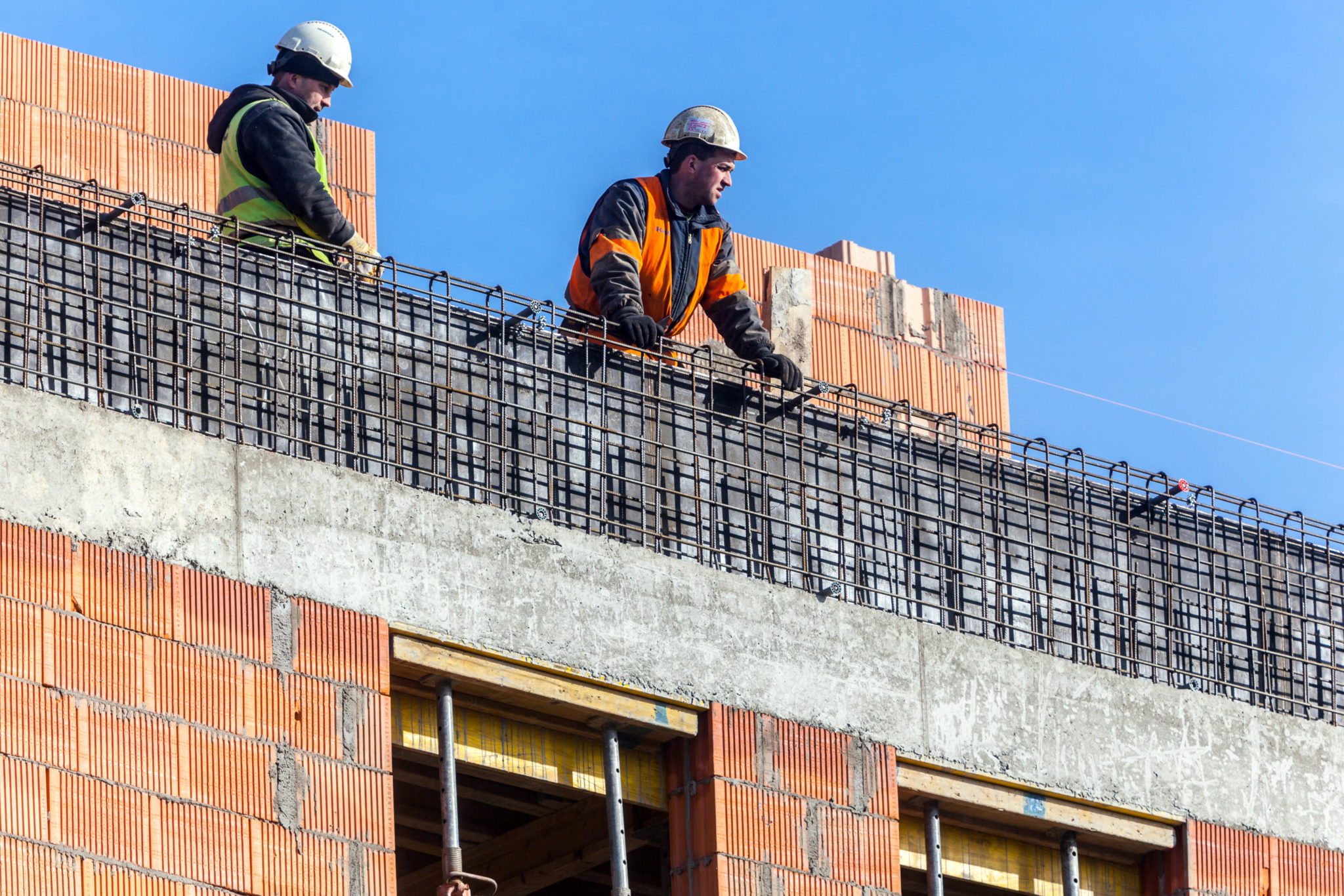 Two workers at the building of a new house. Picture by: Cum Okolo / Alamy Stock Photo
Last year, there were 36,284 new homes built in Ireland - notably more than the 30,147 delivered in 2024.
In the Programme for Government last year, Fianna Fáil and Fine Gael vowed to build more than 300,000 new homes by the end of 2030.
It is a target that Mr Farrell believes can only be achieved with help from international investment funds.
“The reason we've had no new supply is because the investment conditions of this market don't make it stack up - even for a pension fund,” he said.
“And with these changes, we are already seeing the increased interest of investors and we're seeing transactions in the market whereby investors are now coming back into the market.
“And we are getting new supply; we're up to 36,000 homes for the year gone by.
“I would anticipate that we will have an uplift on that this year and in following years, which will bring more supply.”
Overall, Mr Farrell believes the reforms strike the right balance between the needs of tenants and property investors.
“In order to attract the money we need to build the 50,000 houses per annum, we have to be able to remunerate that investment,” he said.
“And in the case of this money, which is pension fund money, it's a moderate return people are looking for.
“And that's what this new modest reform, which also gives very important safeguards to tenants, by the way, which you shouldn't lose sight of, is designed to do.”
Main image: House building. Picture by: PA Archive/PA Images.


