



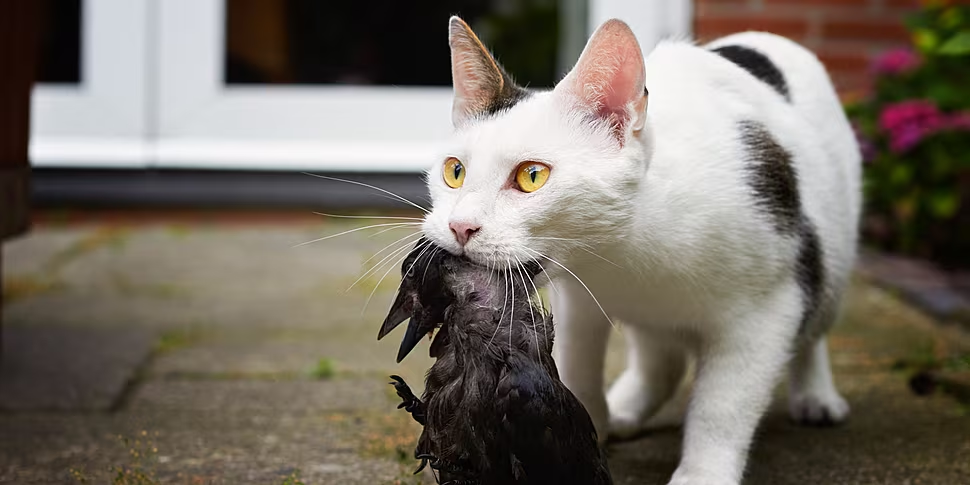
People letting their pet cat roam free is partly to blame for the “massive decline in birds around the country”, a conservationist has warned.
In recent decades, the populations of many of Ireland’s native species have seen significant declines.
Loss of habitats and climate change are often blamed, but the culprit might also be in the room with you now.
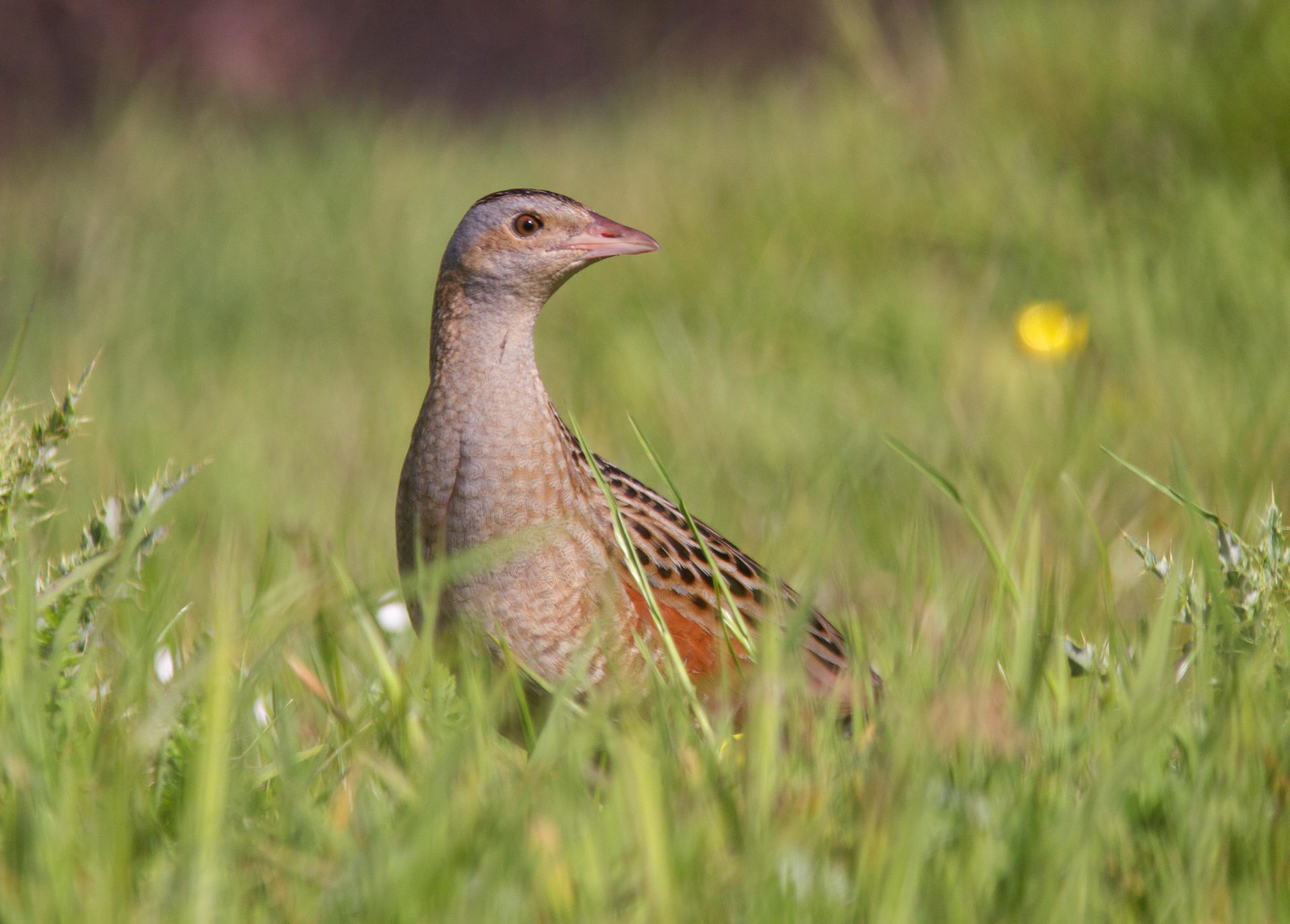 An endangered corncrake. Picture by: Alamy.com.
On The Claire Byrne Show, Breeding Waders spokespersonOwen Murphy said Irish people have to be “realistic” about the impact cats are having on bird populations.
“We need to be adults and we need to start the conversation of what the impact these cats are having on native birds,” he said.
“I suppose a lot of people don't realise that although cats are with us for quite a long time, they aren't native to Ireland.
“So, they're a non-native predator and if they're just allowed to roam and do whatever they want in the countryside, they will have a negative impact on our native creatures.”
Mr Murphy added that some of Ireland’s native species - such as the curlew and the corncrake - “teetering on the brink of extinction”.
He suggested that this means cat owners need to be part of the solution if bird species are to recover.
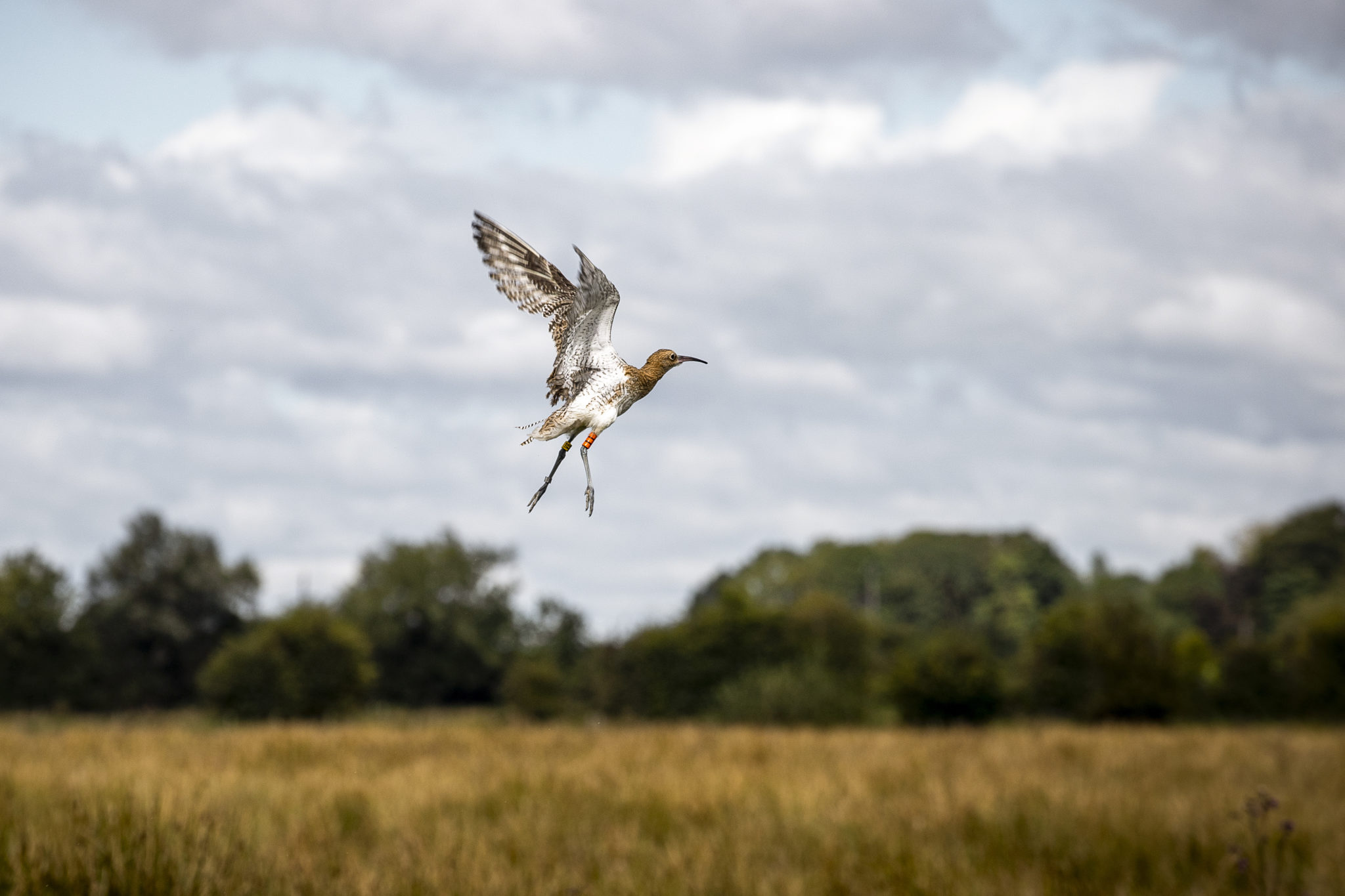 A young curlew in flight after being released into the wild around Lough Neagh. Picture by: Liam McBurney/PA Wire/PA Images.
 “I think a good starting point would be to get a handle on how many cats are in Ireland, how many are free roaming, how many are part of a household and how many are feral,” he argued.
“I think that would be a really, really useful start because it's like anything - when you have no baseline figures, it's very hard to come up with a sensible plan and bring everybody around the table.”
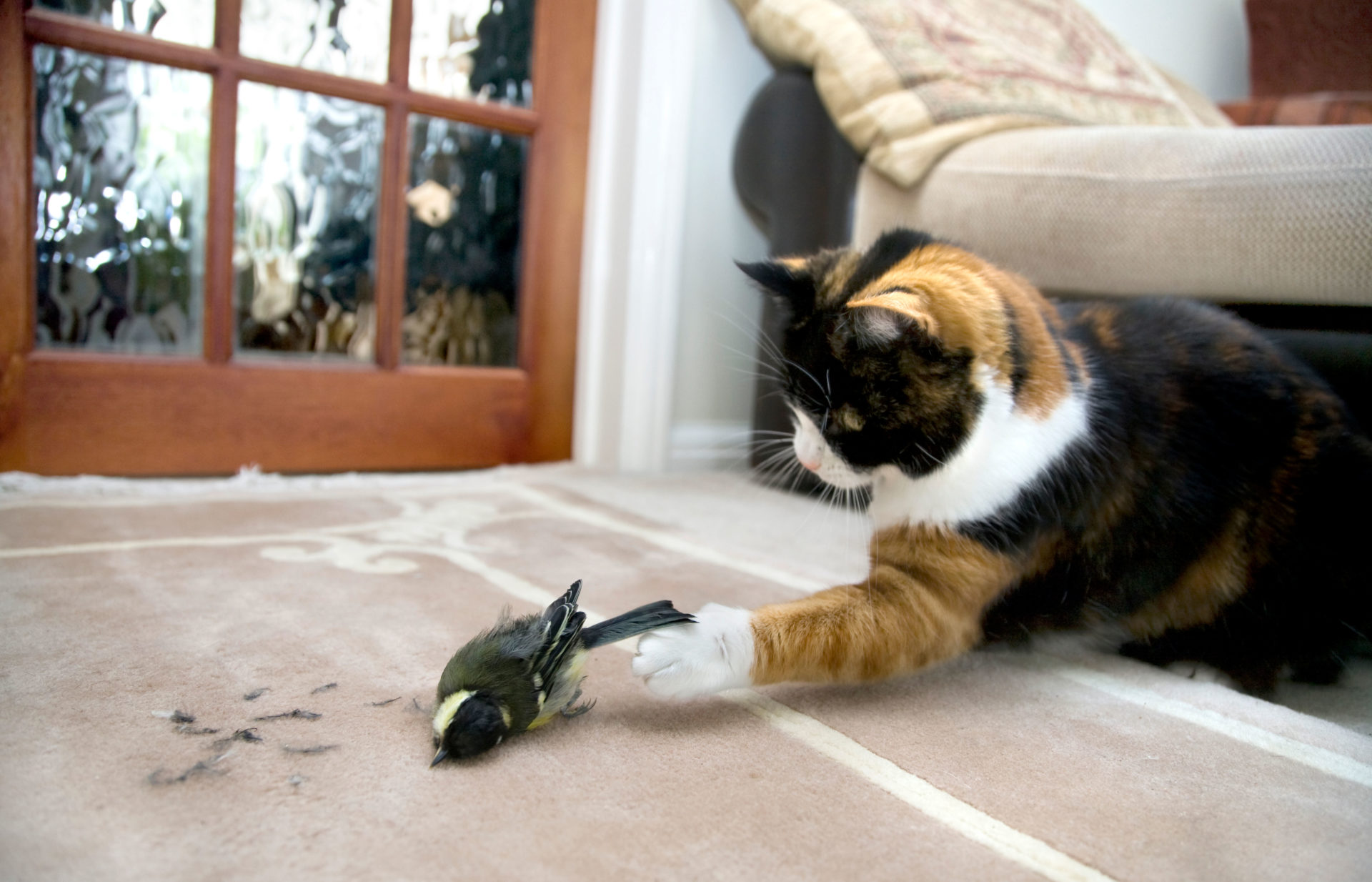 A domestic cat with a bird it has killed and brought into the house. Picture by: Alamy.com.
 While Mr Murphy said he accepted there are other factors influencing the “massive decline in birds around the country”, he added that no one who works in conservation doubts the impact cats are having.
Young birds who are learning to fly are especially vulnerable to cats.
“Our nest protection officers and our survey workers would report cats really, really frequently,” he said.
“And these cats aren't sitting in somebody's house or sitting outside somebody's house - they're out in the countryside, they're on our lanes, they're in our fields.
“So, those cats are actively hunting and when we look at predation pressure, we need to start thinking, ‘Well, what is the pressure that non-native species put on it?’”
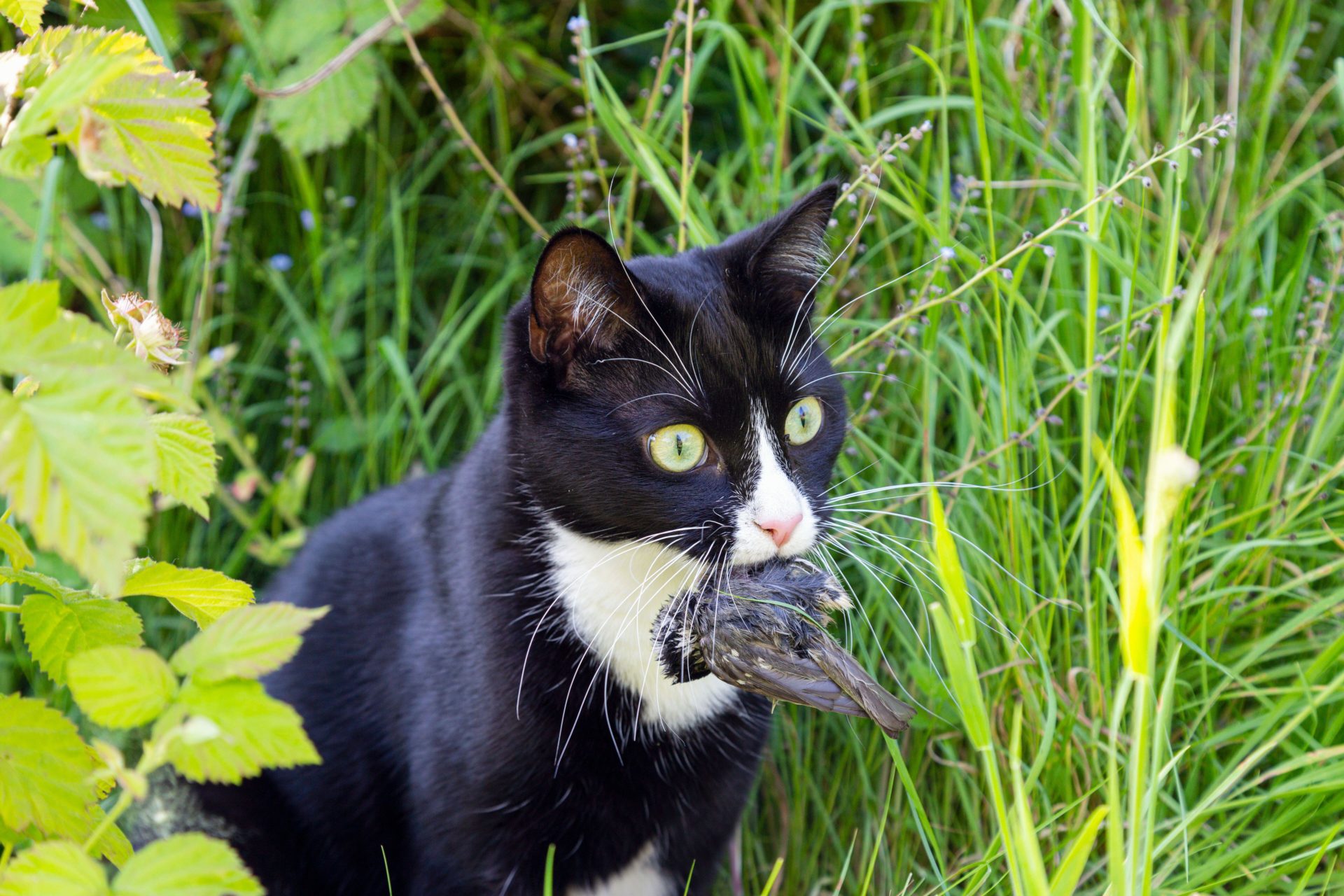 A cat with a small bird in its mouth. Picture by: Alamy.com.
 While some argue that all cats should have a collar and bell to alert birds to their presence, Mr Murphy said there is an even more radical alternative.
“In a lot of other countries, it's normal for cats not to be free ranging,” he said.
“So, you don't just let your cat out in the evening and it goes off and does whatever it wants to do at night.
“Your cat is either indoors or it's in some sort of a human-made facility that keeps it from having such a negative impact on the wildlife.”
Main image: A cat with a dead bird. Picture by: Alamy.com.


