




Mary Lou McDonald has said the British Government will have to “honour their obligations” and pay for the pensions of people in Northern Ireland in the event of a United Ireland.
The Sinn Féin leader was speaking as the party’s Planning for Constitutional Change Bill 2026 advances through the Oireachtas.
If passed, it would “require the Taoiseach to prepare and publish a Green Paper” and periodically update Dáil Éireann on planning for Irish unity.
On The Claire Byrne Show, Deputy McDonald said her party has done a “huge amount of work” on preparing for a unity referendum and urged the Government to do likewise.
“We've run symposiums and consultations all across the country - we've done it in the United States of America, Australia and in Britain,” she said.
“Of course, as a political party, we have to be generating that conversation, generating those ideas.
“But just remember, it is the Irish State that is a party to the Good Friday Agreement and only the government in Dublin can actually produce a green paper that sets out all of the opportunities, all of the different areas of work that need to happen by way of preparation for the referendum.”
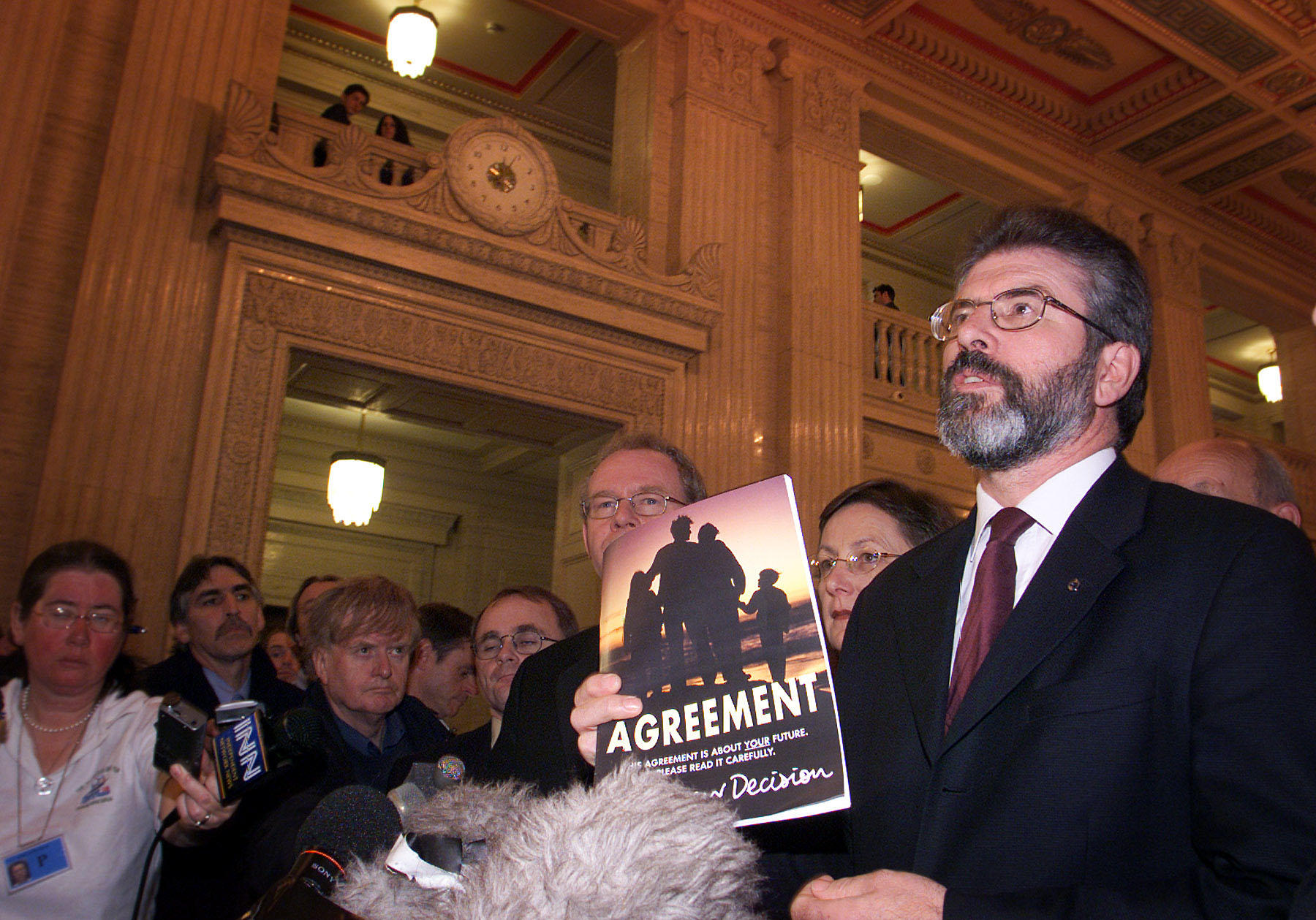 Gerry Adams holds a copy of the Good Friday Agreement. Picture by: Alamy.com.
According to the British Office for National Statistics, £21.5 billion in tax revenue was raised in Northern Ireland in 2023.
However, £36.0 billion in spending was assigned to the province by the agency, which includes spending on the North’s devolved services - such as health, education and transport.
The figure also assigns Northern Ireland a share of the cost of maintaining reserved services - such as Britain’s Armed Forces, security agencies, embassies, foreign aid budget and Royal Family.
The difference between tax revenue raised in the province and the tax revenue spent is often called a ‘subvention’ and means average public spending per head of population in Northern Ireland was £16,116 in 2024/25 - higher than a UK average of £13,504.
Deputy McDonald described the subvention as “often very, very overstated”.
“It's overstated to include things like pensions, defence spending and so on and so forth,” she said.
“It's up to us to explain and set out the numbers of it, that actually this is affordable.”
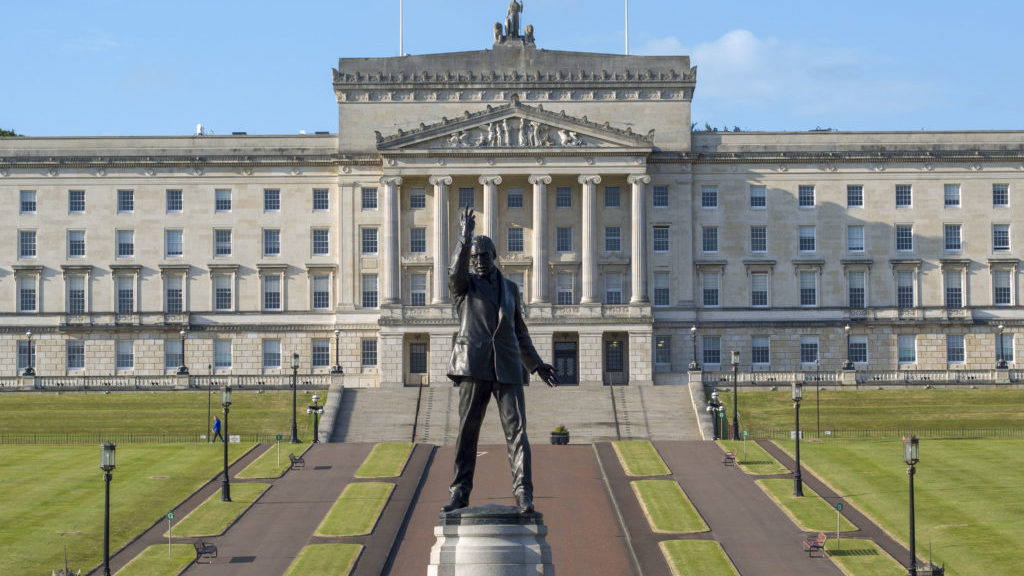 Parliament Buildings on the Stormont Estate. Picture by: PA Archive/PA Images.
When asked if she believed the British Government should continue to pay the pensions of those living in the province in the event of reunification, Deputy McDonald said the British State would have a duty to do so.
“I think you have plenty of people who live in this jurisdiction, on this island, who draw their pension from Britain,” she said.
“I think the British Government would have to honour their obligations in respect of payments that have been made and contributions made to pension funds.
“By the way, post-Brexit, I think the evidence was that, in fact, the British State did honour its obligations in that regard.”
Scottish pensions
In 2022, the leader of the Scottish National Party at Westminster, Ian Blackford, said that the British State would ‘retain an obligation’ to pay for Scottish pensions if Scotland became independent, adding there were “no ifs, there’s no buts about that”.
Britain’s then-Pensions Minister Guy Opperman described the claim as “misleading”.
“If Scotland chooses to become a foreign country, then working English, Welsh and Northern Irish taxpayers should not pay for a foreign country’s pension liabilities,” he said.
“That has been the settled position of the UK Government since before the 2014 [Scottish independence] referendum.”
Mr Blackford later announced that an independent Scotland would “take responsibility for pensions in Scotland”.
Main image: Sinn Féin president Mary Lou McDonald. Picture by: Alamy.com.


