



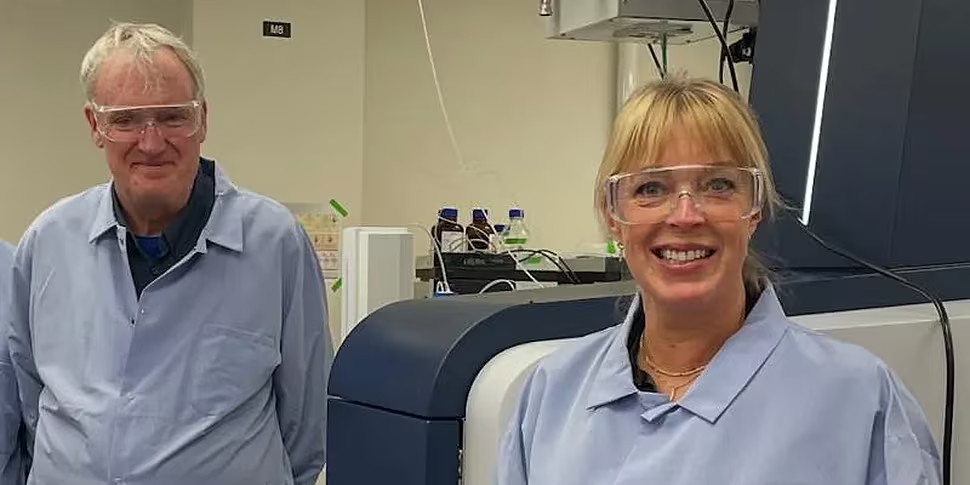
Luke O’Neill has said he is “very excited” that a new treatment for eczema has been developed at Trinity College.
Eczema is a skin condition that sees part of a person’s skin become inflamed, itchy and dry.
Globally, an estimated 200 million people suffer from the condition. However, medication can mitigate the symptoms, there is currently no cure.
On Newstalk Breakfast, Professor O’Neill said SYX-5219, as the new treatment is called, is already “showing benefits to patients”.
“It's a Trinity story because my lab initiated this project,” he explained.
“Some of the trial was done in James's hospital; so, it's an Irish story as well as a story to do with Sitryx.
“So, I'm very excited about it.”
Professor Luke O’Neill continued that Sitryx Therapeutics, a biopharmaceutical company that he co-founded, was delighted to see the results of the clinical trial.
“Our drug is anti-inflammatory; it turns off a specific part of the inflammatory process,” he explained.
“A postdoc in my lab, Eva Palsson, let's give Eva credit, it was her project on this thing called PKM2 is the jargon, which she's worked on this.
“Next thing Sitryx saw this.”
Professor O’Neill added that because eczema is such a common condition, the new medicine has the potential to sell widely.
“This disease is… a massive burden on health care systems, of course, kids having rashes and creams and all sorts,” he said.
“There's a big need for a new treatment, basically.
“So, if it did make it, it would be very lucrative for a drug. Our company, Sitryx, will take it further now.”
Professor O’Neill predicted that it will take a “little bit longer” before the new treatment is available commercially, with perhaps a further a year or two to finalise its suitability for patients.
Main image: Professor Luke O'Neill and Dr Eva Palsson. Picture by: TCD.


