




Missing out the fada from someone’s name is “slightly insulting”, a man has argued after Sinn Féin introduced legislation to tackle the issue.
Dublin South Central TD Aengus Ó Snodaigh has tabled An Bille um Ainm agus Seoladh Gaeilge an Duine (Síneadh Fada) 2026, which would compel public bodies to use a person’s name and address in Irish if requested.
It would also give people a right to use the Irish version of their name and address in dealings with the regulators of private companies in finance, utilities, communications and air travel.
On Lunchtime Live, writer Séamus O’Reilly said far too many people feel that a fada is a voluntary extra when writing out someone’s name.
“I have probably experienced quite a lot of fada droppage in my time,” he recalled.
“I've got a fada over my e. And so an awful lot of the time it's either left out or it's just ignored. It's very inconsistent.
“I would make a distinction between if an ordinary person sends me an email, maybe they're not familiar - that's one thing.
“But it's whenever you're talking about actual Government services; I've booked trains, I've had to do all sorts of applications where if I put the fada in, I will not be able to make the booking.”
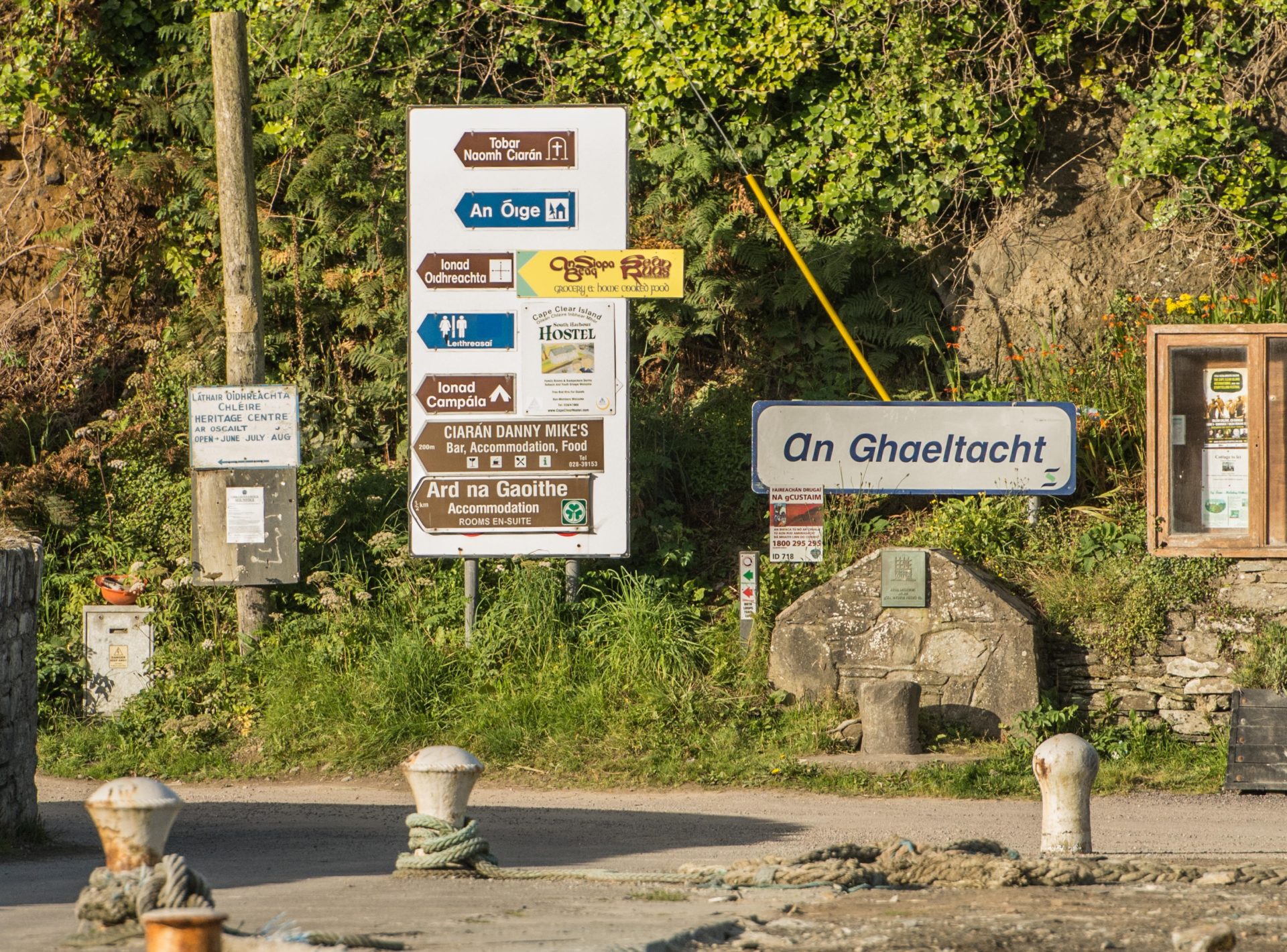 Irish language signs in the Gaeltacht. Picture by: Bernard Golden / Alamy.
 Mr O’Reilly continued that it annoys him to see people abroad having their names spelt correctly with accents, while Irish people with fadas are constantly having theirs misspelled.
“That part of it would rankle with me because culturally it's important and personally it's important to me,” he said.
“But I think more in a systemic sense, this is not, I don't think, a difficult problem. It's just a problem of will - and that starts to become slightly insulting.”
Having said that, he admits that even he sometimes struggles with typing his name out.
“I have occasionally, when extremely hung over, been reduced to just Googling Beyoncé and copy and pasting the e,” he said.
“Only when very, very hung over, I promise you.”
Mr O’Reilly added that he “completely backs” Sinn Féin’s bill, arguing that its implementation will require minimum effort.
“It's not hard to preserve, it's not really taking up too much time or effort,” he said.
“And it's an act of society to make sure that people are welcomed and included.
“Especially if you're talking about something which is, you know, intrinsic and very sort of, you know, innate to Irish society, that we have these lovely flourishes that maybe other countries don't have.”
Main image: A school child on a protest. Picture by: Alamy.com.


