



The Government should consider building desalination facilities to tackle more frequent droughts in the years ahead, a lecturer in infrastructure has suggested.
Uisce Éireann has announced a hosepipe ban in the six counties of Dublin, Meath, Wexford, Wicklow, parts of Kildare and South Tipperary.
Noting that there is now brown and yellow grass in many parts of the country because of the heatwave, Paul Davis of DCU said Ireland has a “lack of usable infrastructure”.
“We've got leaking pipes, which we know Uisce Éireann are working very hard on,” he told The Claire Byrne Show.
“We're looking at a population of about 1.5 to 1.7 million in Dublin and that's growing.
“The eastern boundary of Ireland has just got this massive population and climate change is then leading to drier spells and more frequent drought conditions.
“So, even though we've got a wet country, we don't actually have the storage capacity to hold the water when we get it.”
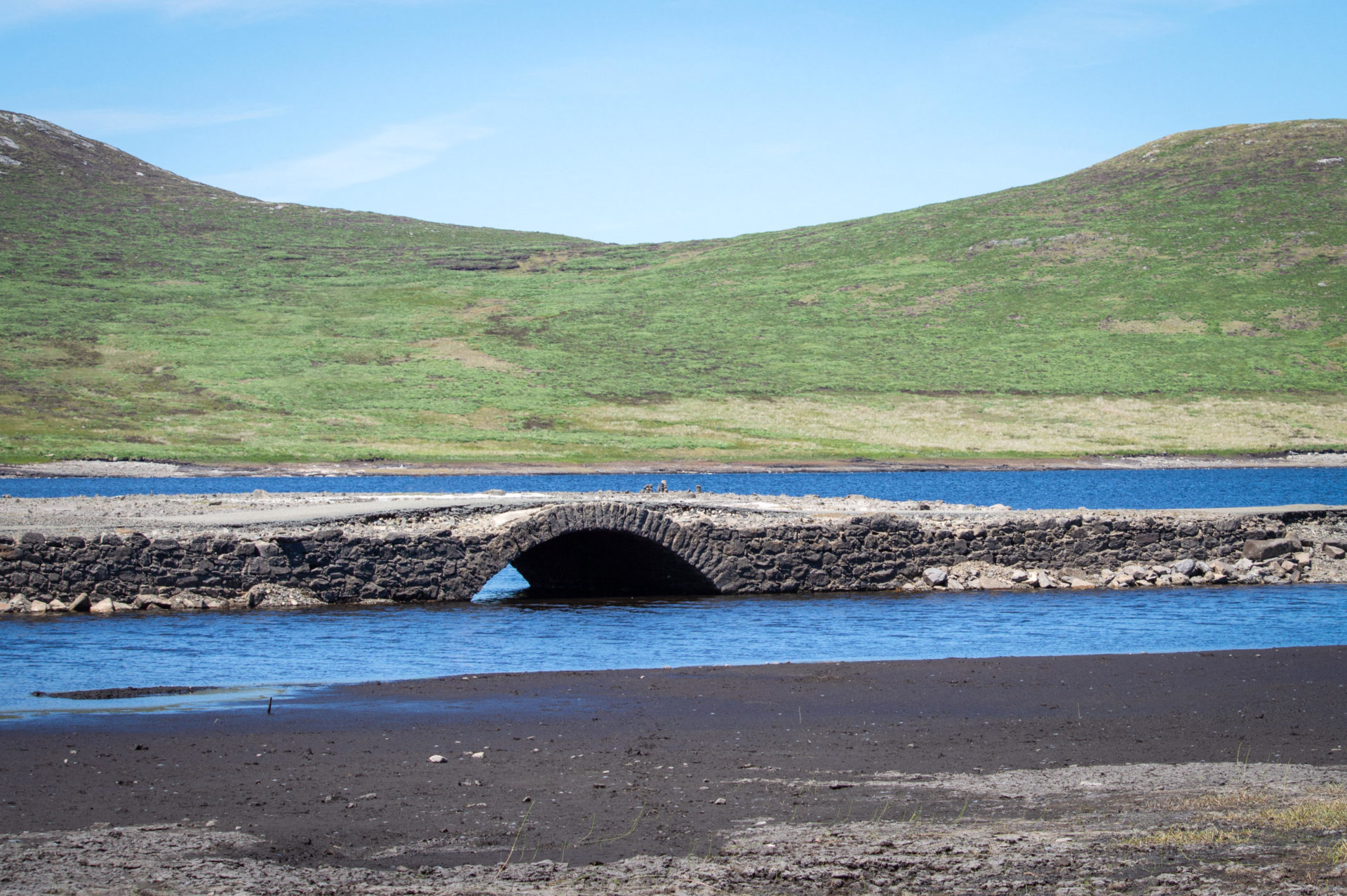 Low water levels in a Northern Ireland Reservoir. Picture by: Alamy.com.
At present, 85% of water used by the Greater Dublin Area is extracted from the River Liffey.
To diversify their supply, Uisce Éirean has submitted a planning application for the Water Supply Project Eastern and Midlands Region; if approved, it would see a pipeline built that links the capital with the River Shannon.
“The reality is we've been debating the Shannon-Dublin pipeline and saying this is going to be a solution to it,” Mr Davis said.
“But that solution is only a short-term solution; it's going to take 2% from the Shannon without any environmental impact.
“But we don't know what the environmental impact is with climate change; so, in other words, drought conditions are going to have on the Shannon.”
The solution, Mr Davis believes is desalination, which is when sea water is filtered to remove salt and other minerals to make it drinkable.
It is traditionally more expensive than treating freshwater; however, Mr Davis believes desalination would give Ireland more security of supply.
“We rely on a fresh water source for water all of the time - we don't use the sea at all,” he said.
“We know that the ability is there, but what it would do is give us that resilience.
“Whereby, if we are having drought conditions, such as what we're experiencing in Dublin, we have an opportunity rather than dragging a pipeline from the Shannon, which we don't know the environmental impact on because of the future.”
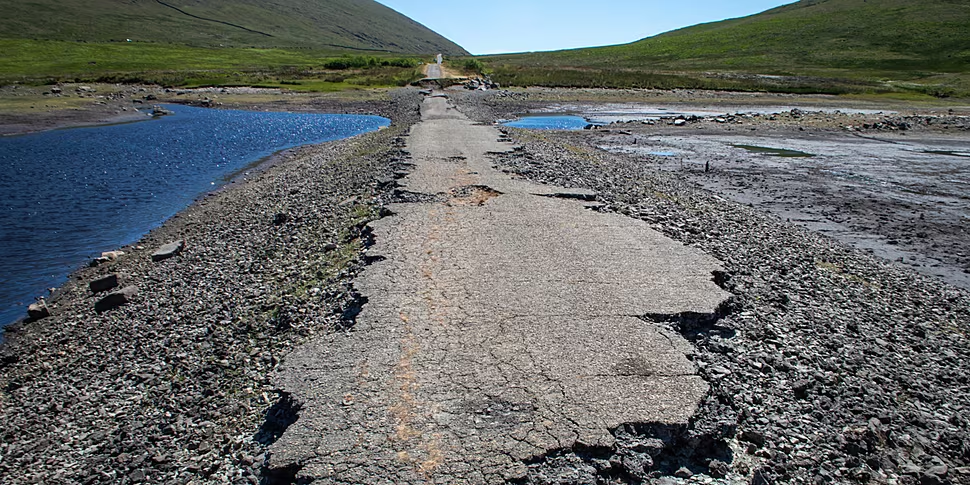
Main image: An old road emerges in a reservoir reduced by drought. Picture by: Alamy.com.


