




Climate change is reshaping Ireland’s wildlife, bringing migratory species like hooper swans to local rivers in unprecedented numbers, according to wildlife expert Aileen O’Donoghue on The Anton Savage Show.
“Hooper swans are coming from Iceland and Greenland,” O’Donoghue explained.
“With climate change, there’s more plant growth and it’s warmer up there, so they’re able to feed more. The numbers of hooper swans are actually increasing.”
The contrast with Ireland’s native mute swans highlights the impact of shifting climates on ecosystems.
“The mute swans have orange bills and an S-shaped neck,” O’Donoghue said.
“The hooper swans have straight necks and yellow bills with black tips. If you hear them, you know them, they sing. The mute swans? They never open their gobs.”
Beyond swans, climate change and the absence of natural predators are affecting deer populations in Ireland.
O’Donoghue noted the importance of culling and sustainable hunting: “You have to manage the herd. The numbers are too high. If you don’t, they’ll be leaping out on the road and killing everybody.”
She added that consuming deer can also benefit the environment:
“If you want to do your duty for the environment, eat deer. It’s really good meat, lovely and lean, no antibiotics.”
The discussion extended to the historical consequences of introducing non-native species.
“The gentry wanted it to look like Blighty,” O’Donoghue said of 19th-century colonial introductions to New Zealand, Australia, and even America.
“They brought over yellow hammers, foxes, and all the animals they had in Britain. Of course, it wrecked the native ecosystems. They didn’t do it on purpose - they just decided, we will have it nice like home.”
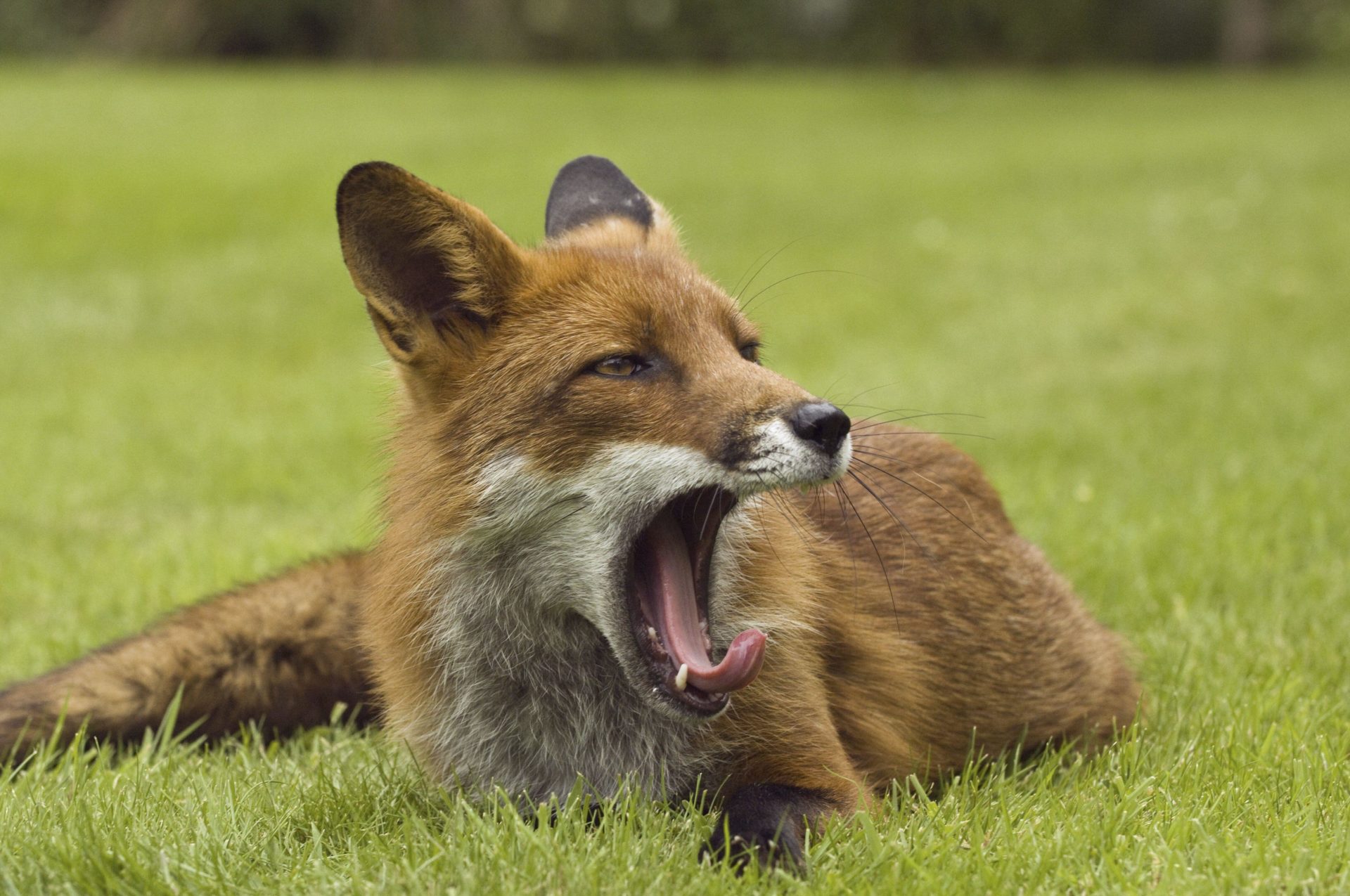 Red Fox (Vulpes vulpes), adult, yawning, resting on lawn, in garden, Ireland, Europe
O’Donoghue’s insight paints a vivid picture of how human activity, combined with climate change, is reshaping Ireland’s natural landscapes.
“Every native swan in Dublin is a legacy of Oliver St. John Gogarty donating a couple of swans to the Liffey in the early 1900s,” she said.
“But now, the wild swans, the proper ones - are the migratory hoopers, increasing because of climate change.”
Changing temperatures and altered habitats are driving wildlife patterns, with both environmental and practical consequences for urban and rural communities alike.


