




The HPAT for medical students is a “performance of cruelty” and should be scrapped, a consultant psychiatrist and associate clinical professor has argued.
The Health Professions Admission Test is an examination used to help universities select students who apply to study medicine.
It lasts for 2.5 hours and tests applicants on logical reasoning, problem solving, interpersonal understanding and non-verbal reasoning.
On Newstalk Breakfast, Dr Matthew Sadlier said he does not believe that some of the skills assessed in the HPAT are needed in a medical career, noting that some doctors have no need of interpersonal understanding - or ‘bedside manner’ - as they never deal with patients.
“The problem with a medical career is that's a very vast and diverse career,” he explained.
“About 15 to 20% of doctors don't meet patients any day at all - they do pathology or they work in laboratories or they work in drug companies or industry.
“So, it's a degree that leads to a diverse set of careers.”
Dr Sadlier added that he also doubts very much that a person’s bedside can be accurately assessed in an HPAT exam.
“I've been campaigning against the HPAT since it was first introduced,” he said.
“Number one, can you even test those skills on an examination where you're sitting in a room for three hours is the first thing, writing down answers on a piece of paper?”
Dr Sadlier also hit out at what he called the “performance of cruelty” required by the HPAT, which he believes unfairly distracts students from their studies.
“A certain amount of their time preparing for their Leaving Cert is taken up in the February on the run up at the time they're doing their mocks, at the critical time of preparing for the examinations,” he said.
“They get distracted by the second examination, which will probably have an effect on their result in their Leaving Cert.
“And given that only about 20% of the people who do the HPAT will actually end up doing medicine, what we're doing is harming these young people's chances of getting the second choice career that they want.”
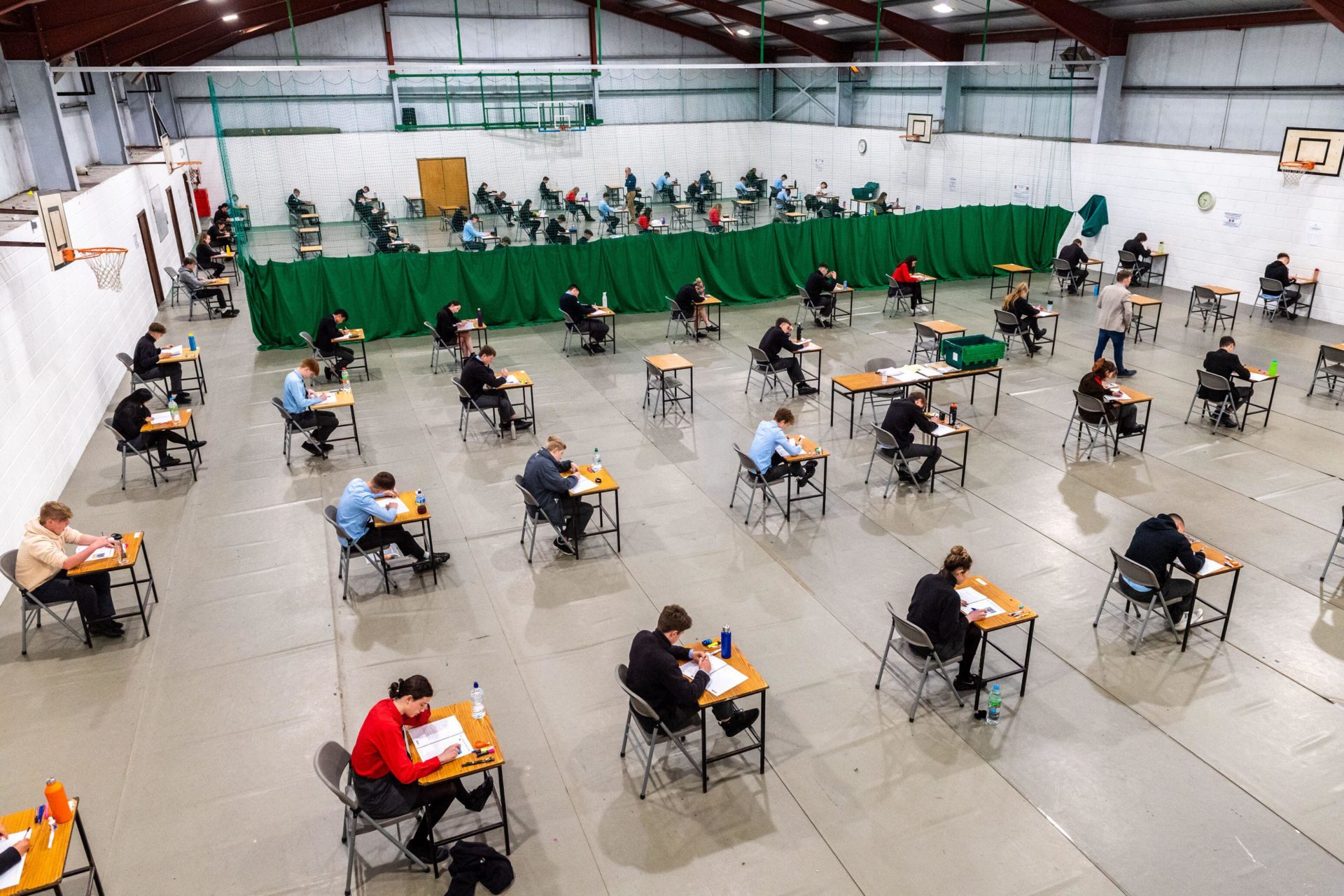 Students sitting their Leaving Cert exams. Picture by: AG News / Alamy Stock Photo.
 Instead, Dr Sadlier proposed that people could be given extra points in subjects relevant to the course they hope to pursue at university.
“Maybe for university selection, if you're going to do a science course like medicine, you get a couple of extra points for chemistry and physics,” he suggested.
“If you're going to do arts, you get a couple of extra points for languages.
“And if you're going to do some other subjects, you get a few extra points depending on the subject choices you do, if you want to do self-selection.”
Main image: A student sitting an exam. Picture by: AG News/Alamy Live News.


