



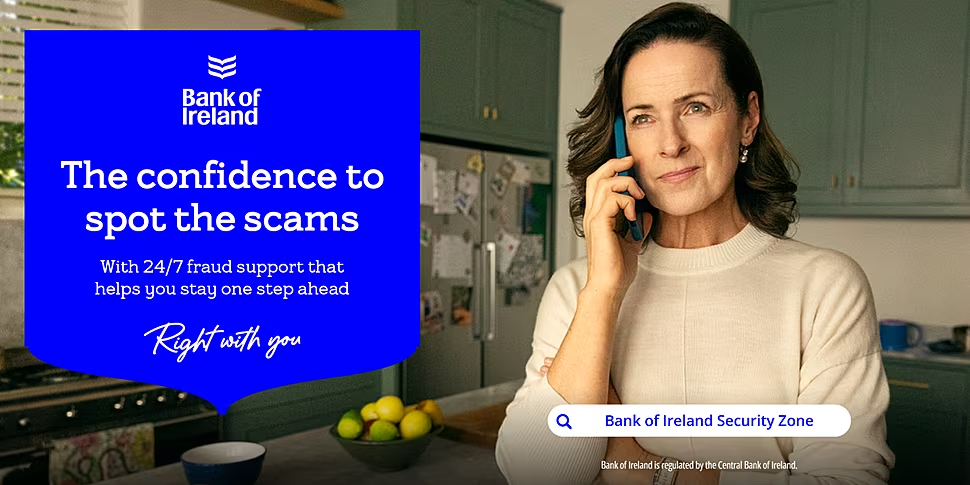

As fraud continues to evolve, both online and in person, Bank of Ireland is working to teach consumers how to spot scams, challenge suspicious activity and take action.
Bank of Ireland research shows that seven in ten people in Ireland are confident in their ability to spot an online scam – but with fraud continuing to cause significant losses across the country, developing the confidence to challenge suspicious activity is more important than ever.
Confidence to Spot the Scams
As Fraud Awareness Week approaches, Bank of Ireland is launching its latest fraud awareness campaign, aimed at helping consumers recognise the warning signs of fraud and feel confident enough to take action.
Every day across Ireland, fraudsters continue to exploit normal human behaviours, such as trust and emotion, as well as the demands of everyday life.
While many people believe they can identify fraud, they do not always take proactive steps to verify information independently.
The Confidence to Spot the Scams campaign aims to give people the confidence to question suspicious activity and take action when something doesn't feel right.
WIN an 11-inch Apple iPad Air worth €1,000
We’re marking Bank of Ireland’s new fraud awareness campaign by giving you the chance to WIN an X worth €1,000.
To be in with a chance to win, simply fill out the form below.
From fake investment opportunities and online shopping scams to fraudulent phone calls and messages, criminals are using a wide range of tactics to target consumers and businesses.
Bank of Ireland is highlighting six types of fraud that people should be particularly aware of.
Investment and recovery scams: Fraudsters promote fake investment opportunities or impersonate legitimate firms. They may also target previous victims, offering to recover lost money for a fee.
Invoice redirection fraud: Criminals intercept genuine correspondence or impersonate businesses to redirect payments into fraudulent bank accounts.
Romance scams: Fraudsters build relationships and gain people's trust over time before manipulating them into sending money.
Purchase scams: Fake retailers and fraudulent online listings trick consumers into paying for products or services that never arrive.
Smishing and vishing: Fraudsters impersonate trusted organisations through text messages or phone calls to obtain sensitive information or persuade people to transfer money.
CEO fraud: Criminals impersonate senior business leaders to pressure employees into making urgent payments or purchasing vouchers.
Stop, Think, Check
While modern fraudsters have many ways to attack, Bank of Ireland says you can rely on a basic set of principles to defend yourself and your family.
Before clicking a link, responding to a message, sharing personal information or making a payment, the bank is encouraging people to follow three simple steps:
Stop: Take a moment and don't rush when receiving an urgent, unexpected, or high-pressure message, call, or email.
Think: Remember that fraud can take many forms. Question the request and remember, Bank of Ireland will never ask for your full banking login details, PIN, passwords, or security codes.
Check: Verify information independently using official channels.
These simple habits can help consumers recognise suspicious activity, challenge unusual requests and make more informed financial decisions.
Tools, guidance and support
Bank of Ireland offers consumers a range of services designed to help people identify potential fraud and protect their finances.
These include its dedicated Security Zone, which offers information and guidance on recognising scams, and its TextChecker service, which helps check suspicious text messages.
The bank also offers Spend Alerts, Verification of Payee and Card Freeze functionality, alongside access to its 24/7 Fraud Team.
For Bank of Ireland, confidence means feeling comfortable challenging unusual requests – because recognising scams and knowing what action to take can help you feel more in control of your finances and more confident in your decisions.
Find out more about protecting yourself from fraud through Bank of Ireland's Security Zone.
Bank of Ireland is regulated by the Central Bank of Ireland.


