




We are now dealing with a global “epidemic” of online scams, according to one of Ireland’s leading experts in cyberpsychology.
On The Pat Kenny Show, Professor Mary Aiken, Chair of the Department of Cyberpsychology at Capitol Technology University in Washington DC said a recent study found that more than half of adults around the world have encountered a scam in the past year – and almost one-quarter lost money as a result.
Prof Aiken joined Pat as part of International Fraud Awareness Week to help people avoid scams in the run-up to the busiest shopping season of the year.
“The point is that when we get to a point where more than half the world has encountered a scam in the last year, that's not a trend, that's an epidemic,” said Prof Aiken.
She said many online scams have become much more persuasive in recent years – with many scams now making use of Artificial Intelligence.
“The difference now is the use of what's called ‘Dark AI,’” she said. “Effectively organised crime groups using AI to facilitate scams.”
Prof Aiken highlighted two scams people should be particularly aware of in the run-up to Christmas, when about a third of people shop online.
The first is the ‘purchase scam’, where fraudsters use AI to create fake websites, ads, and social media profiles that mimic real brands.
The second is investment scams, which she described as “even more sinister” because they often use deepfakes, synthetic media, and fake celebrity or expert endorsements that “look extremely plausible.”
View this post on Instagram
Prof Aiken said the only way to protect yourself from an online scam is to “do your homework” and be “very discerning”.
“You can do all sorts of things like look at the URL, look for discrepancies in the website, look where something feels a little off,” she said.
“You've got to think like a profiler. You've got to get in and forensically examine.
“If you want to shop online and you want a carefree shopping experience, then you've got to always verify what you're dealing with.”
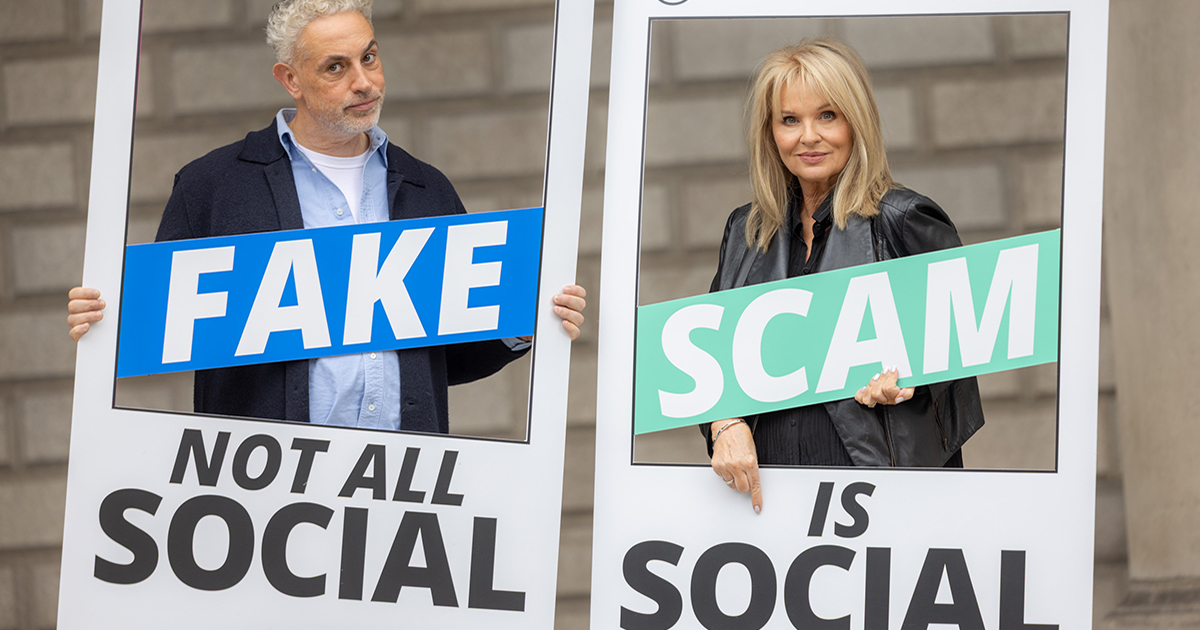 Pictured at the launch of the public awareness campaign are Baz Ashmawy, Bank of Ireland’s Financial Wellbeing Ambassador and Prof. Mary Aiken, International Cyberpsychologist. Image: Bank of Ireland.
Dr Aiken said the best way to protect yourself is to follow the ‘trust paradox’ – which essentially means you have ‘zero trust’ when buying online and ensure you always verify the site you are buying from.
“If you cannot verify that this is a genuine retailer or a genuine item, then you should not use your credit card,” she said.
“If you're hesitating, that's your intuition trying to save you. So, pay attention to the small things. If you feel it's not quite right, then stop.”
Prof Aiken also urged people to make use of security features like spend alerts to monitor all transactions on their cards and be ready to act if anything looks suspicious.
She warned that you should never share your full banking details like your banking pin, passcode, or any one-time activation codes with anyone.
Christmas shopping
Bank of Ireland research shows that nearly half the Irish population now shops online throughout the year, and although interest in Black Friday and Cyber Monday is not what it once was, just over one-third of people plan to spend online in the run-up to Christmas.
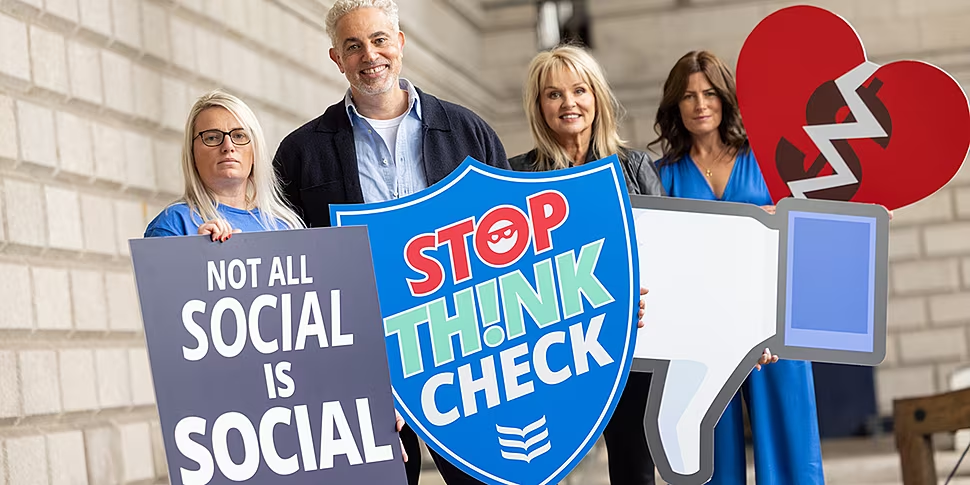
The bank’s fraud prevention campaign is built around three simple steps – Stop, Think, Check.
Before you buy online, Bank of Ireland is reminding consumers to:
- Stop: Shop only with reputable retailers.
- Think: Never be rushed into buying, even if it looks like a bargain – remember, if it seems too good to be true, it probably is.
- Check: Research unfamiliar websites and read trusted independent reviews.
When buying online, always try to use a debit or credit card for added protection, such as chargeback claims.
The bank is encouraging everyone to switch on enhanced card security features like Spend Alerts that ensure you get notifications for every payment on your card(s).
Meanwhile, with three-in-four people who use social media saying they are wary of the risk of fraud when shopping online, you can always freeze your card instantly in the Bank of Ireland app if you think it has been compromised – giving you the time you need to call the Bank of Ireland 24/7 Fraud Team on 1800 946 764.
Epidemic
Bank of Ireland’s research shows that Irish people believe social media fraud is now at epidemic levels, and is now the largest single channel for fraud scams in the country.
Nearly 80% of people use social media every day, with the average person spending between one and two hours on social platforms daily.
With so much interaction online, consumers are inevitably more exposed to scams.
Some 15% of people say they have fallen for a social media scam, but the majority of people say they were able to detect that it was fraudulent through a combination of instinct and research.
Some of the reasons people said they were able to detect it as a scam included:
- Something about the ad didn't look quite right 62%
- The offer was too good to be true 47%
- I researched the profile to see if it was real 44%
- I'd already heard about these fakes in the news / from family / friends 35%
- I investigated it on independent reviews 25%
- I fell for the scam and lost my money 8%
- I fell for the scam, but didn't lose any money 7%
Nine in ten people believe social media companies should not be able to profit from fraudsters placing ads on their platforms, and the same proportion believe companies that advertise financial services on social media platforms should have to prove that the ads are genuine and the company is registered with the Central Bank of Ireland.
All of this underlines why Bank of Ireland is urging everyone to Stop, Think, Check before they act online.
By taking a few simple precautions, shoppers can stay one step ahead and ensure we don’t let the fraudsters win.
Bank of Ireland is regulated by the Central Bank of Ireland.


