



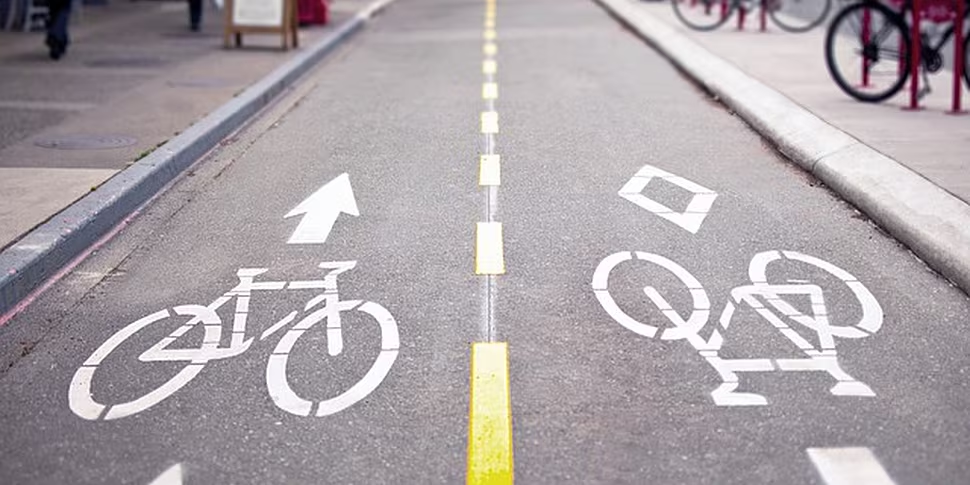
As the next phase of Dublin’s traffic plan is rolled out this year, wider cycle lanes and the pedestrianisation of College Green will reduce road space for cars.
This raises questions about congestion and mobility in the city.
Discussing the changes on The Hard Shoulder, Trinity College Dublin Professor of Transportation Brian Caulfield said the focus is long overdue:
“This phase of the plan is focusing on cycle lanes, and the much long-awaited pedestrianisation of College Green.”
While acknowledging that traffic disruption often sparks backlash, Caulfield said evidence shows these measures work once implemented.
“When the plans get implemented, it works. The plan is working, but any change is difficult to do.”
Addressing concerns from motorists, Caulfield pointed to travel patterns in the capital.
“It’s the volume and numbers moving through our city and motorists make up a small percentage of that, the majority that traverse in our city are on a bike, a bus or walking, not driving."
“Over the past 20 years the number of cyclists in this city has doubled," he added.
He said international examples show pedestrianisation is unavoidable if congestion is to be tackled.
“There are very few cities in Europe that are ahead of us in terms of congestion that aren’t doing things like this, pedestrianising the city.”
Caulfield warned that if congestion continues to worsen, it could cost Ireland up to €1.5 billion by 2040.
“In terms of this Dublin city plan, it’s actually delivering and it’s actually working, while we wait for bus connections and the long-awaited metro.”
National Cycling Coordinator for the Irish Cycling Campaign Damien O’Tuama said reallocating road space is key to easing congestion.
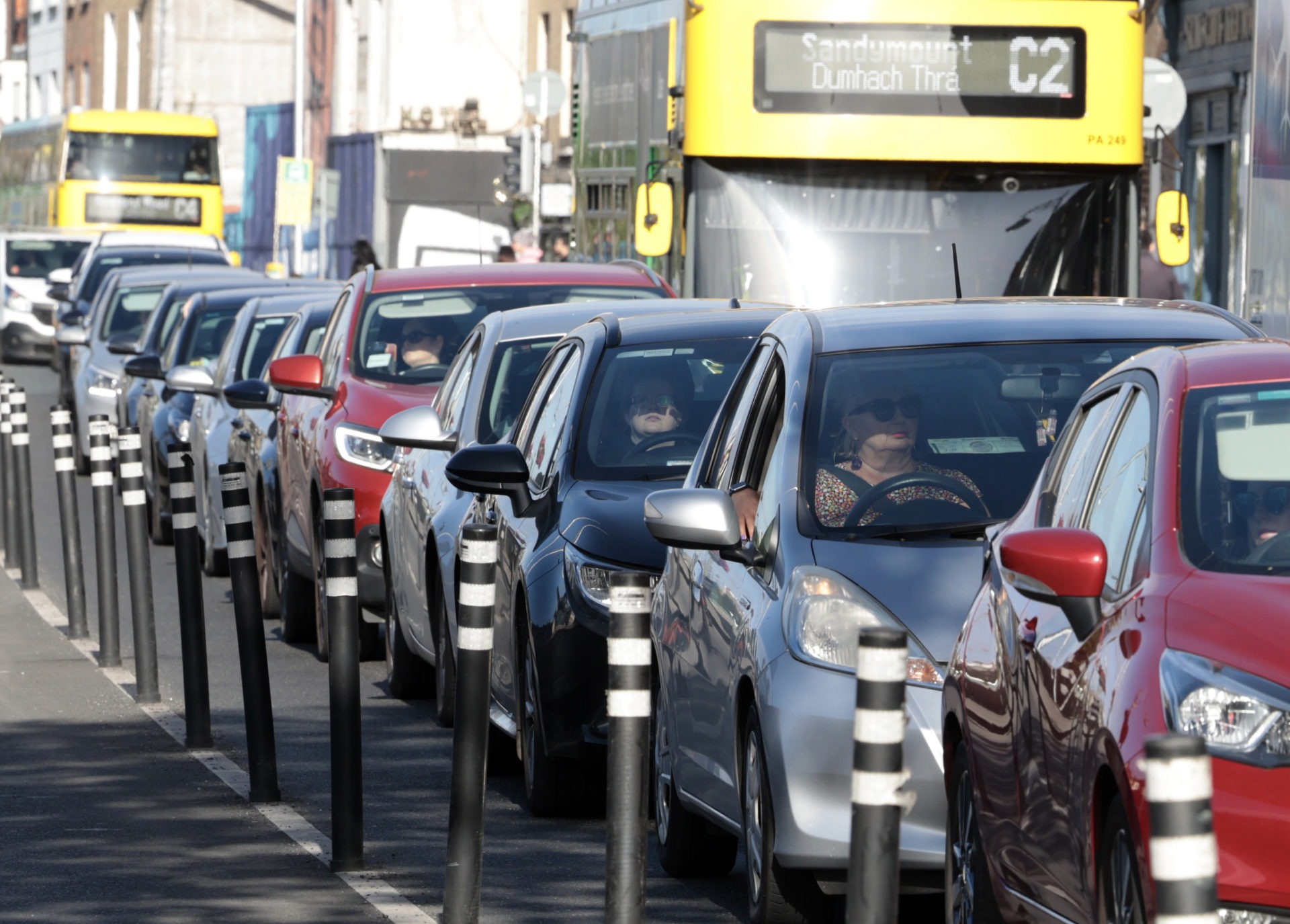 04/07/2024 Dublin Ireland. Photo: Leah Farrell/© RollingNews.ie
“If you want to relieve congestion in your town and city centres it is providing that dedicated public transport space for trams bikes for buses, and it’s the combination of those measures which really frees up towns and cities to be much more economically viable places.”
He also stressed the importance of physically separated cycle lanes.
“It definitely makes a difference, particularly for those cohorts who aren’t cycling as much at the moment.”
“Parents are definitely a lot happier allowing their children to cycle to school when there’s some sort of segregation," he added.
While Caulfield acknowledged frustration around long commute times, he said better data is needed to measure the success of cycling infrastructure.
“One of the key things that I’ve always advocated for is that we start to count the numbers of people that are using these cycle lanes and that their sensors are put in place.”
He added that major public transport projects remain essential.
“We need to do the big ticket projects - the metros and the increased number of light rail lines.”


