




The high cost of retrofitting is putting Ireland’s climate targets at risk, a report by the ESRI has warned.
The built environment accounts for 37% of Ireland’s emissions, yet the number retrofitting their properties remains low.
By the end of 2024, 57,932 properties had undergone deep retrofits - a mere 11.5% of the Government target.
The figure for heat pump installations is even lower, with only 14,194 completed - a mere 3.5% of the target.
While those numbers are forecast to rise, the ESRI noted that “even continued acceleration leaves substantial shortfalls by 2030”.
The report noted that high costs, disruption, administration and the lack of incentives for landlords all act as barriers for higher participation.
On The Hard Shoulder, Royal Institute of Architects of Ireland spokesperson Claire McManus said she believes that cost remains the “key” reason why so few people are retrofitting their homes.
“The costs range from like €22,000 for an apartment up to €66,000 for a detached house,” she explained.
“And even though the Government is subsidising those costs, the majority are borne by the homeowner.”
The Government has promised to “deliver more B2-equivalent home retrofits each year from 2026 to 2030”.
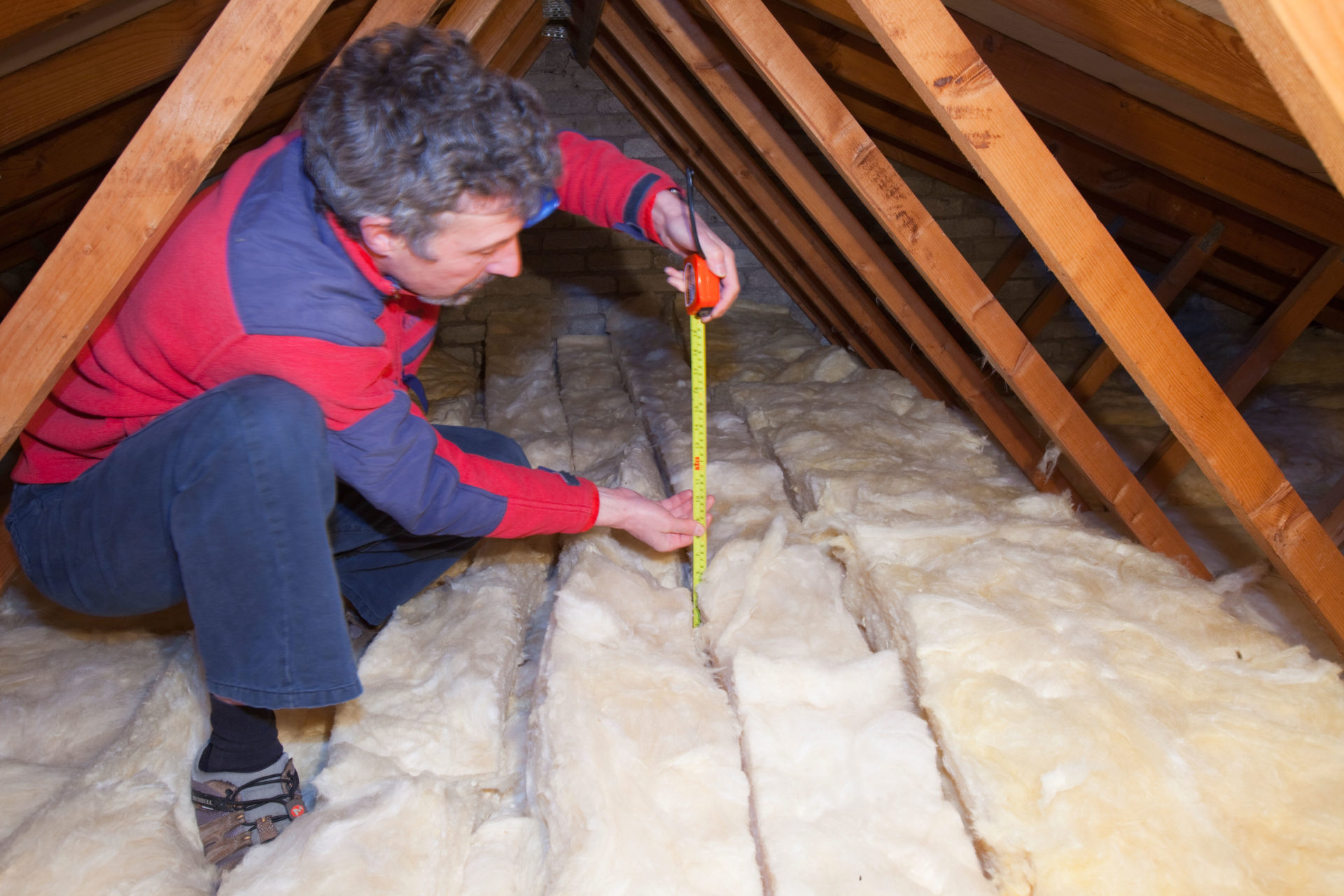 Loft insulation. Picture by: Alamy.com.
 However, Ms McManus argued that the BER rating system is “far too narrow” and often fails to reduce energy consumption.
“The people living in the home will notice a big difference - the home will be much warmer, less drafty, et cetera,” she said.
“But statistically, the A rated home uses the same energy as the G rated.
“I suppose the theories for that are to do with, maybe, people get used to living in more warmth.
“Or perhaps, people in A rated homes generally have more disposable income to spend on energy.
“So, it doesn't make you less likely to turn the heat off.”
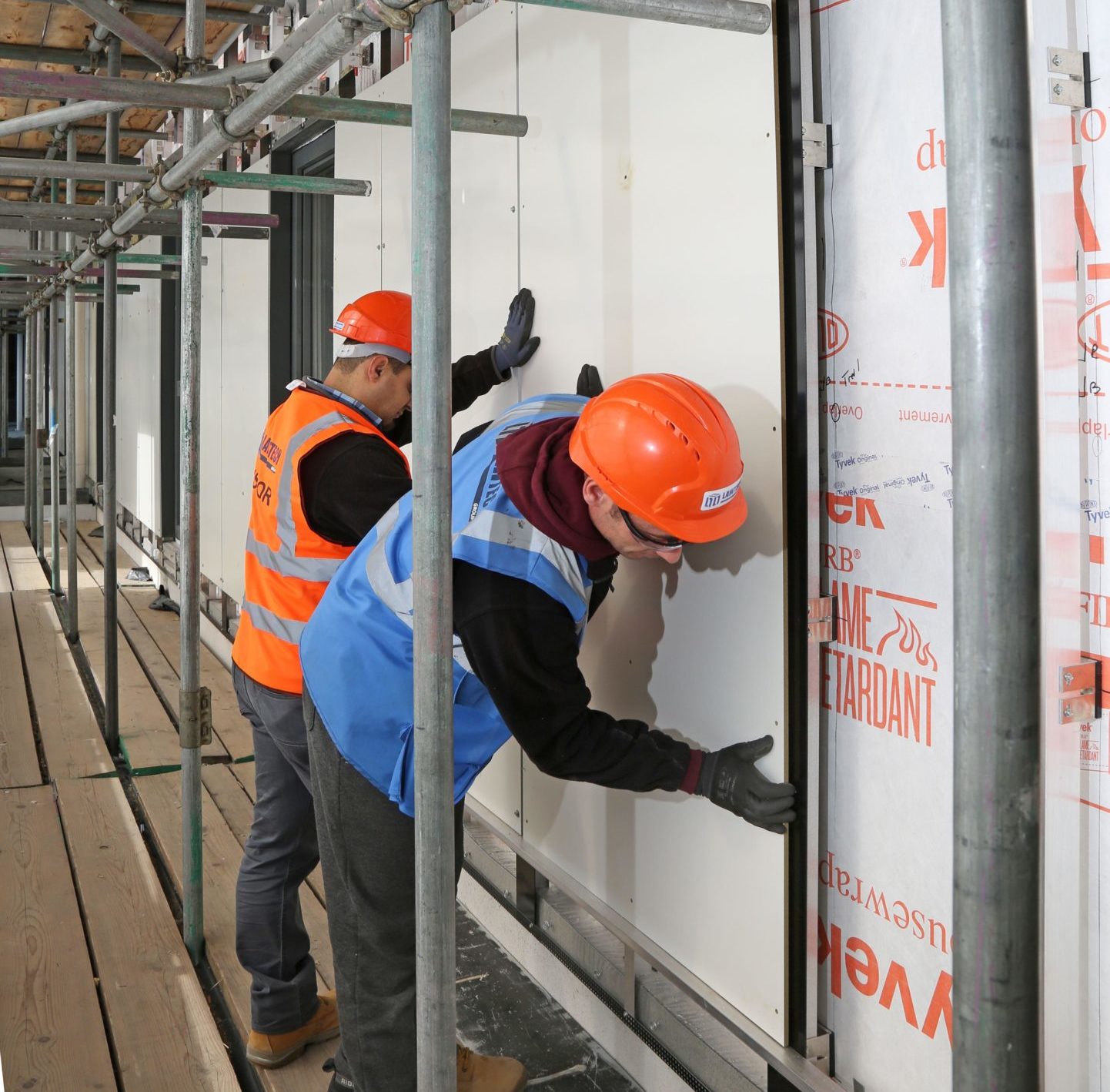 Workmen fix fire-resistant cladding panels and extra thermal insulation to an exterior wall in October 2018. Picture by: Simon Turner / Alamy Stock Photo
Ms McManus urged the Government to consider targeting financial support better at those most in need.
“I think retrofitting is still an important aspect of what needs to be done,” she said.
“Particularly where it can be done, if we could target it where the benefit is the highest - which is within our existing towns, villages, cities.
“So, I'd be in favour of maybe targeting the grants and making the grants easier for people to access, you know, providing them with some information that will, you know, perhaps remove the uncertainty of the process.
“But it is a tricky process because each home will be different.”
Earlier this year, the Government announced new grants for those installing new air tight doors and windows.
Main image: A man installing a rooftop solar panel array. Image: Radharc Images / Alamy


