



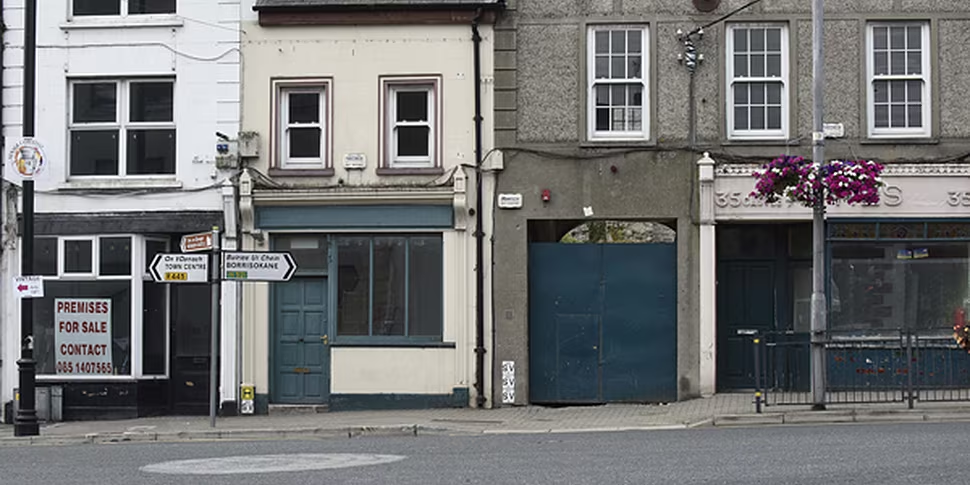
Vacant buildings in Irish town centres has drawn local attention after four retail units on George’s Street, Dún Laoghaire, remain empty.
Prolonged vacancy in this area has had calls for the government to intervene and give local councilors more authority in relation to dealing with these retail spaces in towns and communities.
Speaking on Newstalk Breakfast, town planning expert Tom Phillips, Managing Director of Tom Phillips and Associates and Adjunct Associate Professor of Town Planning at UCD, explained that vacancy, even without physical decay, can have a significant negative impact on town centres.
He touched on the difference between buildings being vacant and derelict:
“Vacancy is when a building is out of use, and it is obsolete when it has been out of use for more than three years.”
However, a derelict house is a property that has been abandoned or neglected, often falling into disrepair.
According to Phillips, large vacant retail units have a psychological effect.
“A few large empty buildings can outweigh dozens of occupied smaller ones in the public mind.”
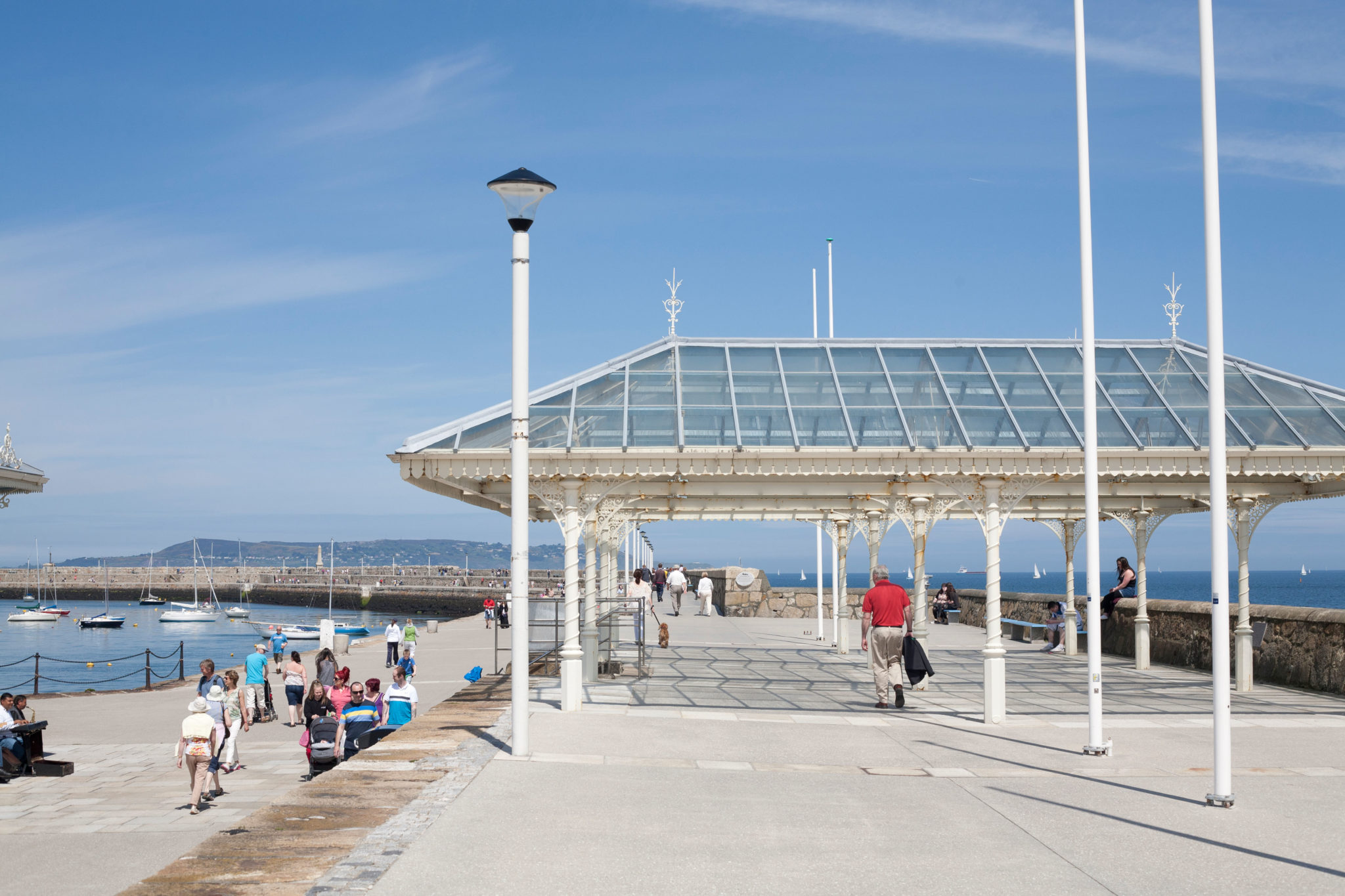 Dun Laoghaire Pier in Dublin, 2013. Image: Doreen Kennedy / Alamy Stock Photo
The Dún Laoghaire - Rathdown County Council has now formally called on the government to give councils greater authority to tackle long-term vacancy, aligning with the broader Town Centre First policy, which aims to revitalise urban areas and prioritise them for development.
However, existing legalities limit what councils can actually do when a building is vacant but still structurally sound.
Phillips pointed to the UK as an example of alternative approaches.
There, local authorities can use “rental auctions” for properties that have been vacant for more than two years.
Under this system, councils can auction the right to occupy a building for a limited time, typically one to five years, bringing activity back into the area without permanently undermining ownership rights.
“It’s not confiscation,” Phillips explained.
“It’s a financial stick and an inducement. The building comes back into use, footfall returns, and the town benefits.”
The discussion also reflected on wider challenges facing local authorities, including delays in re-letting social housing.
Phillips highlighted how long gaps between tenants, estimated at around 20 weeks in some cases, can allow properties to deteriorate or be taken over unlawfully, as seen in recent reports of council houses being used as stables.
“If a building moves too slowly from vacancy to reuse, it becomes vulnerable,” he said.
“We have hundreds of pages of planning legislation. What’s missing is speed, coordination, and the ability to intervene early," he added.


