




Physical infrastructure for contactless public transport payments in Dublin will begin to appear next year, the National Transport Authority has announced.
There had been speculation Dubliners would be waiting until 2029 to get contactless public transport payments; however, it is now expected the system could be up and running by 2028.
On Newstalk Breakfast, Trinity Professor of Engineering Brian Caulfield predicted that it is “going to take a long time”.
“It seems like a lot of the public transport systems right across the world are definitely ahead of us on this,” he said.
“It's about 750 cities that have this contactless payment… So, it's catching up, basically.”
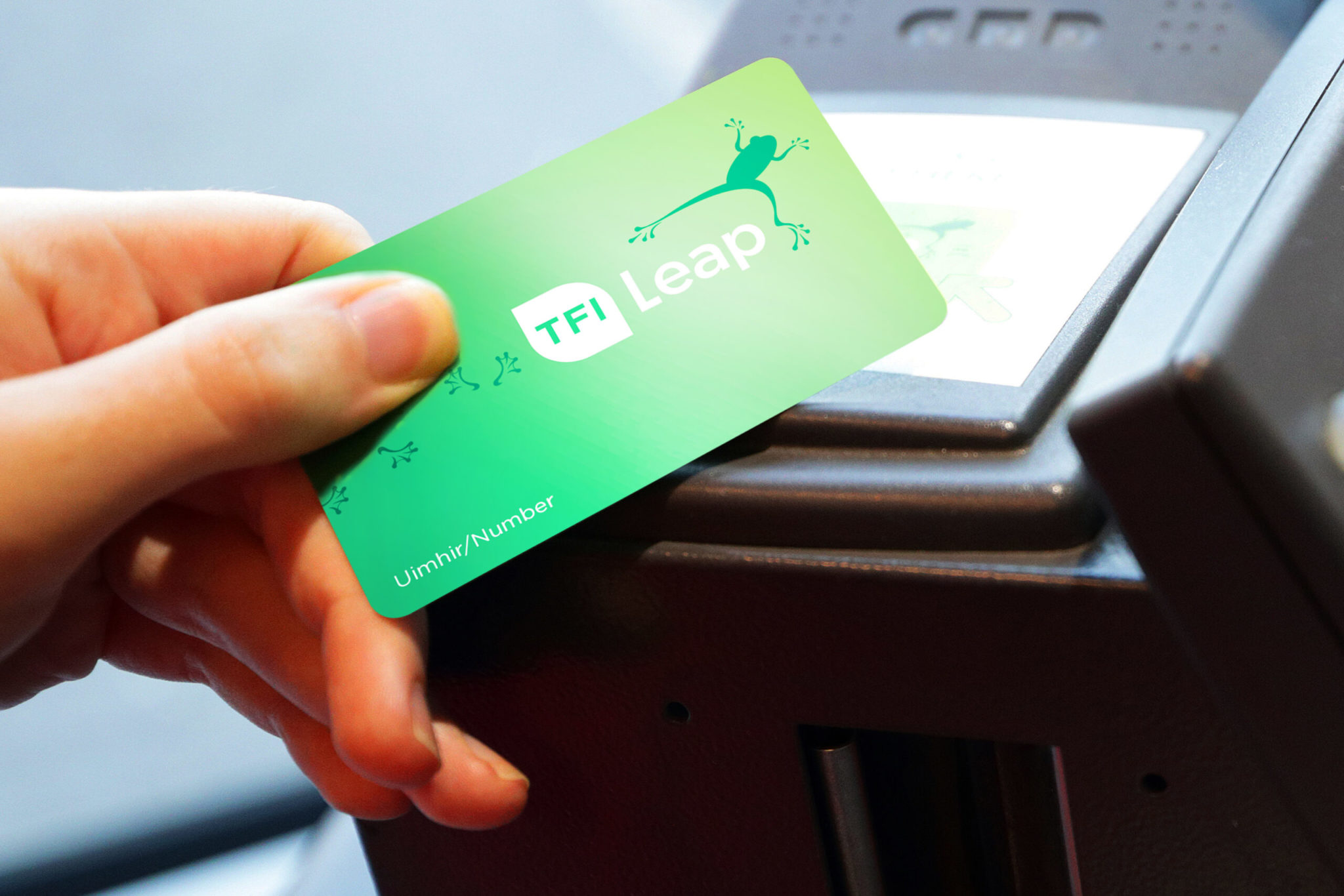 A Leap Card being held against a validator. Picture by: Leapcard.ie
Professor Caulfield added that while the Leap Card was launched in 2011, it was only the following year that London buses began taking contactless payments.
“It took us at least, I think, 10 years for us to get the Leap Card up and off the ground - but it's there,” he said.
“It has, you know, the benefits of that have been accrued and they've been great.
“But yes, pretty much straight away, it felt like it was obsolete - especially when you saw cities like London bringing this, rolling this out, right across their bus network.”
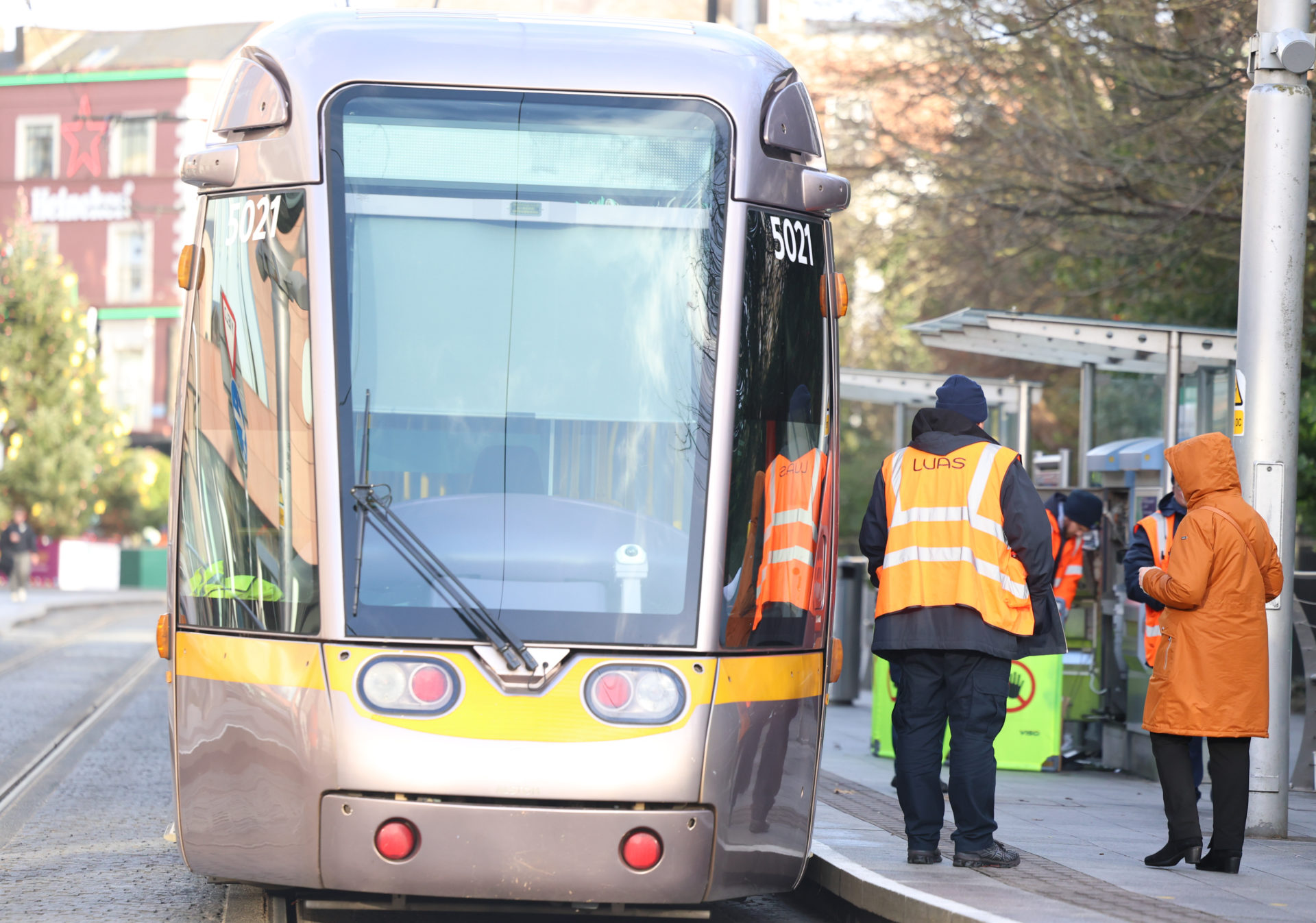 A Luas at Stephen's Green today.Picture by: Leah Farrell / © RollingNews.ie.
Construction work on MetroLink is due to begin this year - decades after the project was first considered during the Celtic Tiger.
Overall, Professor Caulfield said the delivery of transport projects remains “painfully slow”.
“I think what we need to do is have a plan,” he said.
“We seem to have that plan now for the Greater Dublin Area, but we need to stick to it.
“We need to, if we're saying we're going to deliver a direct project or a rail project, that we stick to it.
“There's no doubt that the planning process is painfully slow - and we've seen that with Metro, we've seen that with Luas Finglas.
“All of these projects are painfully slow; we need to expedite these because we know public transport is a great enabler to open up housing, to open up our cities.”


