




It is “not clear” how the Government will pay for all of its tax cuts in this autumn’s budget, an economist has warned.
According to the Sunday Business Post, the Government hopes to increase the figure at which people start paying 40% on their income from €44,000 to €46,000.
On Newstalk Breakfast, economist Barra Roantree of Trinity College said it means higher earners will pay a “a little bit less tax” next year.
“When your wages increase - just through either inflation or through getting a kind of a proper pay rise - you pay more of your kind of income essentially goes into the higher brackets and you end up paying higher tax,” he explained.
“So, the Government, unless it changes these, is in effect imposing a kind of a stealth tax, it's increasing effective tax rates.
“It's not really a big tax cut, it's really just keeping pace with expected kind of inflation, with expected earnings growth for next year.
“So, really it's kind of more or less just running to standstill.”
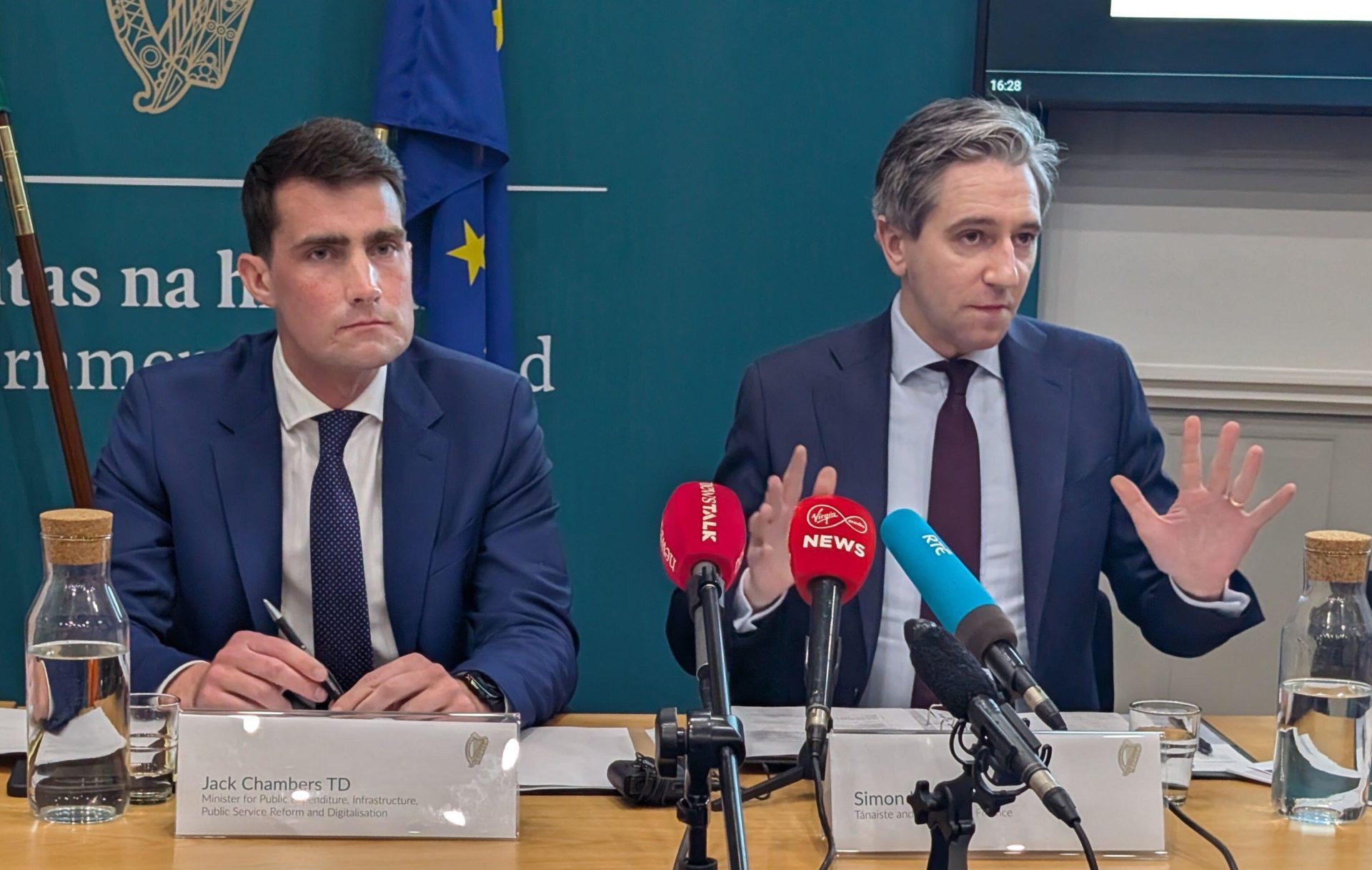 Public Expenditure Minister Jack Chambers and Finance Minister Simon Harris. Picture by: Alamy.com.
 However, Professor Roantree noted that such a move would be “expensive to do”, due to the significant number of people it would impact.
“There's usually a small bit of their earnings and this is one of the reasonable criticisms of the Irish tax system is that higher rate of tax kicks in at a relatively low level of earnings, not much more than kind of average earnings,” he said.
“So, if you compare ourselves to other EU countries or other kind of advanced economies, if you're on kind of average earnings, you can pay less tax than elsewhere.
“But if you're on a little bit above average earnings or kind of twice average earnings, you pay more once you factor in all the different taxes.”
If the Government were to increase the threshold at which people pay 40% tax from €44,000 to €46,000, it would cost the exchequer roughly €1.2 billion.
However, Tánaiste Simon Harris has previously said the Government has only allocated €1.5 billion for tax cuts in the next budget.
“If the Government want to increase the point at which the higher rate threshold kicks in, if they want to do these tax cuts that we're talking about, they really don't have scope for anything more,” Professor Roantree said.
“And again, you've also got to pay for some of the [hospitality] VAT cut last year because they only put in the books essentially half the cost because they brought it in halfway through the year.
“So, it's not clear that they necessarily have all the scope to do that and other things that they are probably going to do or have said they're going to do and keep with their fiscal commitments, which were only set out last month.”
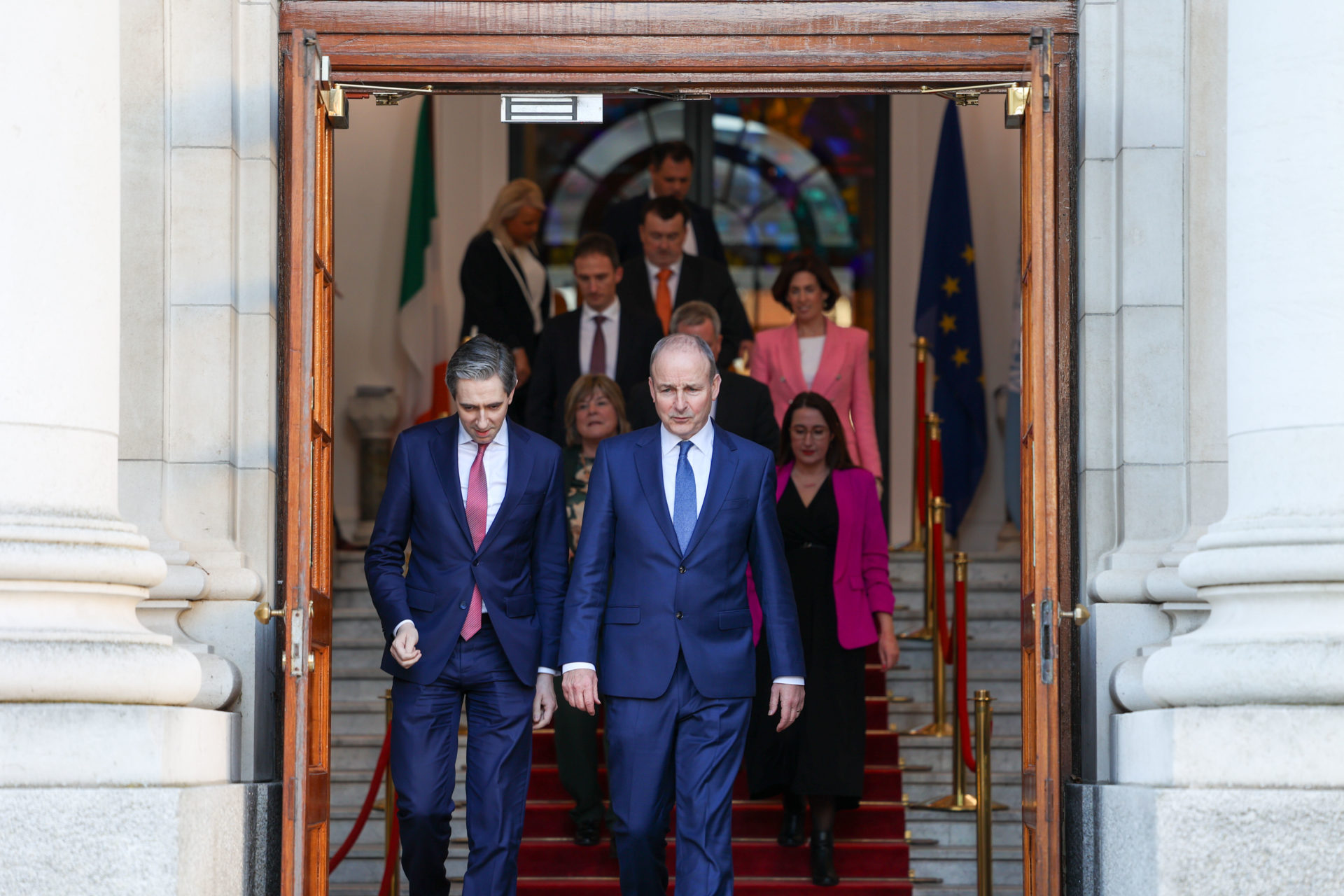 Taoiseach Micheál Martin and Tánaiste Simon Harris. Picture by: Government Information Service.
 It means that despite the buoyant levels of corporation tax receipts, Professor Roantree predicted the next budget would still be “difficult”.
“Increasingly, what sounds like large amounts of money being spent on both public services increase and also on tax cuts is really just the system adjusting for either inflation, kind of the earnings growth, or also just our changing population in terms of us getting older,” he added.
“It costs more to deliver services, there's more people, particularly of the ages where the government spends a lot of money.
“So, budget time we're going to hear lots of billions and billions thrown around.”
Main image: A €50 bank note. Picture by: RollingNews.ie.


