



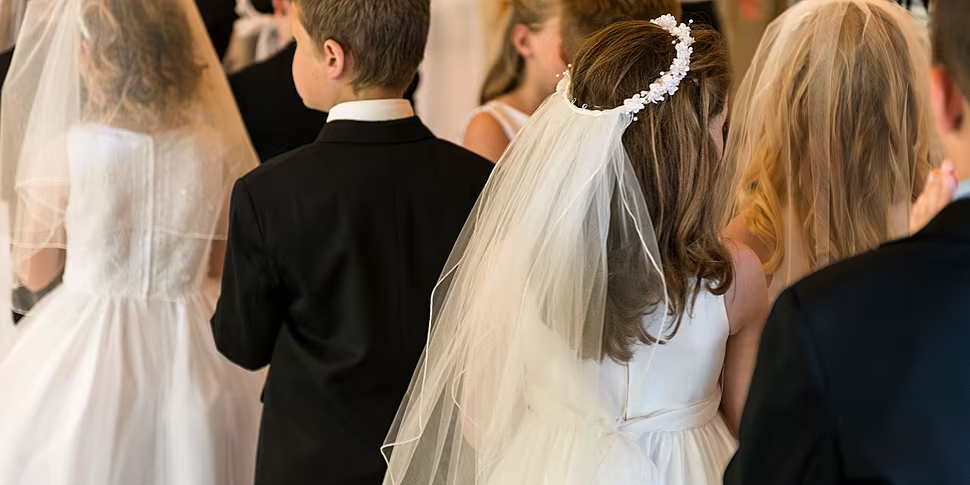
More and more parents are opting for non-religious “milestone” or “Age of Reason” ceremonies for their kids.
Secular milestone ceremonies to celebrate important moments in children's lives outside of religion are on the rise.
Approximately 40 ceremonies like this existed in 2024 and 45 were held in 2025, signalling a steady increase.
Humanist celebrant Niamh Davis said the milestone ceremony she is having for her daughter "is a transition into a new stage of awareness and understanding”.
Speaking to Anton Savage on Newstalk Breakfast she said they decided to have such a ceremony because their daughter was getting jealous of her classmates upcoming communions.
“We developed a ceremony for her”, she told Newstalk.
“She was definitely getting jealous, especially with all the talk of the dresses.
“Between the ages of seven and nine, it's a stage that's called an age of reason. That's when children start to better understand right and wrong consequences and how their choices affect others.
“So this is a celebration of that development”.
Ms Davis said she’d conducted a number of ceremonies, for groups of children as well as individual families and each was entirely different.
How secular milestone cermonies take place
“We can do little rituals like tree plantings. I know I know I've created time capsules. For the children to open when they're 18 or 16”, she said.
“Sometimes if a family member gives a dress that they've worn, sometimes the kids will wear a white dress. A lot of the time, it's just a nice dress, you know, and a nice outfit.
“It's a gathering of all the family, friends, and the community together, you know.
And the kids often do a little performance or they write something for it.

She said the secular milestone ceremonies end when the parents take vows or the guide, guide parents or godparents take vows and the community take vows to support the child in this transition that they're making.
Contrary to holy communications these ceremonies aim to “focus much more on the child's and the child's qualities.”
“We also allow ourselves a time of reflection, you know, for not just the child, but for everyone that goes there.
“We're acknowledging how far the child has come and the person that they're becoming. I don't think we do that necessarily on birthdays as much.”
Main Image: Communion.


