


Are psychedelics a 'magic medicine'?
That’s how one user of magic mushrooms has described her experience of microdosing.
Magic mushrooms are illegal in Ireland and the HSE warns that people who use them risk triggering a psychotic episode.
However, there are some who believe that psilocybin, the term scientists use for magic mushrooms, can be used to treat certain mental health conditions.
On Newstalk Daily, writer Suzanne Harrington said that she believes this revival of interest in psychedelic medicine has ‘evidence driving it’.
“It’s been shown repeatedly in trials from Canada to Australia to the UK that it’s actually effective with helping treatment resistant depression, PTSD, anorexia, anxiety, addiction, pain management," she explained.
“In Australia in 2023, the psychedelic medicine was legalised and it was driven by pressure from the families of first responders… who had a super high suicide rate from trauma and PTSD.
“It was shown that the psychedelic medicine was helping to alleviate that.”
Ms Harrington continued that she sincerely believes that psychedelic medicine is “magic” and recalled her own experience of microdosing magic mushrooms.
“I did it for a couple of months and I do think it had an impact on problem solving, productivity and mood,” she recalled.
“But that’s just anecdotal to me.”
Ms Harrington added that while it was not a “mind blowing experience”, she does believe the impact was “small and subtle but positive”.
A lack of evidence
Also on the programme, Professor Brendan Kelly of Trinity College said people who report positive experiences of using psychedelic medicine should be treated with a healthy dose of scepticism.
“The research to date, the outcomes in the research, do not support licensing these medications for systemic use,” he said.
“Many regulatory authorities around the world have considered this and many have rejected them outright or provided very, very limited named psychiatrist-named patient licences.
“Which basically indicates a lack of systematic evidence.”
Professor Kelly added that the people who are happy to answer the phone to journalists and talk about their experiences of using magic mushrooms are likely to have had a positive experience.
Those who had a negative experience are less likely to want to talk about what happened to them.
“We tend not to hear the stories of people who did not get on well, who suffered harms,” he said.
“But I do see people who suffered harms as a result of using these substances.
“So, the current position is that the evidence to support systematic benefits falls considerably short of what is needed for a responsible licensing authority to licence these for more widespread use.
“The closest anything comes at the moment is psilocybin, for treatment resistance depression as part of a programme for psychotherapy.
“While the evidence there is positive and I’m confident that there will be a use for it in due course, the evidence base is not sufficient to say that it’s effective enough and safe enough for general licensing for treatment resistant depression.”
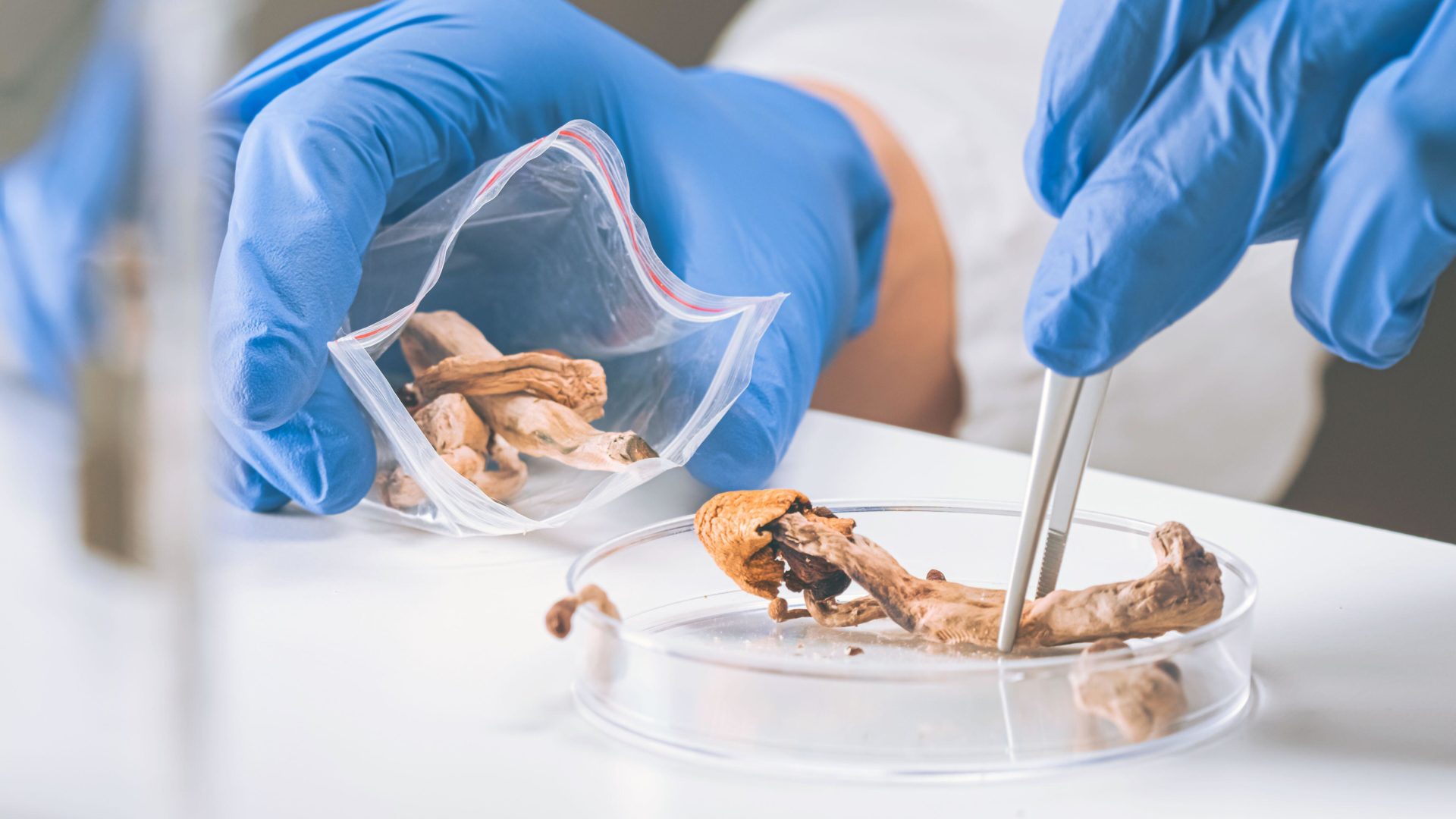 Magic mushrooms in laboratory. Picture by: gre jak / Alamy Stock.
Research into the use of psilocybin is currently underway at Trinity College, Dublin.
While Professor Kelly predicted it would “produce benefits into the future”, he warned that most regulatory regimes believe that the science is “simply not quite there yet”.
“We saw Australia - but not other countries - give a limited licence for post-traumatic stress disorder treatments using psychedelics," he said.
“But again, these are very limited, specific licences in relation to specific countries.
“So, I do think licensing authorities do need to be flexible on these matters.
“I don’t think a one size fits all approach works but the systematic evidence base at this time is not to support licensing these for general use.”
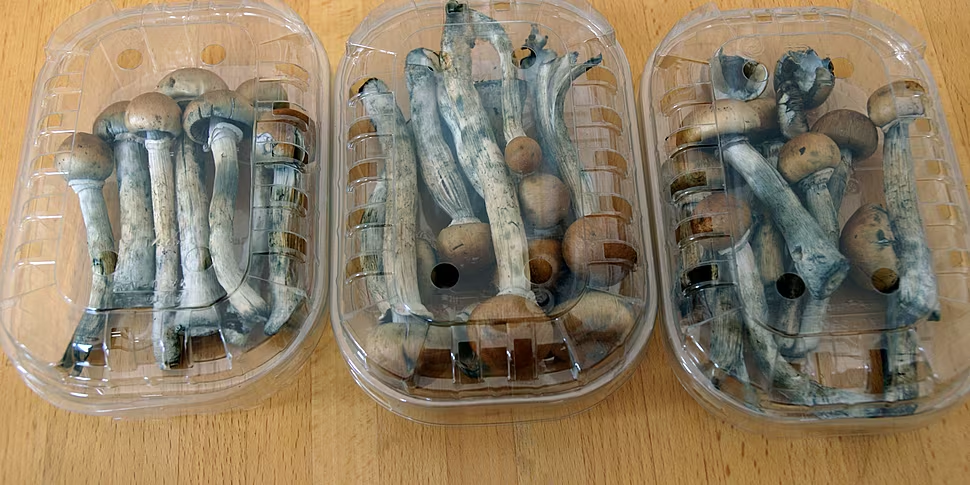
Main image: Magic mushrooms. Picture by: Alamy.com.


