



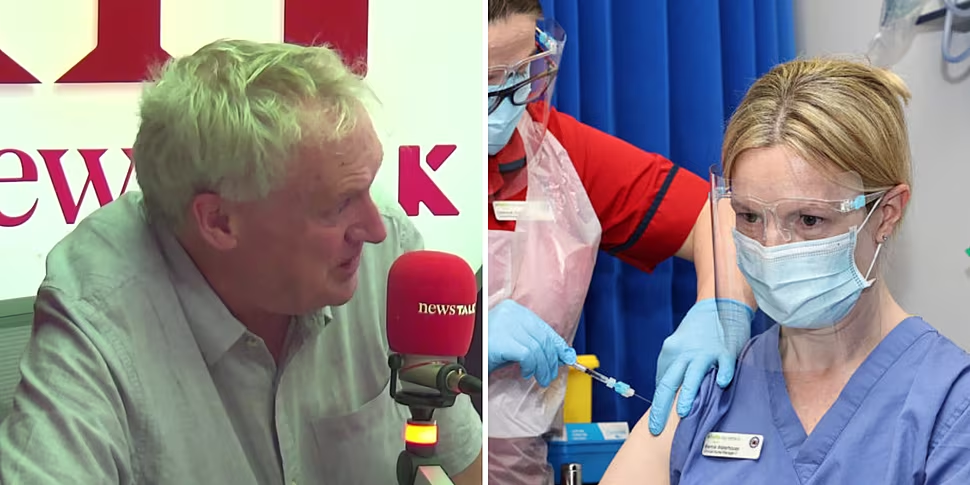
New research has found that positive thinking makes vaccines more effective, Luke O’Neill has said.
For the study, whose findings were published in Nature Medicine, participants took part in four sessions that aimed to boost activity in the ventral tegmental area (VTA) - namely, the brain’s reward system.
Scientists asked them to do this by focusing on happy times and then vaccinated them against hepatitis B.
On The Pat Kenny Show, Professor Luke O’Neill said he was very surprised when he first heard about the study.
“If you think positively, vaccines work better and it's the most unlikely kind of thing,” he said.
“But the data really stacks up that just positive thoughts kind of boost your immune system.
“So, this may be a new way to enhance vaccine efficacy, is the idea.”
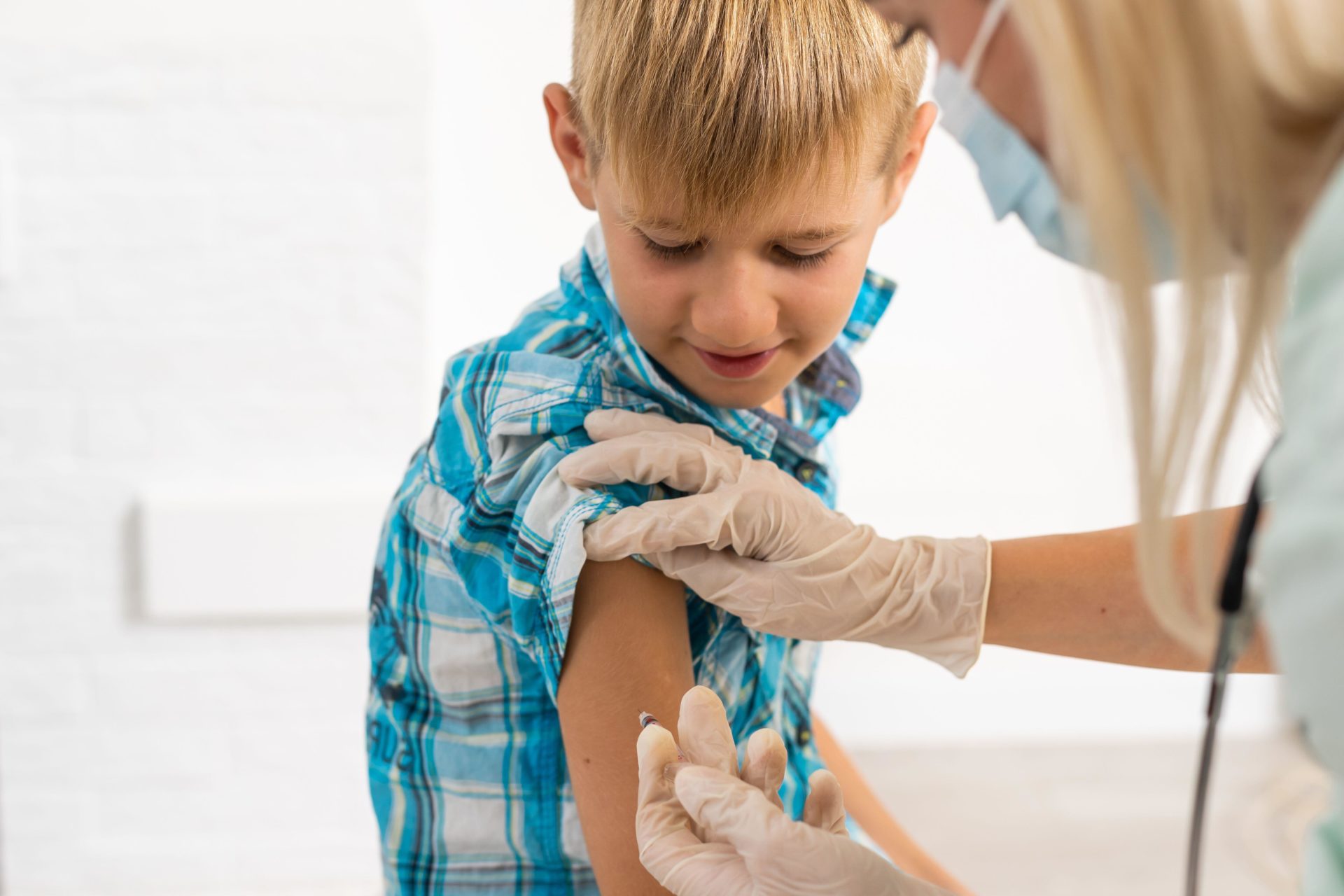 A child is given a vaccine. Picture by: Alamy.com
Professor O’Neill added the phenomenon of positive thinking might be similar to the placebo effect - in which a person who is given fake medicine sees their symptoms improve, simply because they are happy to be on perceived treatment.
“There's no doubt the placebo effect is real,” Professor O’Neill said.
“It's things like pain, for instance; any trial with new painkillers is kind of confounded by this placebo effect.
“So, something with the brain responding in a way that would help, say, a dummy pill work.
“And this might be similar.”
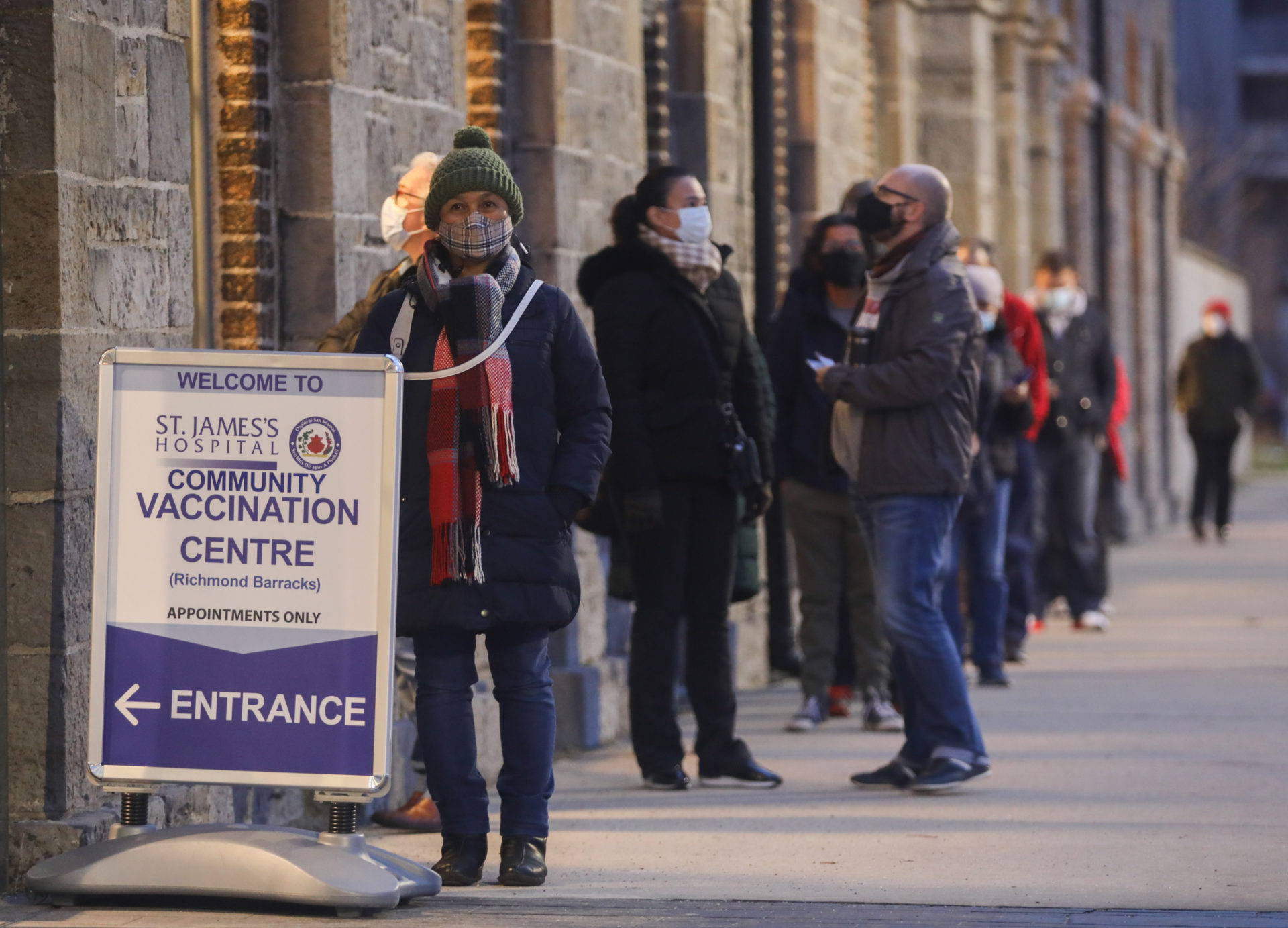 Members of the public queuing outside Richmond Barracks in Dublin for COVID vaccines. Picture by: Leah Farrell / RollingNews.ie.
For anyone due to get a vaccine, Professor O’Neill suggested they indulge in some positive thinking beforehand.
“[Participants were told], imagine a future trip you want to go on, anticipate something exciting was the second thing they told them to do,” he said.
“A third one was to recall something pleasant in your life, right?
“They did that over the course of four sessions and then they gave them the vaccine - it was hepatitis B vaccine, actually.
“Then they measured antibodies two weeks and four weeks later - so, it's quite an elaborate protocol.
“And guess what? Two weeks and four weeks later, a much stronger antibody response in the ones who had thought positively.”
There are, Professor O’Neill believes, lessons that health services across the world could incorporate.
“What was good as well was they were asking doctors and nurses to say to the person, ‘We're going to do our best to take care of you’ or, ‘I've seen this vaccine work in others’,” he said.
“Just positive statements from the health care provider might change the mindset in the person being vaccinated.
“And then they're predicting this might be part of the protocol in the future when you go to get your vaccine.”
Main image: A split of Luke O'Neill and a woman recieving a vaccine. Pictures by: Newstalk and Marc O'Sullivan.


