




The Government has been urged to speed up the legalisation of plug-in solar, following an industry claim that it could save an average household €100 a year.
Energy Minister Darragh O’Brien has previously said that he is “very open” to the technology, which allows people to buy solar panels and simply plug them into a main socket.
The energy generated is then used by the household - similar to traditional solar panels - but there is no need to pay for their installation.
On The Claire Byrne Show, Plug-In Solar Association spokesperson Craig Morris said the technology is easy to use and understand.
“Basically, you just have a couple of solar panels and you have a small inverter,” he said.
“It's a little box that will take the direct current from your panels, convert it into alternating current that you can then send into your household circuits.
“Because it's a relatively little current, the limit in Germany, where I'm based, is 800 watts.
“So, that's enough current to send safely back into your household.”
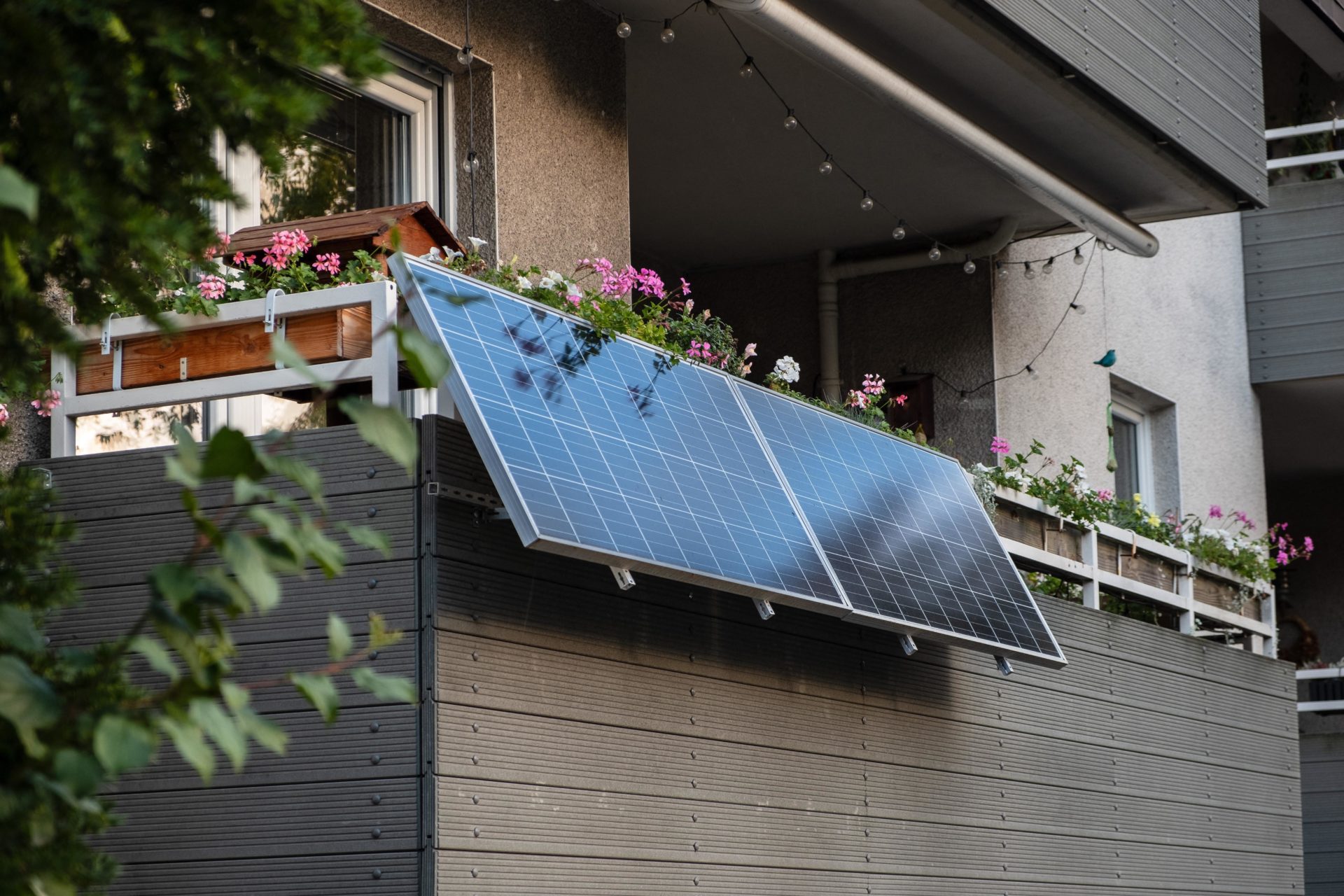 Balcony solar panels on an apartment building in Duesseldorf. Picture by: Alamy.com.
 Mr Morris added that there are at least 1.4 million plug-in solar panels in Germany where he lives, noting they “very much” do the same job as traditional solar panels.
However, he added that in Germany - unlike in Ireland - households are not paid for any unused power that is exported back to the grid.
“So, the only way you make money here or save money here is by consuming as much of that electricity as possible yourself,” he said.
“Even then we're seeing savings of over €100 a year.
“So, for a system that costs €500, we're talking about a payback in four to five years.”
According to the SEAI, solar accounted for 1.9% of Ireland’s energy generation in 2023.
The figure has increased since then, amid high demand for the panels following a spike in fossil fuel prices.
Main image: Plug-in solar panels in Berlin. Picture by: Alamy.com.


