


My first impression of Luanda was, frankly, one of the worst I have ever had of any country — and I’ve been fortunate enough to visit around thirty.
Barely twenty minutes after leaving Dr. António Agostinho Neto International Airport , our taxi slowed on the three-lane motorway. Two cones stood in the centre lane. I assumed an animal had been hit.
But as we edged past, the truth emerged: it wasn’t an animal. It was a young man, lying dead on the tarmac, likely struck as he tried to cross the road.
Traffic carried on. No one stopped. No emergency services, no bystanders — just cars sweeping around his body as though it were debris. My media colleagues and I were stunned as the taxi we were in slowly drove by. How can a life be treated with such indifference? Who was he? A son, perhaps a father. What hopes did he hold before the world sped past without noticing?
It was a brutal introduction to a place we had never been.
Luanda
 Daily life in Luanda
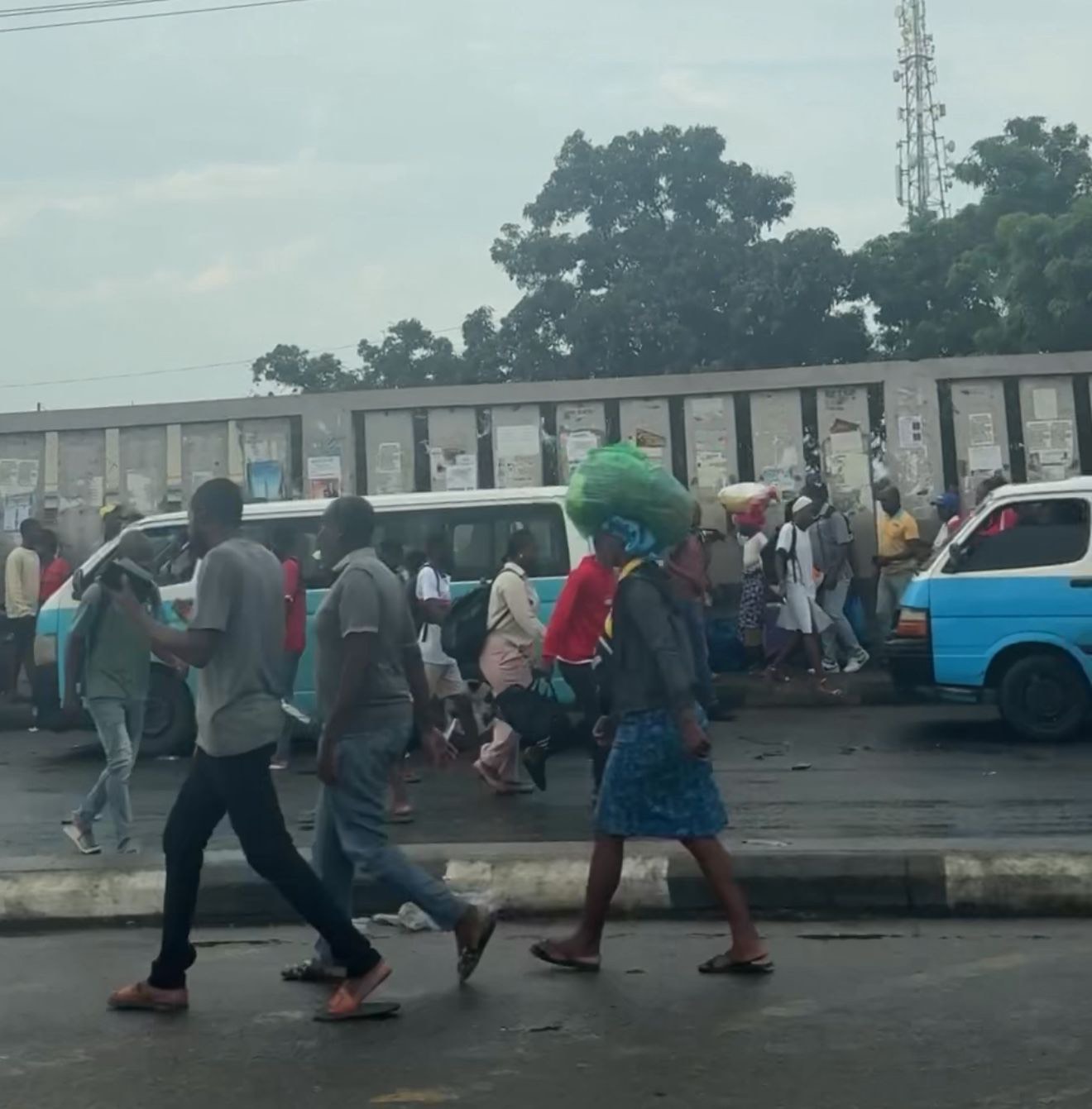
When traffic picked up again, the wider reality of life in Luanda quickly came into view.
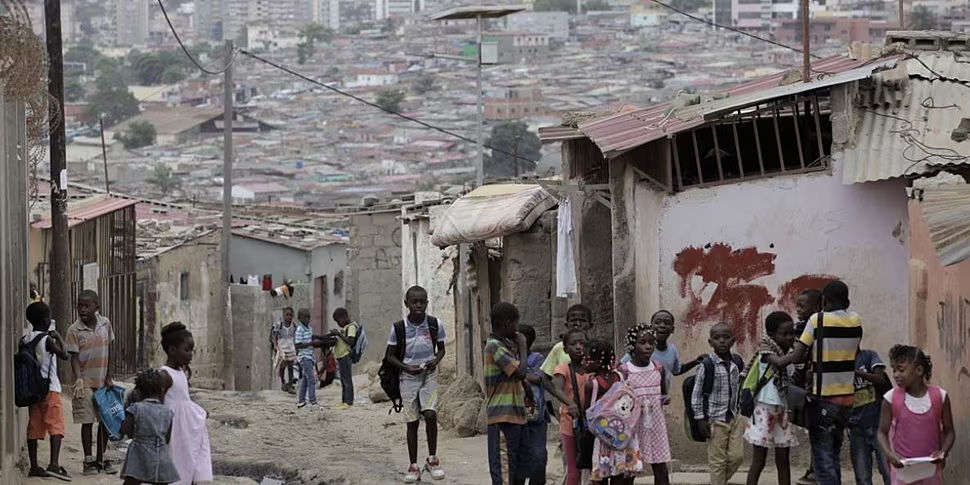
As we continued towards the city centre, shanty towns stretched along both sides of the road — vast settlements of makeshift homes without sanitation or basic services. Life on the outskirts of Luanda is not about living; it is about surviving. And survival, I soon realised, shapes much of daily life in a city of up to ten million people.
In the centre, beggars approached us — men, women, sometimes children — hands outstretched, tapping their mouths to signal hunger. They didn’t speak English. They didn’t need to. Others rummaged through skips, searching for the remains of someone else’s meal.
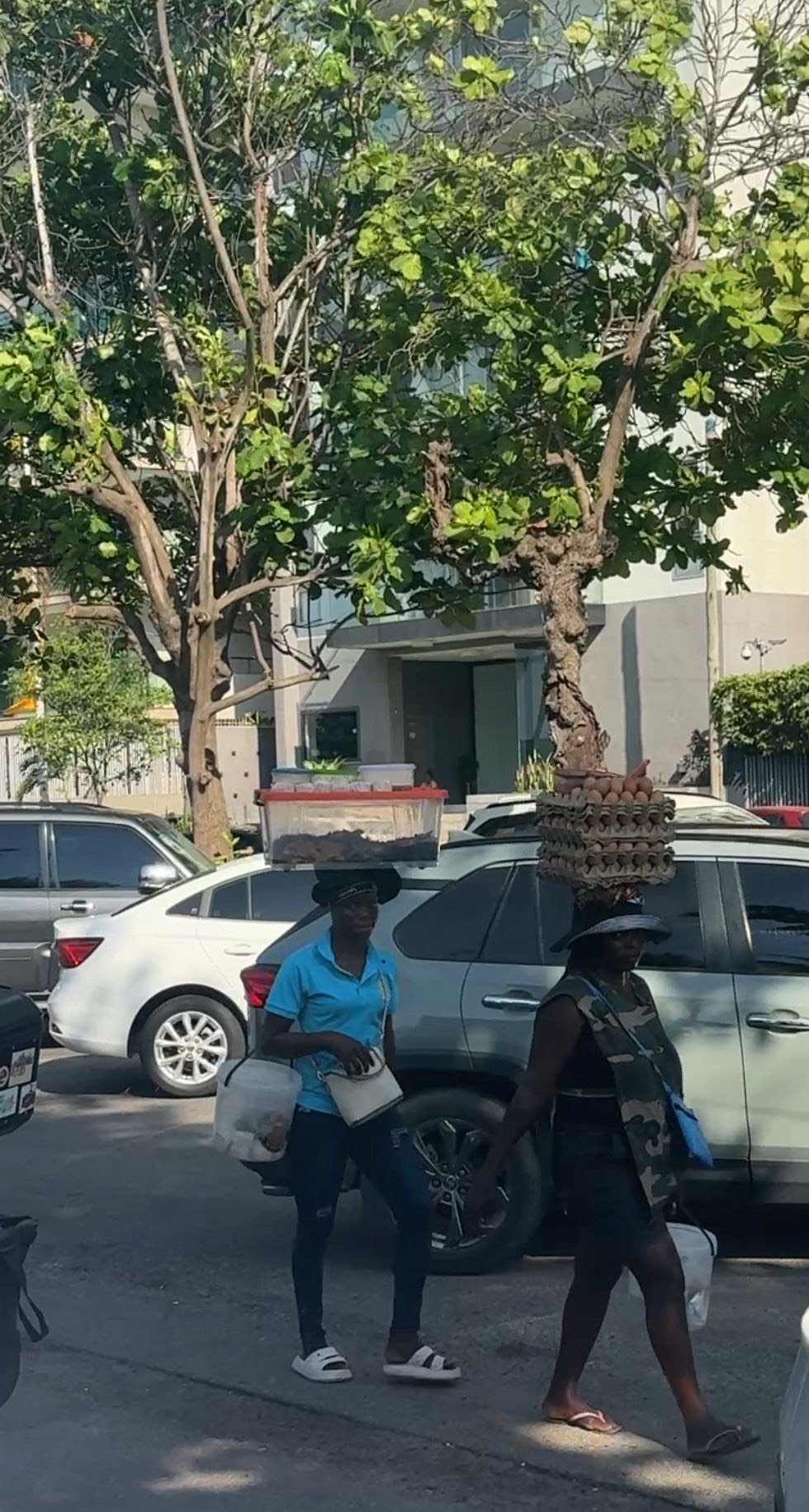
For those fortunate enough to have work — Uber drivers, hotel staff, bar and restaurant workers, and café employees — friendliness came easily, despite the language barrier. Men and women just happy to have jobs. Their average hourly wage is around 2,333 kwanza (€2.20).
No wonder more than half of Luandans live in poverty. Around 11.5 per cent live in extreme poverty.
 Locals in Luanda
Yet Angola is rich in natural resources. The offshore oil boom turned the country into Africa’s second-largest producer and transformed Luanda’s skyline with high-rise towers and gleaming seafront developments.
There are four and five-star hotels in the centre. Trendy bars and restaurants line the seafront along Ilha do Cabo, full of people wearing designer clothes and luxury cars parked outside. There is wealth here — and enormous potential. Temperatures hover around 25 degrees for most of the year, and golden beaches stretch for miles. What’s not to like?
But the tourism potential remains largely untapped, and the wealth is enjoyed by a small elite. For the majority, the boom has passed them by.
Luanda was designed for half a million residents. Today it is home to more than sixteen times that number. The consequences are severe overcrowding, a chronic housing shortage, and astonishing costs: one of the new two-bedroom apartments in the city centre can cost €6,000 a month — affordable only to the privileged few. While the old run down flats that are scattered throughout the city cost between €800 to €1000 a month.
For families in the sprawling bairros on the outskirts, such homes belong to another world entirely. Their concerns are immediate — finding the next meal, even if that means risking their lives on a motorway. For many, the ultimate dream is escape: Europe.
Tens of thousands of Angolans leave every year. Surveys show that 38 per cent have “thought a lot” about emigrating, and 57 per cent have considered it. For many more leaving simply isn’t possible - many have no access to education, so they’ll never be able to get a job that allows them to earn enough money to leave. Their aspirations are modest: a job, regular meals, a roof overhead. Opportunities that remain scarce across Angola — and much of Africa.
According to World Bank data, nearly half the country still has no access to electricity. Unemployment is close to 30 per cent. Youth unemployment exceeds 50 per cent. Under such conditions, dreams shrink until they become survival strategies.
Earlier this week, Luanda hosted the European Union–African Union Summit, which I was reporting on. Leaders pledged cooperation and promised major investment in trade, infrastructure, and migration. Europe has committed hundreds of millions of euro. It needs to arrive quickly, because until it does, people across West Africa and beyond will continue searching for a better life elsewhere.
So the next time someone in Ireland or the UK — or anywhere in Europe — complains about immigration, consider this: what would you do if you were born in the slums of Luanda? If survival — not comfort — defined your daily reality?
Would you stay? End up like that man dead on the motorway. Or would you try to find a way out?


