




“Institutional misogyny” within the Police Service of Northern Ireland meant a man with a history of violence nearly got away with Katie Simpson’s murder, a report has concluded.
The 21 year old Armagh woman was a talented show jumper, who was murdered in Derry in August 2020.
Intitially, her death was treated as suicide by the PSNI, but Ms Simpson’s friends and family were convinced this was not the case.
Thanks to their dogged determination, the PSNI were forced to re-open the case and properly examine the evidence.
Eventually, a man called Jonathan Creswell was charged with Ms Simpson’s murder but took his own life one day after his trial began in 2024.
He had been the partner of Ms Simpson’s sister and was a well-known figure in the equestrian world.
“He was someone who got results in terms of the people he trained,” Belfast Telegraph journalist Allison Morris explained on Newstalk Daily.
“Because of that he seems to have been able to get away with all sorts of horrendously abusive and coercive behaviour without ever being held to account.”
It was Creswell who brought Ms Simpson to hospital after he attacked her; she was still alive - but only just.
Once inside Altnagelvin Hospital in Derry, he began to spin a web of lives.
“Initially he claimed that he had gone to leave his children off at his parents' house and when he came back that Katie had been trying to take her own life, that he had cut her down,” Ms Morris said.
“He had put her into Katie's car, the passenger seat of Katie's car; he then made a 999 call, but he started driving, which I suppose would have been red flag number one rather than wait for the ambulance.”
Circumstantial evidence
Despite this, the PSNI seemed unconcerned about Creswell and concluded he had nothing to do with Ms Simpson’s death.
It was not until the following year that he was arrested and charged.
“Numerous people were trying to whistleblow and were trying to raise concerns with the police,” Ms Morris said.
“But they were dismissed and it was very difficult then to start trying to investigate the murder at a later date.
“When you talk about the failures, they didn't seize her car, they didn't examine it as a crime scene, they didn't treat Creswell himself as a potential crime scene in terms of his own clothing, which could have obviously yielded information.”
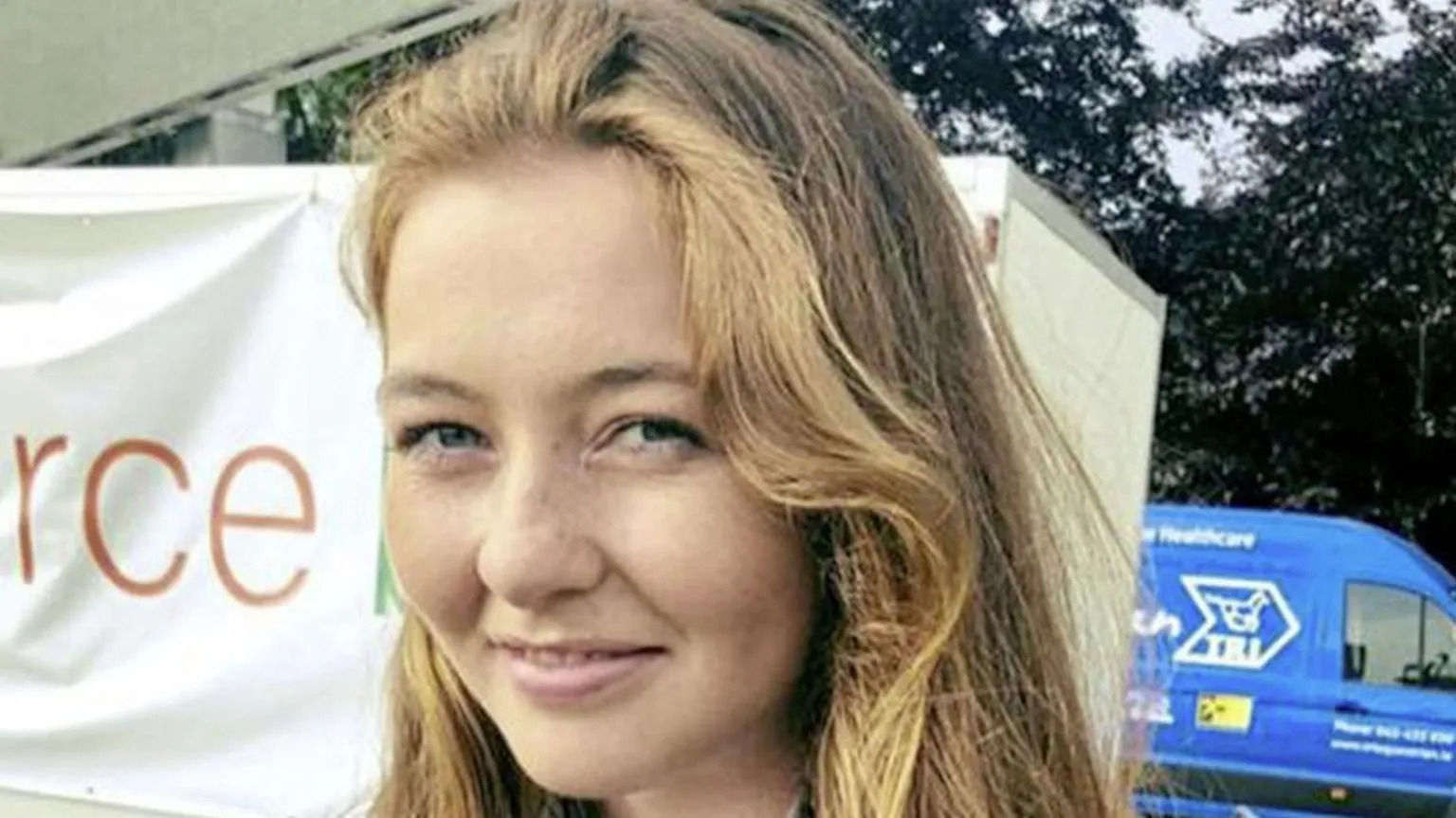 Katie Simpson. Image: Supplied.
Police even accepted Creswell’s explanation that the bruises on Ms Simpson’s body were because she had fallen from a horse.
At no point did anyone on the PSNI take the initiative to double check if anyone else had witnessed such a fall.
“There were no pictures taken of Katie's injuries,” Ms Morris said.
“There was no rape kit done to see, even though she showed signs of sexual assault; the first pictures weren't taken until she died over a week later by the pathologist.
“At that stage, obviously, a lot of the bruising would have faded and was no longer there to show the original state that she was in when she was admitted to hospital.”
Most extraordinarily of all, Creswell had a known history of violence against women.
It was not a reputation forged in hearsay; he had previously spent time in prison for domestic violence.
One man in particular, Paul Lusby, was especially insistent that police re-open the case.
“Eventually, they agreed to reopen it and they did manage to build a circumstantial case,” Ms Morris said.
“But the fact is that a lot of the evidence was lost; I should say that Paul Lusby, who is the sort of hero of this piece, kept going back and trying to make ombudsman complaints, make police complaints.
“He also took his own life after this; he is another, I suppose, victim of this terrible story.”
A critical review
Yesterday, the Northern Ireland Executive published the Katie Simpson review, which concluded there had been a litany of failings in the investigation into her death.
Ms Simpson’s mother, Noeleen Mullan, noted in a foreword that "so many things were missed, not done properly and it felt like there was a lack of care for Katie from the police".
The report also called for a “cultural shift” within the PSNI.
“One described Creswell as a bit of a ‘bad boy’ and the other one said, ‘Oh, he's a bit of a philanderer’,” Ms Morris said.
“The report is damning in terms of this language; they're saying such language obscures the harm done by men like Creswell.
“It's denying women's experience of their abuse and that sort of in-built misogyny is something that's quite difficult to take out of an institution like the PSNI.”
The Police Service of Northern Ireland has responded to the independent review into the case of Jonathan Creswell and the death of Katie Simpsonhttps://t.co/gBUCXapPqk pic.twitter.com/E1zEbdCJVt
— Police Service NI (@PoliceServiceNI) May 5, 2026
Ultimately, Creswell did not serve a day in prison for Ms Simpson’s murder, as he took his life as the trial got underway.
“Clearly that was the sort of last act of power in terms of what he could do to evade justice,” Ms Morris said.
“But since then, we know that since Katie's death, 37 other victims involved in the equestrian world have come forward to say that they were abused by Creswell.
“The youngest one of those was just nine years old at the time of the abuse and the eldest around 21.”
A further investigation into Creswell’s offending has been commissioned by the PSNI.
Main image: Katie Simpson. Image: Supplied.


