



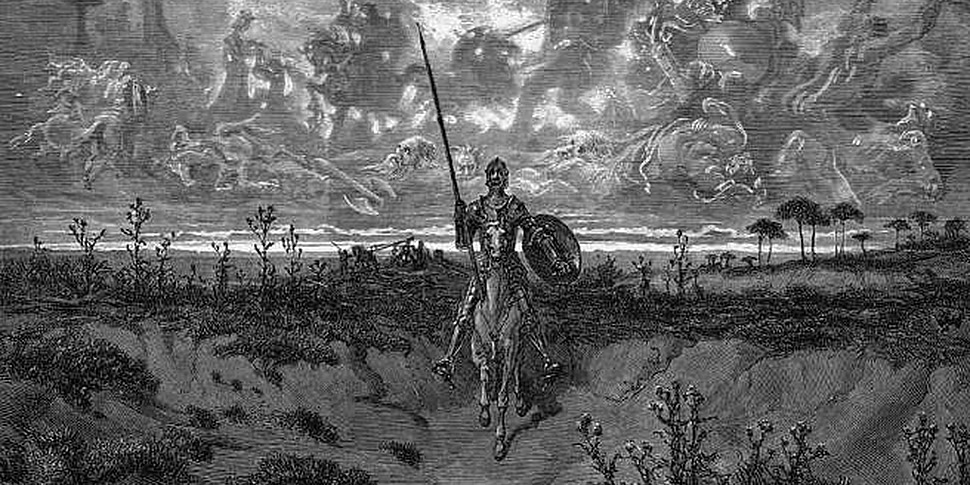
Good writers hold immense amounts of power. Using only words they can manipulate our emotions; making us weep, rage, or laugh at the actions of fictional characters conjured in collusion with our imagination. Ian McEwan and Philip Roth are two of today’s greatest ‘magicians of words’. This Sunday ‘Talking Books’ looks back at the discussions on these amazing authors.
In the 1970s and ‘80s Ian McEwan began to build a reputation as a dark and provocative writer with his debut novels, ‘The Cement Garden’ and ‘The Kindness of Strangers’. The violence and tones of incest and sexual depravity in these works soon saw the nickname ‘Ian Macabre’ bestowed on the author. McEwan was never a one trick pony though and he soon turned his hand to weaving tales of a different thread.
In the ensuing decades McEwan established himself on the international stage with works like ‘Amsterdam’, ‘Black Dogs’, ‘Saturday’, and ‘Atonement’. These novels displayed the extent of McEwan’s talent as he conjured mundane suburban worlds with as much detail and conviction as the violent worlds of crumbling ideologies.
This Sunday at 7am Susan revisits her chat with Sebastian Groes on the life and writings of Ian McEwan. Why is he regarded as such a great writer? How does he tap into our emotions so well? And what are McEwan’s best works?
Rounding off the show Susan takes a look back at her exploration of the life and writing of Philip Roth with Dr Michael Hinds and Professor Ross Posnock. With a litany of awards and honours to his name Roth is one of the most celebrated writers of the 20th and 21st centuries. This success comes largely from his ability to create provocative and irreverent works laced with humour and life.
Over the course of his career Roth has become one of the greatest chroniclers of the Jewish-American experience as well as the male experience in the modern world. His works have enraged, seduced, and forced countless laughs, smiles, and chuckles all while blurring the line between fiction and reality.
Join Susan this Sunday for another dose of Philip Roth. Is he as great a writer as the awards would suggest? Why do his stories get under our skin so much? And why should we keep reading the philosopher of fiction?


