




Supermodel David Gandy recently argued that there isn’t enough conversation around “good men,” suggesting that profiles such as Andrew Tate promote a disruptive version of masculinity.
To explore the issue further, Newstalk Breakfast welcomed Eoghan Cleary, a secondary school teacher and educational researcher with the Sexual Exploitation Research and Policy Institute.
Cleary described how challenging it is for young men today to navigate identity and belonging within modern Irish society.
“Young men growing up at the moment, and like everybody, they're just looking for a sense of belonging, a sense of identity,” he said.
The educator reflected on how in the past, Ireland held a very narrow view of masculinity:
“For a long time, we had a rigid idea of what it was to be a man, to be strong, to be a protector, to be a provider, to repress your emotional expression."
"And we realised a while ago that that wasn’t really serving men anymore.”
He explained how Irish society had then started to move forward.
“We were starting to broaden our understanding of masculinity”, he said, however due to an influx in online toxic behaviour, it has regressed.
Cleary pointed to the rise of online “man-fluencers” who, he argued, exploit insecurity for profit.
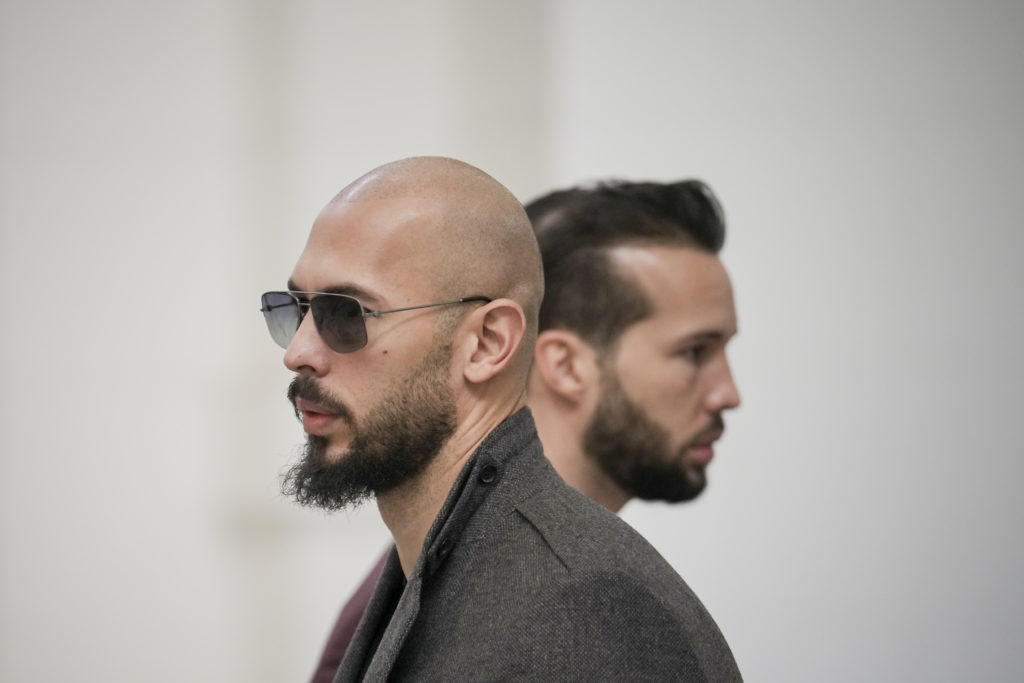 Andrew and Tristan Tate, © Copyright 2024 The Associated Press. All rights reserved.
“This is a very fragile idea coming from people who realise they can make a ton of money out of this emerging space if they grab onto the insecurity that exists for young men right now.”
He said that masculinity has been “rigid for a long time,” but must become more flexible to reflect the realities of modern life.
“The world is changing dramatically," he noted.
"When it comes to providing, unless you’re in the top one percent of earners, there’s no way one person can provide for a family anymore."
Cleary believes young men need wider definitions of what it means to be a provider, beyond the financial.
“We need to explore other ways of providing, providing emotional security, comfort, stability.”
However, he warned that the current public conversation fails to offer young men any guidance.
“There’s a narrative out there at the moment that is grabbing hold of a vulnerable section of young men who are desperate for belonging and identity. And we’re not fulfilling that for them in the public sphere.”
Cleary argued that Ireland needs a stronger, healthier narrative around masculinity, that recognises emotional intelligence as a strength rather than a sign of weakness.
Written by Annemarie Roberts


