



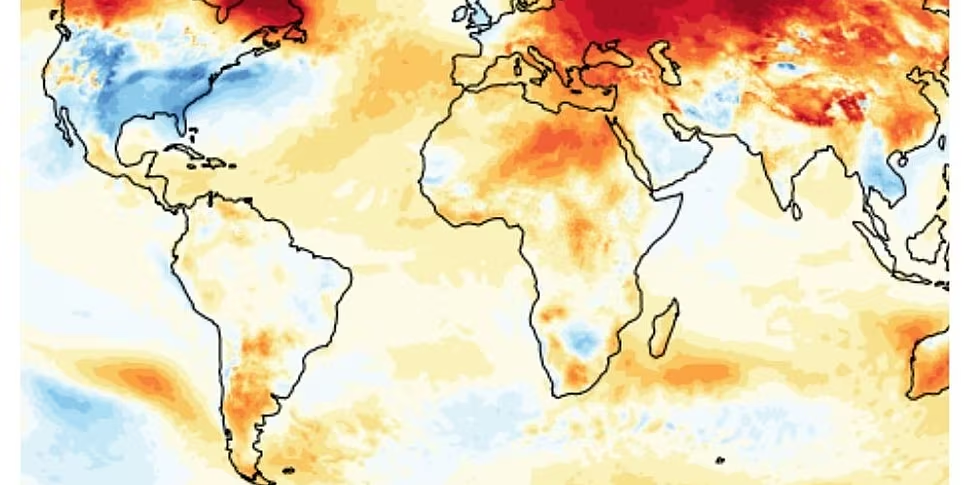
We've been hearing a lot about the threat of El Niño on the world this year, but what is it and what can we expect?
After the Panama Canal announced that they are restricting shipping traffic along the waterway because of a drought attributed to El Niño, many people are asking what it is.
Peter Thorne, Director of the Icarus Climate Research Centre at Maynooth University, spoke on The Pat Kenny Show to explain what this phenomenon is and that this is the biggest one we've seen, potentially ever.
He said: "So El Niño is a phenomenon that occurs in the tropical Pacific Ocean, which is a huge area, and it's got its little sister, La Niña. It's basically an episodic, either heating under El Niño or cooling under La Niña of those waters.
"This is the strongest in at least decades, possibly going back over the entire instrumental record. The only possible comparator is an event in the late 1800s and that's highly uncertain how strong that was.
"We're looking into an unprecedented situation here. It occurs between every three to seven years and it has occurred for millennia; for thousands of years.
"We can look in coral growth records and other proxies to see that it's been going for thousands of years, possibly even millions of years.
"This phenomenon has been occurring and having impact principally in the Pacific and also in the Indian Ocean region and knock on effects to many other parts of the world.
"Effectively what we get is heating of the oceans."
So if this is happening primarily in the Pacific and Indian oceans, why should we be worried?
According to Mr Thorne, California can expect a very wet winter (and other states up the West Coast), and probably a very warm winter in the interior north of North America.
Similarly, in Australia, it's usually the case that in an El Niño they will have drought. In certain regions of the world, particularly surrounding the Pacific, but also in India, the Indian monsoon already has been reduced this summer.
This means less water, potentially less drinking water, and less food growing in these regions.
"The people impacted by this are in the billions,' Mr Thorne continued. "It's probably 50% of the global population that will easily be affected by very reliably predictable outcomes in El Niño.
"El Niño will also have impacts for Sub-Saharan Africa and agricultural productivity in Sub-Saharan Africa."
While there are more preparations in place to help combat the effects of El Niño, considering the scale of this one, there will likely still be a huge impact on the globe.
These impacts are more predictable in the regions around the Pacific and Indian oceans, and less predictable in places like Ireland.
However, with supply chains, production and productivity likely being affected (especially with the Panama Canal restrictions), this could see price spikes in countries like Ireland where we can "afford to pay over the odds".
In other parts of the world, it will lead to malnutrition due to the reduction in availability of food.
Main Image: An example of La Nina weather in January Picture by: Copernicus EU Data


