



Have you ever wondered if the price of your toothpaste actually means it's better or worse for your teeth?
Well, it turns out the price isn't the key factor you should be looking at when deciding which one to purchase, and there's a code you should be seeking out instead.
Speaking to The Claire Byrne Show to answer listener questions was Caroline Robins form Kiwi Dental, and one person asked about the price discrepancy of toothpastes.
Ms Robins answered: "I mean, you can spend what you want. You can make an informed decision about what you're wanting to spend, but expensive doesn't mean good.
"So really, the key is when you buy toothpaste, you are looking for a number on that toothpaste. You want to look at the ingredients and you want to read 1450 ppmf.
"1450 parts per million fluoride is the gold number that you want to see on toothpaste. And kiddies from the age of two can be using that amount of that adult strength and most children's toothpaste have that amount in it.
"So long as it's got that amount of fluoride, that's the key. That's what keeps your teeth healthy. If it costs a euro from Eurogiant, all good.
"And if you want to pay 50 euro from it, because some influencers said that's what they use. Well, knock yourself out. But honestly, there's no difference."
Another listener text in to say that they were surprised that both their children had a lot of plaque when they brought them to the dentist recently.
They both brush regularly and have electric toothbrushes, and the question asked was if people can be more prone to plaque than others.
Ms Robins said that it is possible, but also, depending on the ages of the children, they may just need help brushing.
She said: "We would always say kids need help cleaning. So up until about the age of eight or nine, when they can tie their shoelace well, they need help.
"An electric toothbrush as well is a different technique. It's not like your manual toothbrush where you're sort of scrubbing the sides of your teeth up and down, round and round.
"The electric toothbrush needs to be held individually on each individual tooth and moved around and making sure the head gets to the gum line as well.
"So there's a little bit more technique to it. So maybe a child doesn't quite have that sort of dexterity to do that well.
"Maybe mum and dad just need to be, sort of, having a look after they clean."
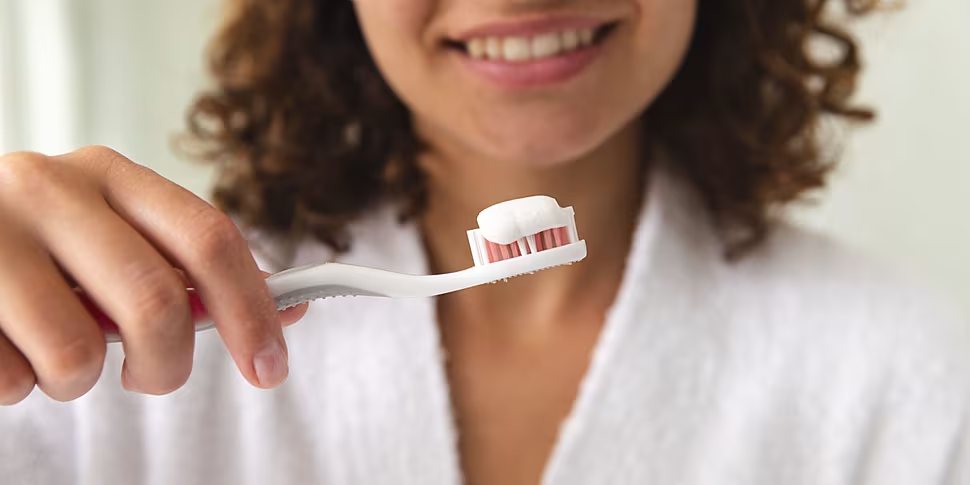
Main image: A young Caucasian woman holding toothbrush with toothpaste at home. Pic: Wavebreak Media Premium. 30 January 2024


