




The question of whether Dublin should have a directly elected mayor has been circling Irish politics for decades, endorsed by a Citizens’ Assembly, implemented in Limerick, but still unresolved in the capital.
On Newstalk Daily, the debate was revisited with a focus on whether Dublin is falling behind comparable cities.
Professor Ricky Burdett of the London School of Economics argued that the growing prominence of mayors internationally isn’t about city size, but about where problems now land.
“Mayors are having to face more real issues on the ground than they’ve ever had to face before,” he said, pointing to climate change, migration, and inequality.
“If there’s a fire outside in Los Angeles, who’s going to deal with it? The mayor.”
Burdett noted that Dublin stands out internationally because its mayor is largely ceremonial.
“Among the 30 mayors we brought together from across Europe, Dublin’s representative was the only one who had not been directly elected,” he said.
In cities like London, Paris, and New York, mayors hold authority, particularly over transport, even if they have to still negotiate funding with the government.
Ireland does have one example of an executive mayor:
In Limerick, voters elected the country’s first directly elected mayor in 2024, though the role has already faced limits around funding and central government control.
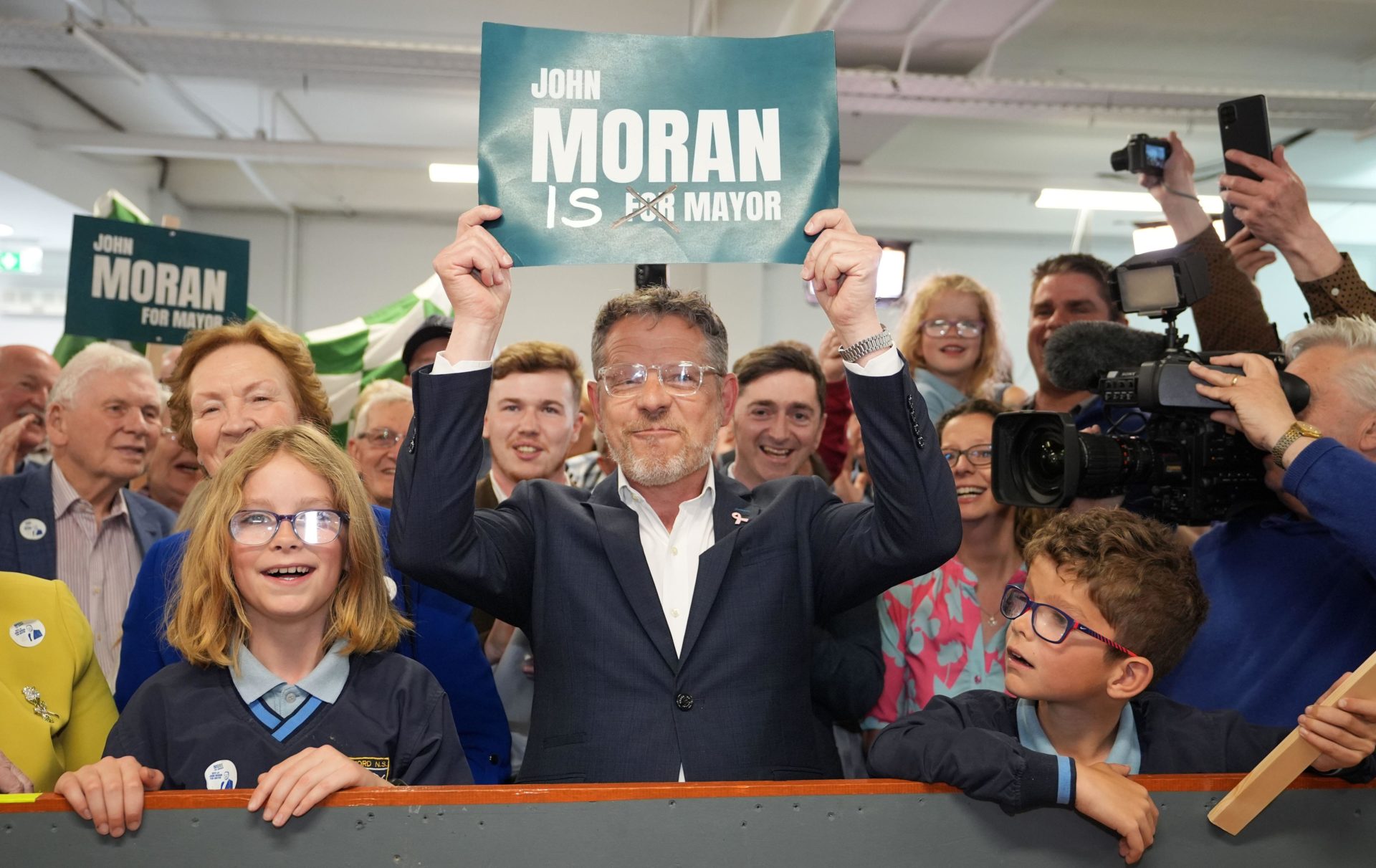 John Moran is Elected at Limerick Racecourse in Limerick's mayoral election in which citizens voted to directly elect their own mayor for the first time in the history of the State. Image: PA Images / Alamy Stock Photo
“A minister will not walk the streets the way a mayor does,” Burdett said.
“The mayor has to understand neighbourhood issues, talk to communities, and deliver immediate change on the ground.”
Green Party chair and Dublin City Councillor, Janet Horner made the case that Dublin urgently needs that kind of leadership.
“A directly elected mayor is such an obvious and immediate win for Dublin,” she said.
“Dublin is on the front line of so many crises - housing, transport, climate, but we don’t have a single governing structure that people have actually chosen to lead the city.”
Horner argued that the current system, with 63 councillors and multiple agencies, fragments responsibility.
“We’re reduced a lot of the time to being advocates rather than decision-makers,” she said.
“There’s no cohesive vision for what Dublin as a whole should look like.”
Transport, she said, is the clearest example.
“We have dozens of different transport bodies operating in Dublin, but no unified structure to bring them together,” Horner argued.
“A directly elected mayor with the power to coordinate them would be a game changer.”
Concerns about controversial figures winning the role were dismissed by Horner.
“That’s a concern with democracy as a whole, not with directly elected mayors,” she said.
“We trust the wisdom of the people, even when it doesn’t go the way we’d like.”
Burdett agreed that the question should at least be put to voters.
“To provide a directly elected mayor to the capital of your country is what the city deserves,” he said.
“But it needs to be explained properly and articulated clearly, and then put to the vote.”


