




A shortage of jet fuel means a “very serious” risk of cancelled flights during the summer holidays, a former Lieutenant Colonel in the Air Corps has warned.
The conflict is now seven weeks old and, although Washington and Tehran have agreed a fragile truce, no one knows when it will end.
The war has also caused huge disruption to international energy supply chains, driving up prices significantly.
On Newstalk Breakfast, retired Air Corps said the aviation sector has been left incredibly exposed by conflict.
“75% of our Jet A1 fuel comes from the Middle East and that's, of course, strangled now because of the situation in the Strait,” he explained.
“But our good friends in America, which I just realised this morning, they're giving us an extra 150,000 barrels per day coming to Europe of jet aviation fuel.
“So they do a lot of refining over there and they're giving us a little help out, as it were.
“But it's going to come to a crunch sooner rather than later, I suspect. There are capacity cuts and flight cancellations already.”
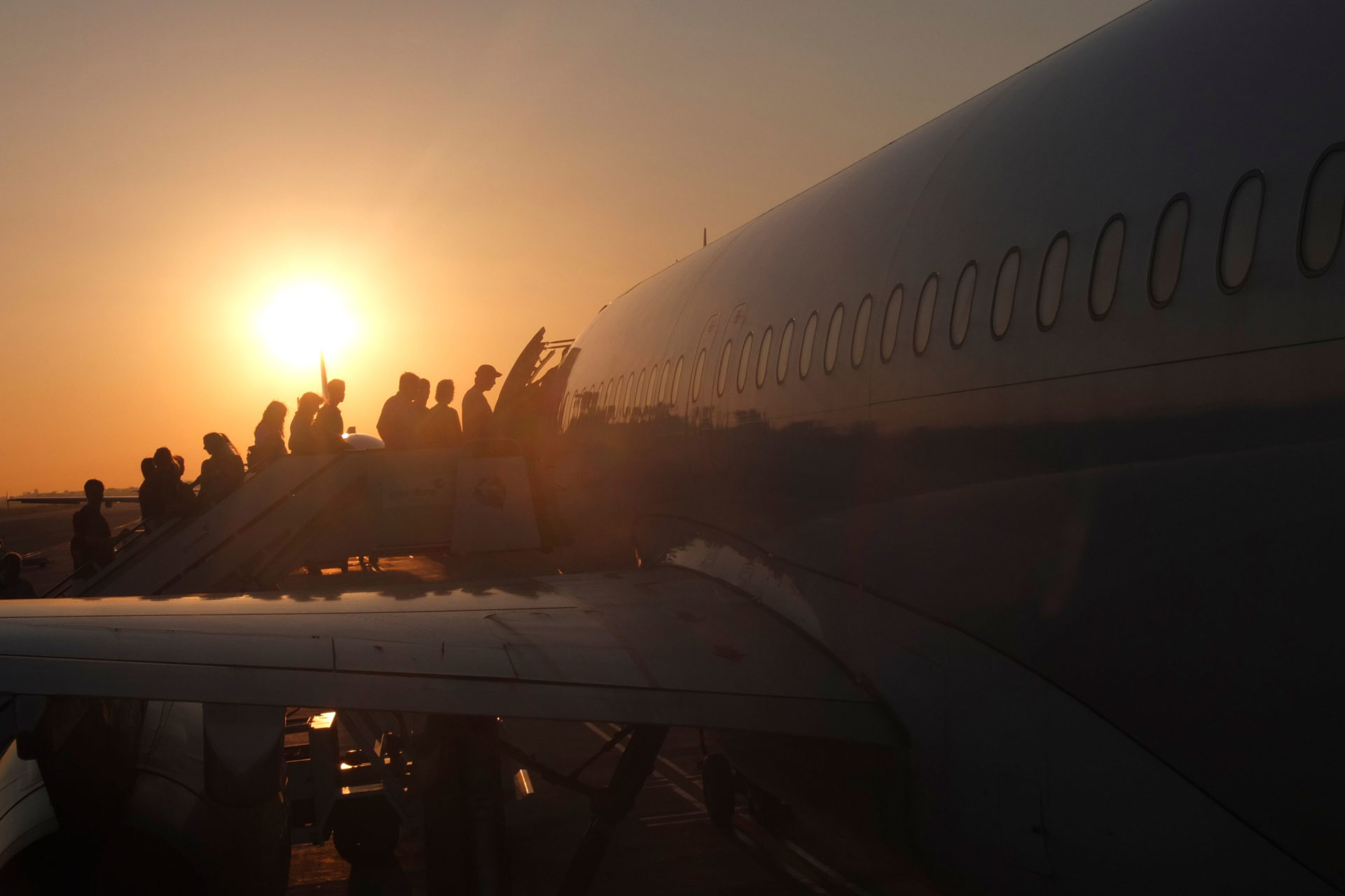 Passengers boarding a flight. Picture by: Alamy.com.
 Lieutenant Colonel Bryne noted that KLM has already cancelled 160 flights - roughly 1% of their total flights - and more cancellations could well be announced soon.
“For the month of April, I'm not too unhappy - things will work the way they are,” he added.
“The supply might tighten between late May and June, which is soon enough.
“And then the risk is very serious around July and August because 2026 was going to be the best year for aviation flying in the Northern Hemisphere.
“We are at summer peak and we're going to be well ahead of what happened before COVID.
“So things could get hit very quickly if we don't get a supply situation solved very soon.”
'Reduced flight options' Whatever happens, airlines have warned that higher fossil fuel costs will inevitably be passed onto consumers.
All in all, Lieutenant Colonel Kevin Bryne described it as the “most uncertain time in aviation history I can think of in the last 25, 30, 40 years”.
“Already airlines are saying there are going to be higher prices for the fares,” he warned.
“They will have reduced flight options because instead of going five or six times a day, maybe we'll only go three times a day.
“And there will be disruption because if, for example, there's a shortage of fuel at a very short notice, then the flight may not come back.”
Main image: Passengers after a cancelled flight at Dublin Airport. Picture by: Alamy.com.


