



The power of blood reaches across time and cultural boundaries. Ancient societies saw it as the most powerful of sacrifices and the binding in the most solemn of covenants. In it lies our whole identity; our heritage, our passions and emotions, our strengths, our ailments, our very past, present, and future. Yet when spilled there is little to distinguish it from anyone else’s. It is, at the same time, vital and worthless, unique and common.
Acclaimed writer Lawrence Hill has made this fascinating liquid the focus of his latest book, ‘Blood: The Stuff of Life’. Born in Ontario in 1957 to a white mother and black father Lawrence was surrounded by the social and cultural connotations of blood growing up. From 1954 till ’68 the Civil Rights Movement was pulling apart institutionalised racial discrimination across America. Just as ideas of racial purity waned blood came into the spotlight once again with the discovery of the Human Immunodeficiency Virus in 1981 and a string of transfusion scandals.
In ‘Blood’ Lawrence looks at the social, medical, and cultural history of blood, from ancient times to the latest chapters that we continue to try and deal with. With its long political and poetic history it is amazing that no one had made blood the central topic of a book before. Yet perhaps the world is only now ready for the unveiling of blood’s story.
On ‘Talking Books’ this Sunday at the new time of 8pm Susan talks with Lawrence about how blood drove medical revolutions and was used to divide societies and bring people together. Why does this simple fluid hold so much power and significance? How has our understanding of it changed? And how have changing ideas of ‘blood purity’ impacted on societies around the world?
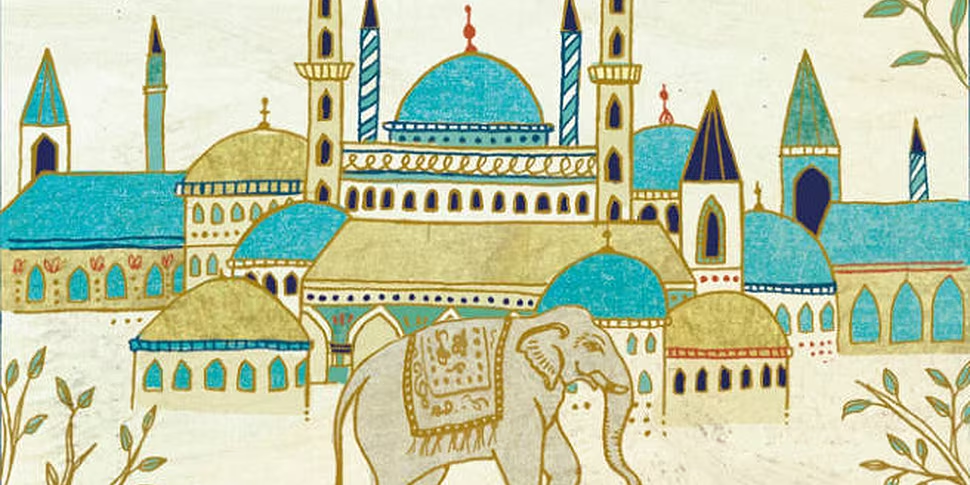
Rounding off the show Susan talks with celebrated Turkish author Elif Safak about her latest novel ‘The Architect’s Apprentice’. Telling the story of a young Indian boy’s journey to the Topkapi Palace in Istanbul this novel illustrates the artistic glory of the Ottoman Empire at the height of its power and the people who built it. Using her distinctive magical-realist style and interest in the ordinary people Elif brings this ancient world to life from the bottom up.
It is the small and brilliantly white elephant calf Chota that brings our hero Jahan from his home in western India to the heart of one of the world’s greatest empires. Jahan had helped to bring Chota into the world, building a close bond with the pintsized pachyderm as he helps to raise and care for it. When it emerges that Chota is to be sent as a gift to the sultan Jahan endeavours to make the trip to Turkey too.
Leaving behind a brutal stepfather and carrying the grief for his lost mother Jahan journeys to a fantastic new land. Here he finds love and beauty and is made apprentice to the sultan’s architect, Sinan. This is no utopia though and while he helps to raise some of the world’s most splendid constructs Jahan sees the suffering of the people on whose backs Ottoman greatness is being built.
Renowned for her magical-realist style, cosmopolitan ideals, and feminism people, once again, lie at the heart of Elif’s account of the Ottoman Empire. Join Susan this Sunday as she talks with Elif about ‘The Architect’s Apprentice’, her life as a writer, and why she does what she does. Where do these tales come from? What is it like being such a provocative and contentious writer in Turkey? And why does she write so often about her home city and those who are overlooked?


