


As drug-related violence continues to be an issue in Ireland, questions are beginning to be asked as to what can be done to help reduce it.
One idea is to legalise drugs and take the money being made on the black market and put it into the Irish economy.
Former Dublin footballer and senior mental health social worker Rory O'Carroll joined The Claire Byrne Show to discuss a think piece he wrote on this very topic.
He is of the belief that if we want to reduce violence, drugs should be legalised, and while it wouldn't eliminate the black market, it would reduce it significantly.
He explained: "In terms of drug distribution, it's 100% black market. So if you legalise and regulate drugs, you can capture some of that.
"So prohibition, in my eyes, I would see as the surrendering of controls because it's all at the supply of criminal organisations. But if you legalise and regulate it, you can at least capture as much of that black market as possible.
"It doesn't make it disappear. It doesn't eliminate the black markets. If you look at black markets, there's black markets for alcohol, for cigarettes, for stolen clothes, for essentially everything. There's a black market to some degree.
"If you legalise and regulate drugs, a black market would remain, but if you can capture as much of that as possible, it would greatly reduce gang violence and the exploitation of kids."
Claire Byrne pointed out how there might be a fear of making drug taking "acceptable", but Mr O'Carroll pointed out that it is already normalised.
According to the Health Research Board (HRB), the demand for addiction treatment where cocaine is the main problem drug has risen drastically, accounting for 42% of all drug-treatment cases in 2025.
In fact, cocaine is now the main problem drug for more than half of all individuals entering treatment for the first time (51%).
If drugs were made legal though, what would purchasing them look like? Would you be able to get certain items like you do your beers or your bread?
Mr O'Carroll said: "I think we should learn our lessons from other regulated industries such as alcohol.
"I would be saying that drugs would be available, [but] we'd have to vary by drug. You could replicate models such as cannabis, like in Uruguay or other countries where they have cannabis cafes.
"But, for other drugs, it could be a licenced state operated dispensary where you would go in, almost like a pharmacy, where there would be no commercial entities involved whatsoever.
"I'm not talking about legalising every single drug tomorrow. You could do it in a graduated, incremental way."
He also highlighted how drugs are often treated in the same way, but just as nicotine is treated separately to alcohol, so should different drugs.
The differences between heroin, cannabis, crack cocaine, and psychedelics are a wide variety, so they should all be treated in different ways.
Mr O'Carroll also highlighted how if something is prohibited, it's more difficult to get health guidelines and advice to the public.
He continued with the example: "Loads of people use cocaine and alcohol, so that produces cocaethylene. So that's an even more dangerous drug that has more serious health complications.
"But if you imagine the Department of Health wanting to do a big public campaign on the dangers of cocaethylene, that would not be allowed.
"So it's really hard to get proper educational and messaging advice out there when something is prohibited.
"If you look at smoking, the public health campaign and messaging around that has been fantastic. If you want support around ceasing smoking, it's out there.
"When you have regulation, you have some power to tweak and adjust and adapt."
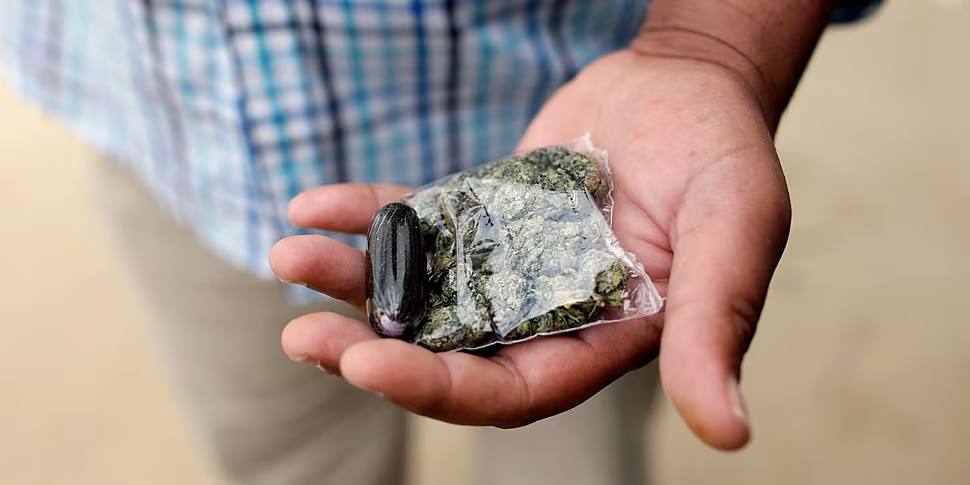
Main image: A man with cannabis product in his hand Pic: Associated Press / Alamy


