




The Government should subsidise the cost of fuel to help farmers with the impact of this summer’s extreme heat, the IFA has argued.
Following weeks of relentless heat, farmers have seen their crops wither and their livestock unable to graze on grass as they typically would at this time of year.
On Newstalk Breakfast, Irish Farmers’ Association President Francie Gorman said he visited seven counties yesterday and in all of them found farmers who are suffering amid an “unprecedented lack of rain”.
“I was with a potato farmer yesterday who's using 2,000 litres of diesel a day to irrigate his potato crops,” he said.
“And if he didn't irrigate those potato crops, his yields could be back anything between 30% and 50%.
“Then if you go into the livestock sector, farmers are using fodder now that they would normally use in the winter period.
“I was with a sheep farmer below Waterford yesterday that's using up to 20 bales of silage a week and a tonne of concentrates a week to feed just his ewes, to keep them in condition, to be able to get them back to breeding, fit for breeding.
“Now, in a normal year, he would never do that.”
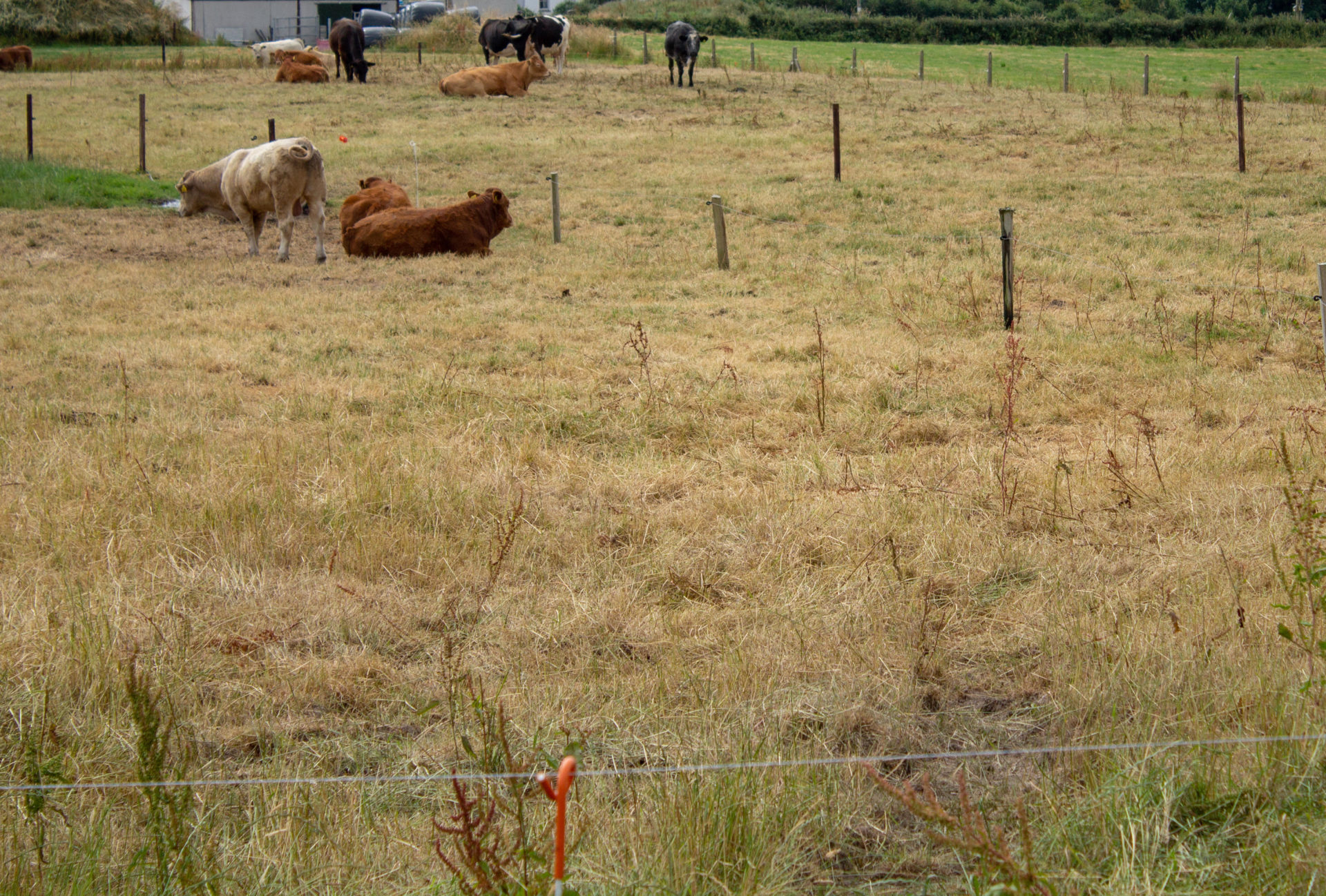 Drought in West Cork. Picture by: aphperspective/Alamy Live News
However, Mr Gorman conceded that in the short-term, the extreme weather is unlikely to push up food prices, as many farmers sell off their livestock.
“There's pressure on farmers to get rid of stock and to reduce stock numbers on the farm, they're trying to get lambs killed,” he explained.
“They're probably being killed - cattle the same - and maybe not quite fully fit.
“But the factories are actually pulling the price to farmers because there's an opportunity there for a quick buck to be got.”
Mr Gorman urged the Government to subsidise the cost of fuel for farmers, a policy he argued “wouldn't blow any budget in the Department of Agriculture”.
“I think there's no doubt that we need a transport subsidy system to move the fodder from A to B because of the cost of fuel in particular,” he said.
“Moving fodder from maybe the likes of, say, Mayo to Wexford is a very expensive process to go through.
“But it wouldn't cost a huge amount to incentivise that to make sure that maybe farmers who have it to sell will be able to get properly paid for it, because in general, fodder is not expensive.”
Globally, July 2026 was the second warmest in recorded history, with average temperatures 1.47°C above the estimated pre-industrial baseline.
The United Nations has warned that such extreme heat is likely to become “more frequent, more intense” and will last longer as a consequence of climate change.
Main image: Sheep being transported. Picture by: Alamy.com.


